Repulse Bay Ceiling Heights and the Quiet Enclosure of Asian Urban Wealth
Restoring vertical volume across 288 square metres exposes the durable divide between long-term property ownership and metropolitan density
SINGAPORE
Private residential architecture operates through subtraction as much as addition.
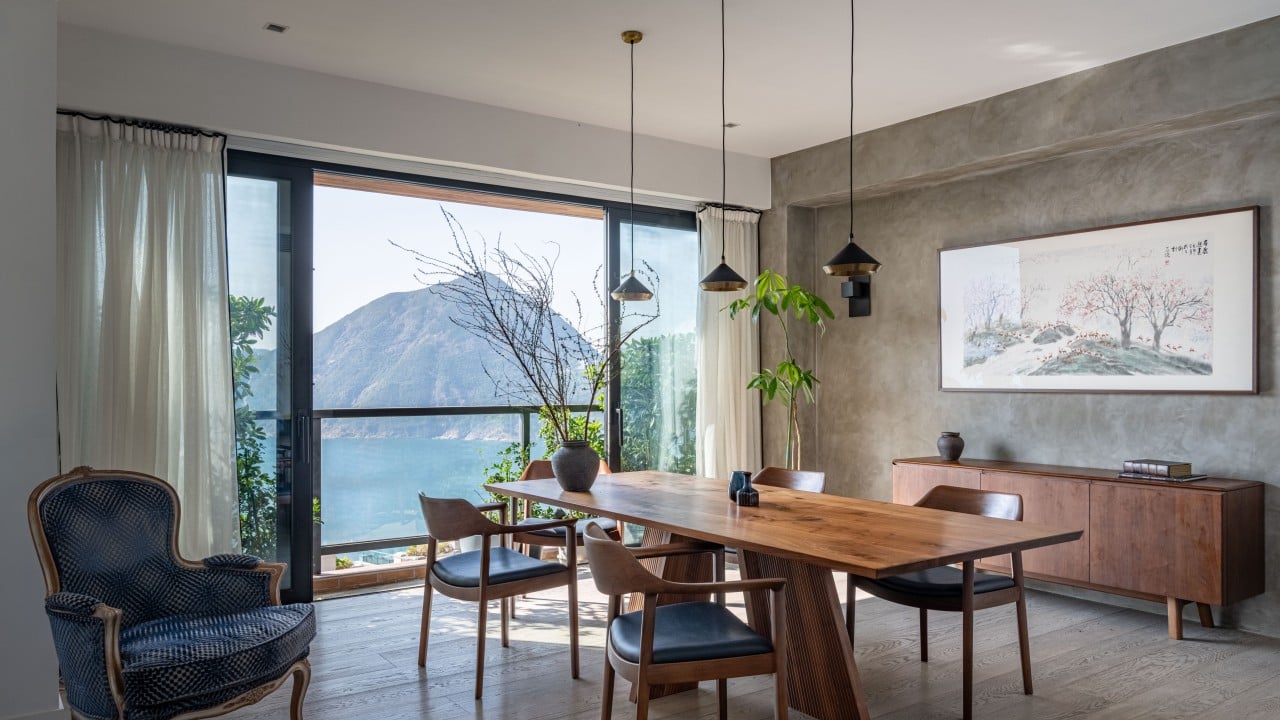
Across the high-density waterfronts of Hong Kong, floor area serves as the standard ledger of real estate value. Yet true luxury increasingly asserts itself through vertical volume that produces no commercial yield whatsoever. When Sarah and Jeff Lee hired designer Peggy Bels to alter their 1980s Repulse Bay duplex, the central structural move was neither an extension nor a partition. Restoring a 5.8-metre ceiling over a 3,100-square-foot (288-square-metre) footprint demonstrated how generational spatial privilege solidifies in the region.
Such domestic renovations rarely register in financial bulletins, though their social implications are concrete. Hong Kong hosted finance ministers from across the Apec forum in October 2026, with officials including China’s Lan debating digital financing, policy coordination, and macroeconomic resilience. While delegations deliberated regional monetary stability behind closed doors, the physical territory outside remained divided between cramped tenements occupied by wage earners and expansive residential envelopes preserved along the southern coast.
The Architecture of Insulation
Public accounts of the project indicate that the Lees occupied their Repulse Bay property for more than two decades before undertaking the full interior reconfiguration. Having retained a physical newspaper clipping across years until engaging Peggy Bels Interior Design, the couple, according to published reporting, sought an environment suited to frequent house guests and long evening dinner parties. Reviving the double-height ceiling brought natural light into the core of the dwelling and refocused internal movement toward the surrounding coastal views.
Architectural conservation offers a defensible rationale for unearthing structural headroom. Proponents of restorative residential design point out that removing clumsy mid-century dropped ceilings respects the original engineering of older buildings. A 5.8-metre void improves passive air circulation, distributes natural daylight, and reduces dependence on artificial lighting during peak heat. In residential buildings dating from the 1980s, private capital spent on reviving original spatial volume can be interpreted as careful stewardship rather than casual consumption.
Yet that architectural defense overlooks the material conditions that allow such preservation to take place. Dedicated entirely to a single household, an expanse of 288 square metres represents floor area that commonly houses dozens of people in working-class neighborhoods across the territory. Cleared overhead space functions as an acoustic buffer against municipal friction. It is, by definition, empty air that has been purchased, secured, and kept deliberately non-productive.
Capital and the Domestic Boundary
Every square metre removed from active floor division reflects financial insulation. Long-term owners who acquired prime coastal property decades ago hold an structural advantage over younger households burdened by high rents and subdivided units. Choosing to eliminate horizontal mezzanine utility in favor of an open 5.8-metre expanse suggests that maximizing usable rooms is entirely unnecessary once capital security has been established.
The dynamic extends beyond Repulse Bay. Early property acquisition across Asia’s financial hubs has permanently insulated established owners from the daily pressures confronting ordinary wage earners. Unencumbered domestic volume confirms that the most exclusive luxury in dense metropolises is not decoration, but the solvency required to leave vertical space entirely vacant.
Sources
Newsletter
Pacific Daily
A curated briefing from Thailand, Asia-Pacific and the world.