The Theatre of the Noodle Counter Crosses the Pacific
Marugame Udon's expansion into Richmond demonstrates why modern fast-casual dining relies on visible craft rather than hidden mechanisation.
SINGAPORE
Steam gathers along clear glass partitions where flour, water, and salt become physical choreography before customer eyes. A cook kneads dough on a visible wooden surface, hand-cutting thick strands before plunging them into boiling water. Across the counter, a queue forms with trays in hand, moving past vats and bubbling broth. Fast food historically concealed its kitchens to protect an illusion of effortless speed. Here, the spatial arrangement reverses that convention, turning basic food production into an open performance.
That deliberate exhibition belongs to Marugame Udon, an enterprise founded in Japan in the year 2000. Having built its domestic reputation as a handmade udon house, the company crossed borders to open its first location in Vancouver back in 2024. Long lines formed immediately as diners gathered for thick, chewy noodles prepared directly in view. Now, new signage in Richmond signals an upcoming second outpost in Metro Vancouver. The company recently posted notices confirming an updated tentative opening date, illustrating how the appetite for staged dining continues to spread across urban centers.
The Choreography of the Queue
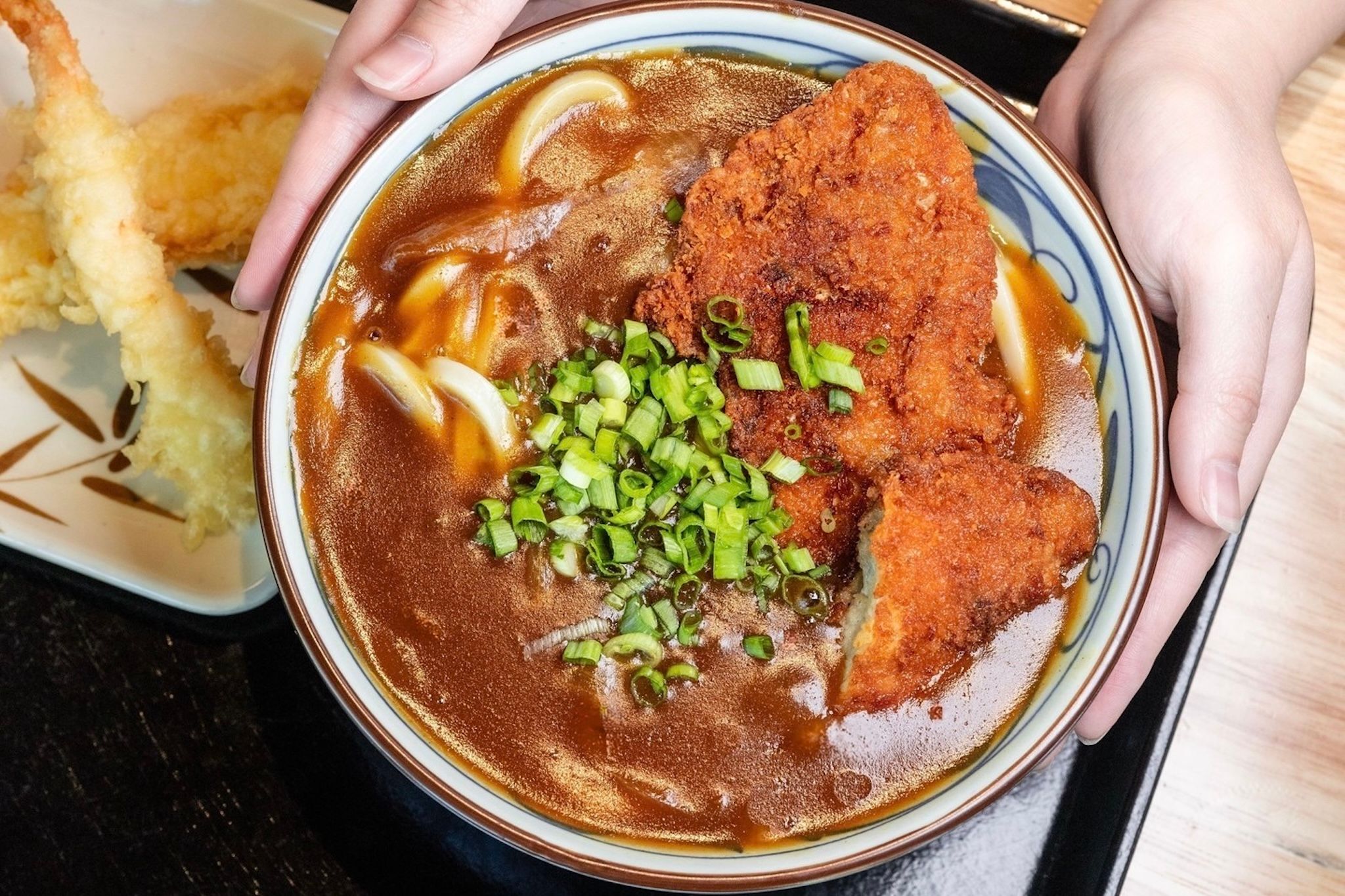
Which habit changed first? Western counter-service operations long trained diners to prioritize detachment, ordering from touchscreens and collecting uniform packages from unseen fryers. In contrast, this Japanese assembly line requires patrons to witness the physical friction of cooking. Diners track an order of Kake Udon or Nikutama Udon from dough slab to steaming bowl, selecting tempura piece by piece alongside dishes such as Chicken Katsu Curry Udon. The layout operates like an open workshop rather than a sanitized dispensary, drawing consumers into the process through sound, heat, and visual rhythm.
Skeptics might argue that this format is simply clever branding, a retail contrivance designed to distract from the mechanized reality of chain expansion. After all, commercial scaling inevitably flattens regional distinctions, regardless of how earnestly staff drop noodles into hot water. The brand is, ultimately, an international chain navigating mall retail environments like Richmond. Yet dismissing the setup as mere marketing ignores how urban spaces actually function. Metropolitan dining environments frequently isolate individuals behind digital transactions and frictionless counters. By placing manual preparation front and center, the theatre-like atmosphere offers a tactile counterweight to automated retail. Consumers do not line up merely for quick calories; they seek confirmation that someone is actually making the meal.
Metro Vancouver serves as an instructive testing ground for how Japanese dining traditions navigate North American retail corridors. Richmond provides an exacting audience that measures texture with technical precision. The appeal rests on what the brand describes as the Marugame texture, where each strand remains slightly firmer than ordinary varieties found elsewhere. Such specificity demonstrates that contemporary diners care less about generic convenience and far more about visible consistency of craft. Speed matters, but tangible human effort matters more when every other dining transaction has been relegated to an impersonal screen.
Watching noodles tumble into boiling water offers a quiet pause in the rush of suburban transit. Whether this second Metro Vancouver location sustains the momentum of the 2024 debut remains a question of operational discipline and sustained foot traffic. For now, the signs posted in Richmond promise another glass counter and another rising plume of steam. As commercial dining continues to migrate into delivery applications and automated pickups, the persistent appeal of visible boiling vats suggests an enduring public desire to see human hands at work.
Sources
Newsletter
Pacific Daily
A curated briefing from Thailand, Asia-Pacific and the world.