The Curatorial State and the Fragility of Public Memory
Executive interventions at Colombia's National Museum demonstrate how constitutional heritage protections falter when political mandates override institutional autonomy.
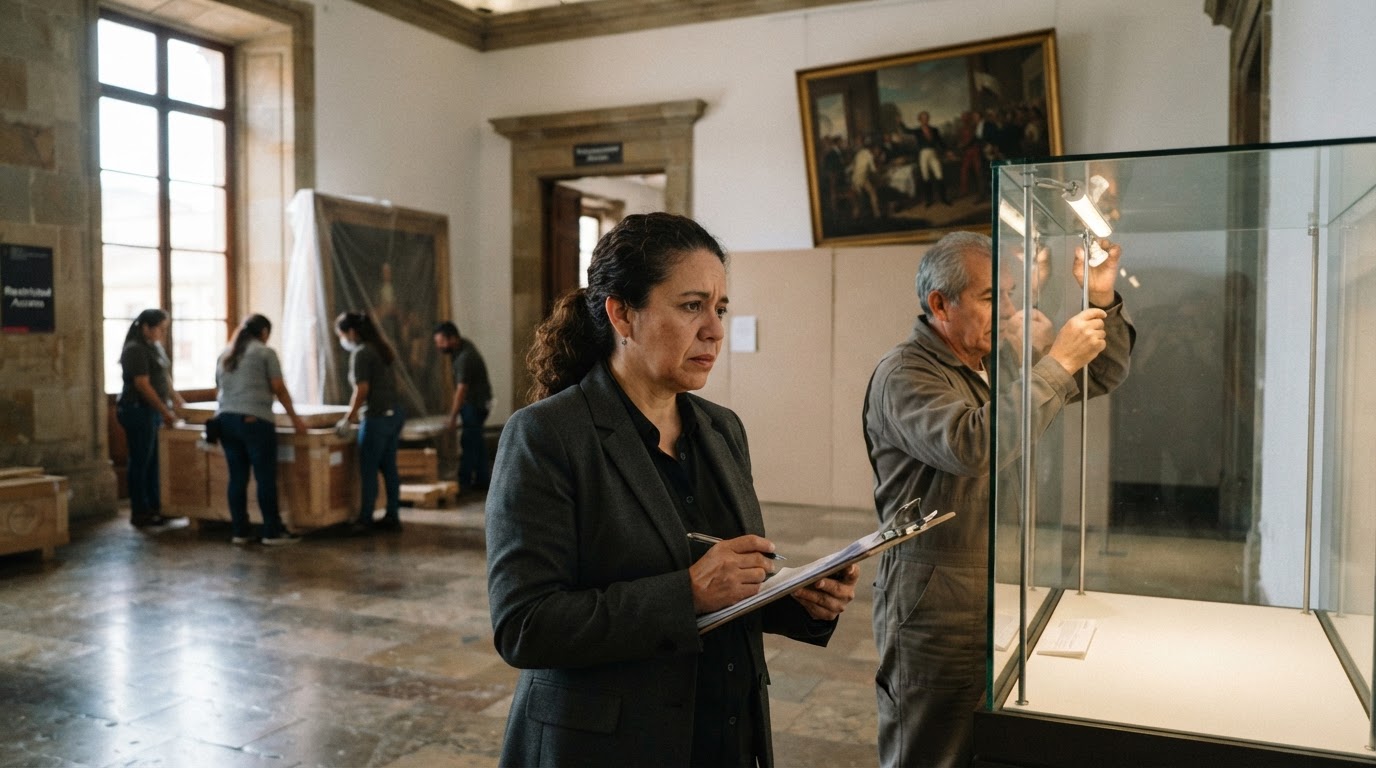
Museums endure because their galleries register continuity rather than the brief rhythms of electoral mandates. In Bogota, that foundational principle fractured in October 2026 when a judicial ruling ordered an immediate halt to scheduled exhibition revisions across the National Museum, intervening after executive directives began pulling established materials from public view. Specialist bodies warned that the sudden removals breached cultural protections explicitly guaranteed under the national constitution. Cultural commentators argued that the presidency had declared an overt culture war, leaving the institution as an early casualty of state overreach. The dispute is not merely an internal bureaucratic disagreement. It marks a fundamental dispute over who holds the authority to interpret a country's material record, testing whether civic galleries exist for the public or for the incumbent administration.
The clash exposes an old and uncomfortable question: what is truly preserved during political transitions, and what is quietly being replaced? Executive power rarely treats inherited collections with scholarly patience. Instead, political leaders across successive regimes view public repositories as convenient instruments for ideological projection, seeking to bend historical narratives toward contemporary political objectives. In 2015, when maritime expeditions identified the sunken San Jose galleon, official statements celebrated historical cargo valued at USD 3000000000. That announcement framed the salvage as a sovereign triumph, establishing a clear precedent where state authorities subordinated curatorial balance to nationalistic claims. Historical artifacts became trophies of official resolve rather than complex testaments to colonial entanglement.
Sovereignty and the Archive
Courts can intervene. Yet an injunction cannot compel an administration to value historical nuance.
A judicial decree creates an immediate legal standstill, leaving plinths and vitrines suspended between professional planning and ideological decree. While magistrates can prohibit unauthorized alterations, statutory enforcement remains an imperfect shield against persistent executive pressure. When ministerial offices circumvent museum directors, the damage extends directly into the daily practice of cultural preservation. Conservators and researchers find their professional standards subordinated to political expediency, forced to defend historical exhibits against political interference. Constitutional articles that protect cultural heritage were drafted precisely to prevent such political encroachments, yet their protective utility falters when political leaders view institutional autonomy as an obstacle to their agenda.
Civic institutions require uncompromised legitimacy if they are to sustain public confidence through severe disruptions. Western Colombia experienced this reality in August 2026, when a catastrophic earthquake struck the region. Initial reports recorded more than 100 fatalities, followed by updated counts of 169, before official tallies ultimately exceeded 250 dead. In the aftermath of sudden trauma, societies look to civic structures for continuity, stability, and reliable testimony. When governments politicize cultural halls during ordinary times, they diminish the institutional trust necessary to unify fractured communities during unexpected emergencies.
Judicial decrees can forbid the physical removal of artifacts, yet statutory provisions cannot compel an ideological executive to respect professional scholarship.
Fractured Memory
Institutional memory cannot be rebuilt as quickly as an exhibition hall can be cleared. Earlier precedents, such as the exhibitions documented in 2007 when a museum honored Hispanic culture, demonstrated that cultural prestige develops when public spaces reflect historical depth rather than executive conformity. Heritage stewardship requires an administrative distance that allows difficult histories to be examined without fear of political retaliation. Without that autonomy, the public record is reduced to whatever an incumbent administration finds flattering.
The struggle at the National Museum reflects a wider Pacific Rim challenge, where governments increasingly treat historical spaces as platforms for short-term political combat. When political custodians decide which artifacts validate their tenure and which must be hidden, the museum ceases to be a civic trust. The physical absence of a painting or document leaves a lasting mark. It signals to citizens that historical truth is being renegotiated by decree, leaving civic life poorer, more fractured, and permanently estranged from its genuine past.
Sources
Newsletter
Pacific Daily
A curated briefing from Thailand, Asia-Pacific and the world.