Gathering at the Table: A Quiet Shift in Public Solidarity
The collective support for a Singaporean artist reveals underlying currents of cultural memory and contemporary communication.
SINGAPORE
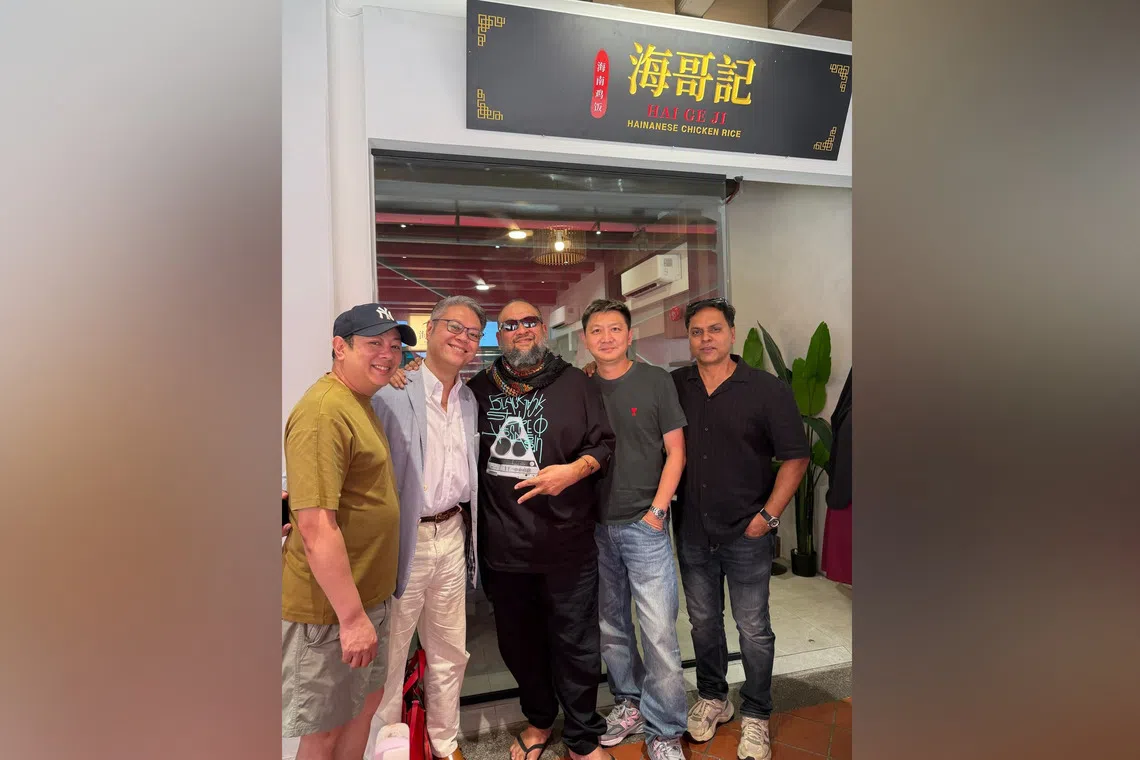
The reunion of actors from the 1996 local military comedy, "Army Daze," at rapper Sheikh Haikel’s restaurant, following his Stage 4 colon cancer announcement on September 4, 2026, presents more than a simple gathering. It is an act of communal recognition, a quiet reflection of how cultural figures are supported, and how public solidarity manifests in the digital age. The Straits Times Life reported this event on September 22, 2026, noting Edward Yong and other actors shared photographs and messages, praising Haikel and thanking his wife.
Historically, public figures, particularly artists, have relied on established institutions or direct appeals in times of adversity. The current scenario, however, unfolds differently. Sheikh Haikel, identified as a Singapore rap trailblazer by The Straits Times in 2021, chose an Instagram video to announce his health status. This choice of platform suggests a direct conduit to his audience, bypassing traditional media intermediaries for initial dissemination. The subsequent gathering at his restaurant, and the sharing of this moment on social media by fellow actors, transforms a private struggle into a publicly observed act of kinship and support.
This pattern reflects a subtle shift in how collective memory and artistic legacies are maintained. The "Army Daze" reunion, decades after its initial release, leverages a shared cultural reference point that resonates across generations in Singapore. The film itself is a preserved artifact of a specific period in the nation's cultural narrative. The actors, by appearing together in support of Haikel, reactivate this communal memory, drawing on the goodwill associated with their collective past. This is not a celebratory launch or a formal award ceremony, but an organic convergence around a personal crisis, amplified through personal digital channels.
One might argue that such events are merely a modern extension of longstanding community support. However, the mechanism of its visibility—the instantaneous sharing across platforms, the direct engagement from public figures—suggests a more immediate and horizontally organized form of solidarity. It allows for a diffuse network of individuals, from playwright Michael Chiang to other unnamed celebrities, to express their support, creating a tapestry of recognition that is both intimate and broadly distributed.
The consequence of this shift is a redefinition of public support. It moves from formalized, often mediated, expressions to a more relational and digitally disseminated form. The restaurant itself, a physical space where patrons can offer indirect support through their business, becomes another layer in this contemporary form of communal care. What is preserved here is the enduring human impulse for connection and mutual aid, while the quiet replacement is the traditional, hierarchical structure through which such narratives of support typically unfolded. This episode quietly illustrates how a deeply personal challenge can become a public affirmation of shared cultural heritage, mediated by the very platforms that shape contemporary social interaction.
The gathering of actors, decades after their shared work, reactivates a communal memory, drawing on goodwill associated with their collective past.
Sources
Newsletter
Pacific Daily
A curated briefing from Thailand, Asia-Pacific and the world.