The Silent Yield: Soil, Yam Bean, and the Memory of Cultivation
The yam bean's struggle in compacted earth offers a quiet reflection on agricultural knowledge and its continuity.
SINGAPORE
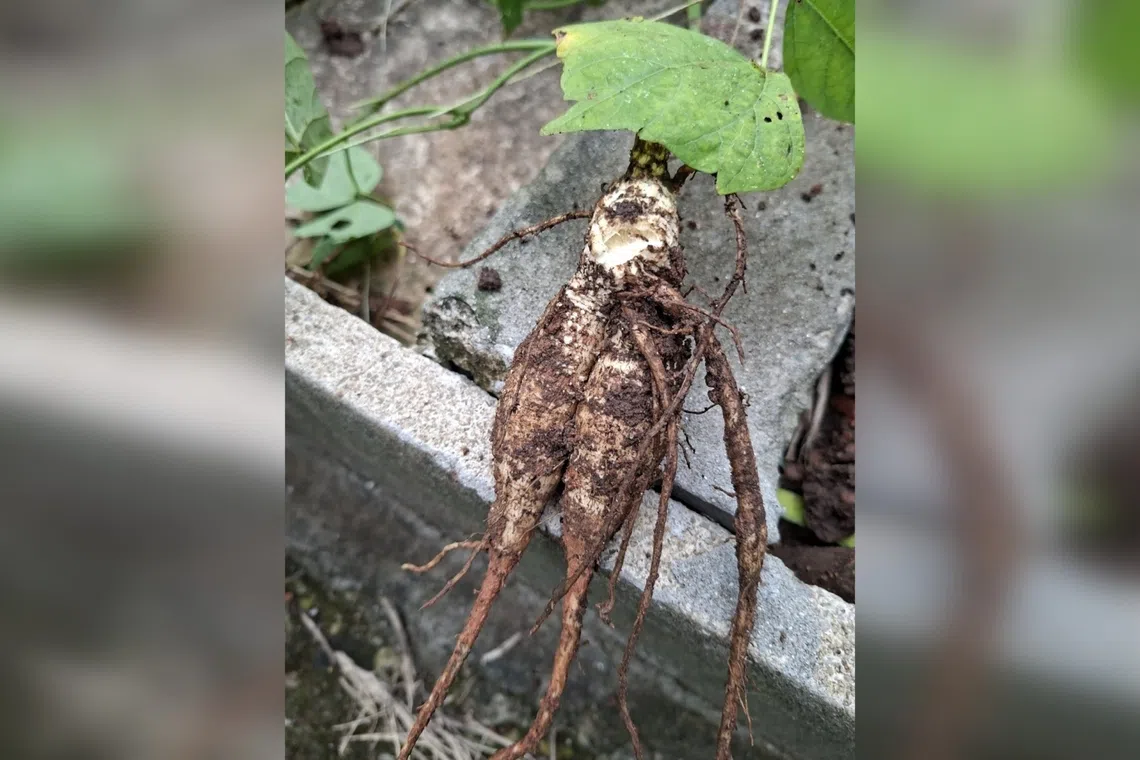
The yam bean, botanically identified as Pachyrhizus erosus, sometimes mistaken for a turnip, presents a specific challenge to cultivators: its edible underground tuber may not develop ideally when planted in compacted soil that lacks organic matter. This observation, derived from gardening tips, points to a fundamental interaction between plant and environment.
The act of cultivation, in many parts of Asia, has long hinged on an intimate understanding of local conditions. The yam bean, with its requirements for well-structured, organic-rich soil, embodies a dependency on these specific conditions. When its tubers appear abnormal, as described in one instance where two plants were grown about 50cm apart, with leaves appearing normal despite the irregular tubers, it suggests a disruption not in the visible canopy but in the hidden mechanics of growth beneath the surface. The proposed solution—improving soil structure with mature compost—is a practice rooted in generations of agricultural insight, a quiet acknowledgment of the earth’s needs.
This interaction is more than a horticultural problem; it signals a potential shift in how agricultural knowledge is applied or, perhaps, overlooked. Historically, the conditioning of soil through natural and sustained practices was integral to maximizing yield and sustaining land. The call to add organic matter like mature compost is not merely a technical fix; it is a suggestion to return to methods that prioritize soil health, methods that might have once been intuitive knowledge for local cultivators.
What is preserved in this specific botanical recommendation, then, is a piece of agricultural wisdom: the necessity of observing the ground itself, not just the foliage. What might be quietly replaced, or at least diminished, is the common understanding of soil as a living system requiring ongoing nourishment and careful management. The ease with which a critical element like soil quality can be overlooked for a plant whose primary value lies in its underground part suggests a detachment from the holistic view of planting.
The experience of a gardener whose yam bean tubers do not develop ideally, even when the visible plant appears healthy, prompts a consideration of the deeper, often unseen, components of agricultural success. This specific advice—to avoid compacted, clay-rich soil and to amend it with organic material—reflects an enduring principle. It suggests that even in modern agricultural contexts, the foundational insights into plant needs, passed down through observation and practice, remain relevant. For Thailand and the broader Asia-Pacific region, where diverse agricultural practices have shaped landscapes for centuries, this interaction with the yam bean and its subterranean struggle offers a small, precise window into the larger dialogue between traditional knowledge and contemporary cultivation challenges.
The necessity of specific soil conditions for the yam bean’s proper development highlights that some fundamental requirements of nature persist, regardless of other interventions. The observation of abnormal tubers, despite normal leaves, speaks to a hidden consequence of an unsuitable environment. It is a reminder that the health of what grows beneath the surface can often dictate the true harvest, a lesson as old as agriculture itself.
Sources
Newsletter
Pacific Daily
A curated briefing from Thailand, Asia-Pacific and the world.