The enduring appeal of 'ancient wisdom' in modern Asia
The consistent framing of tradition as 'evolution' overlooks a more fundamental tension.
SINGAPORE
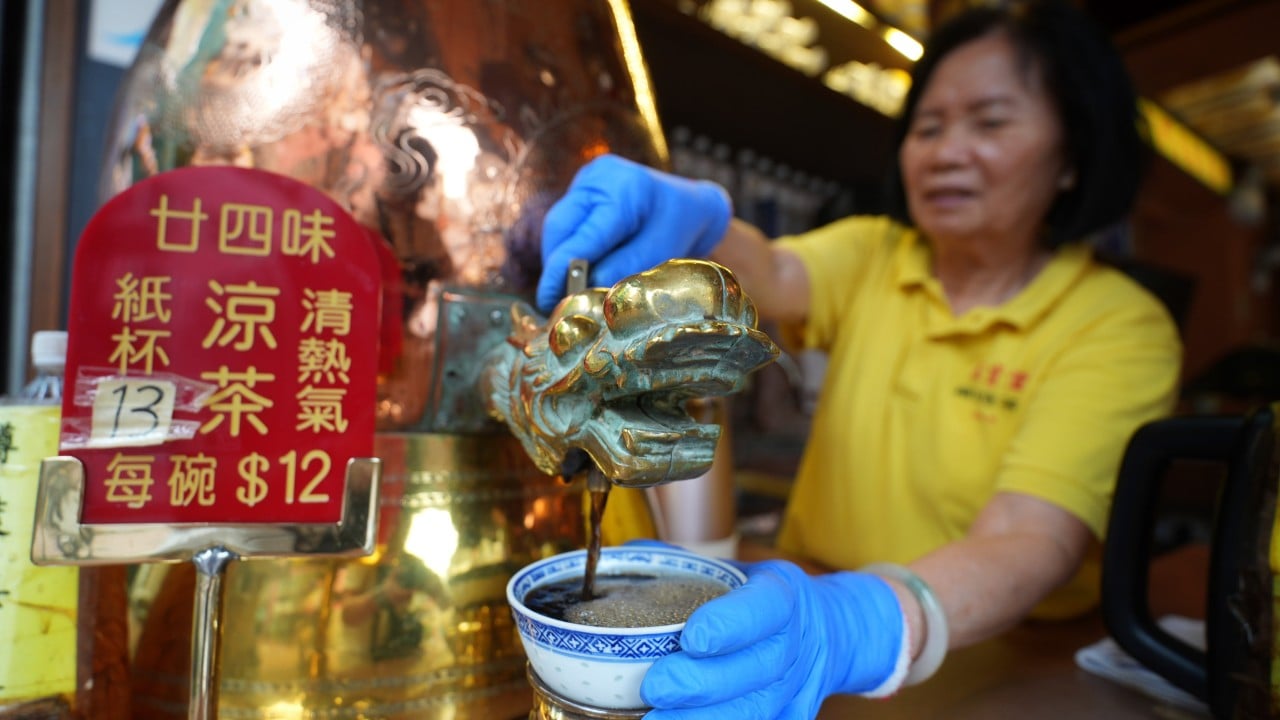
The language surrounding traditional practices in Asia, particularly in recent years, reveals a consistent pattern. From Hong Kong's traditional Chinese medicine (TCM) sector, described in a September 21, 2026, report by the SCMP as undergoing an 'evolution,' to Myanmar's strategic promotion of 'ancient temples and Buddhist pilgrimage sites' to bolster tourism, as noted by The Japan Times, there is a clear emphasis on the old adapting to the new. This rhetorical framing, however, often obscures the deeper, sometimes uncomfortable, dynamics at play.
SCMP's characterization of TCM in Hong Kong as 'ancient wisdom, modern lives' suggests a seamless integration. The term 'evolution' implies a natural progression, a refinement rather than a potential friction. Yet, the persistent need to explicitly pair 'ancient' with 'modern' — and to market this pairing as an 'evolution' — implies that the connection is not always self-evident or universally accepted. If the wisdom were simply integrated, the constant articulation of its modernity would be superfluous. This signals a latent negotiation, an ongoing effort to justify the relevance of tradition in a contemporary context.
This phenomenon extends beyond health. Reuters reported on June 8, 2024, that 'South Korea's young shamans revive ancient tradition with social media.' Here, the tool of modernity, social media, is harnessed to 'revive' an 'ancient tradition.' This is not mere evolution; it is a conscious intervention, a strategic repurposing. The act of revival often indicates a decline or a challenge to relevance that necessitates active measures, rather than an organic, unforced adaptation. The New York Times discussed scientists expanding the 'ancient range' of a human relative using a jawbone, placing 'ancient' as a subject of scientific inquiry, distinct from its contemporary application.
The underlying tension is not between tradition and progress, but within tradition itself: how does something 'ancient' maintain its intrinsic value without becoming a mere relic, or, worse, a commodity? When Myanmar 'bets' on ancient sites for tourism, it acknowledges an economic utility. This instrumentalization risks reducing the 'wisdom' to a marketable asset, shifting its primary function from spiritual or cultural sustenance to economic leverage. The 'evolution' narrative, while positive, can gloss over the hard questions of authenticity, commercialization, and the potential for dilution when ancient practices are refitted for modern consumption or economic gain.
The emphasis on 'evolution' also carries an implicit concession to modern frameworks. It suggests that tradition must demonstrate its adaptability, its utility, its 'modernity,' to survive. What is often unstated is whether modernity is equally pressured to adapt to tradition. The fact that the narrative so consistently runs one way — ancient to modern — rather than as a mutual exchange, reflects a power imbalance. The 'modern lives' are implicitly the dominant frame, to which 'ancient wisdom' must adjust.
While this 'evolution' undoubtedly generates economic activity and preserves certain cultural forms, it also raises questions about what aspects of the 'ancient' are prioritized and why. Is it the philosophical depth, the communal ritual, or the aesthetic appeal that is being carried forward? And what is left behind? The need to consistently classify the process as 'evolution' suggests an ongoing negotiation, a constant internal and external validation that the 'ancient' is still worthwhile. This is not a resolved harmony, but a persistent tension, an argument that remains to be settled.
Sources
Newsletter
Pacific Daily
A curated briefing from Thailand, Asia-Pacific and the world.