A Diplomatic Staging Shifted from Burlington House to Hong Kong
Revisiting the 1935 London Chinese art exhibition inside an auction house showroom traces how geopolitical presentation evolved into elite market stewardship.
HONG KONG
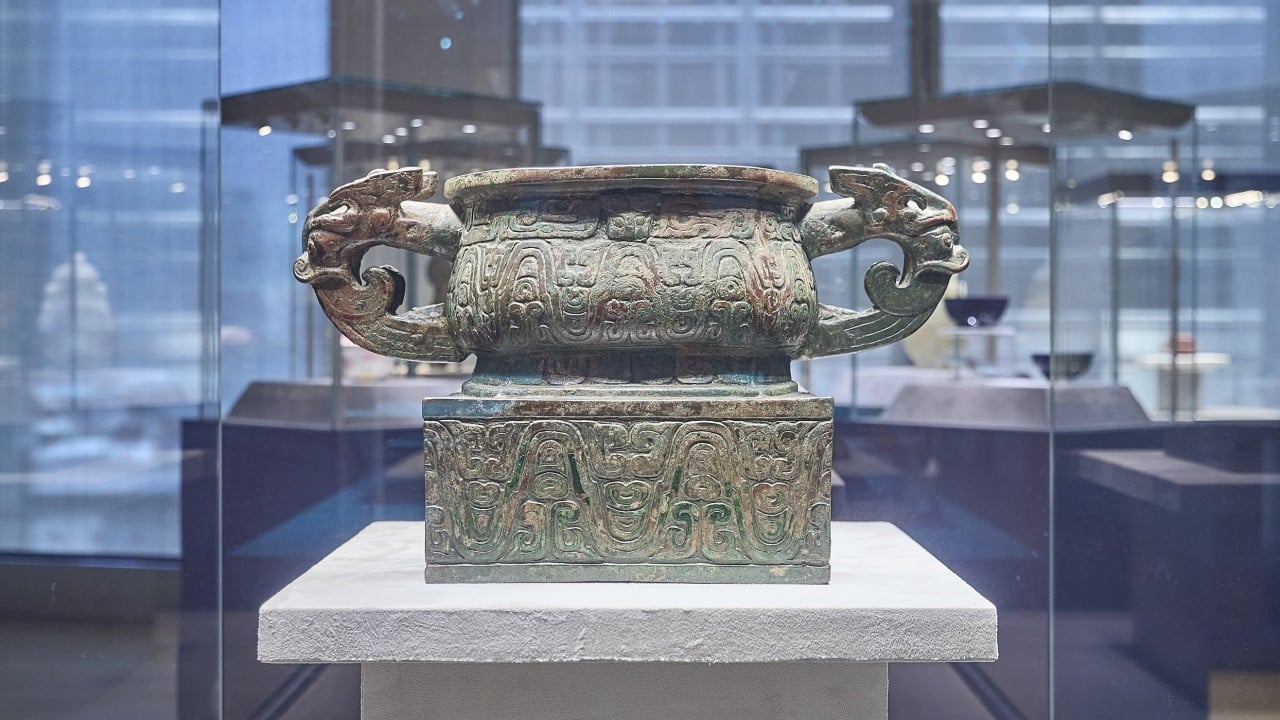
Galleries arranged for commercial viewing carry a distinct spatial cadence compared to national halls. Inside Christie’s Asia-Pacific headquarters in Hong Kong, fifteen objects sit assembled under glass, accompanied by a bilingual six-volume publication. The presentation, titled The Royal Academy International Exhibition of Chinese Art 1935-36: A Commemorative Tribute, runs until November 6. Nine decades prior, the parent assembly occupied London’s Burlington House, an undertaking that established a landmark chapter in modern cultural diplomacy.
That 1935 gathering represented an explicit state endeavor. China sent historic treasures overseas, attempting to project cultural sovereignty and international stature to Western capitals on the eve of global conflict. London received the works within the civic weight of the Royal Academy. The historical record demonstrates that the primary objective was political persuasion through connoisseurship, asking foreign powers to recognise a modern sovereign state through the physical prestige of its past.
Now, the venue has changed.
Shifting Civic Gravity to Market Floors
What appeared in London as an exercise in sovereign diplomacy resurfaces within the streamlined interior of a private secondary market firm. The physical scale has narrowed from an encyclopedic survey to fifteen reunited pieces, documented alongside contributions involving dealers such as Giuseppe and Daniel Eskenazi. This contraction illustrates what appears to be a decisive migration of cultural authority across the Asia-Pacific region.
The transition of historical artifacts from statecraft exhibitions into private auction showrooms charts a decisive relocation of regional cultural custody.
Private auction houses across Hong Kong frequently operate as civic proxy spaces. Where twentieth-century diplomacy relied on civic academies and government ministries to stage national identity, the contemporary landscape often leaves historical narratives to commercial tastemakers. The public square of international statecraft has yielded ground to corporate viewing floors, where private balance sheets supply the academic cataloging and physical security once underwritten by governments.
Defenders of this corporate staging observe that commercial firms command resources capable of achieving what public institutions often struggle to coordinate across borders. Bringing dispersed historic pieces together alongside a bilingual study requires collector trust alongside significant private capital. Christie’s Asia-Pacific commands the reach to assemble dispersed loans and produce six-volume publications that might otherwise languish within underfunded municipal archives.
The Commercial Capture of Sovereign Memory
Yet this institutional substitution incurs measurable interpretive costs. When public diplomatic milestones are remembered primarily through commercial platforms, the civic meaning of the artifacts narrows. Burlington House presented historical treasures to European publics as evidence of Chinese survival. Hong Kong’s tribute, while scholarly in its documentation, places those surviving objects inside a setting structured around private acquisition and market connoisseurship.
The intended audience shifts accordingly. In 1935, organizers designed the exhibition to influence international public sentiment and diplomatic standing. In Hong Kong, the presentation addresses private collectors, institutional curators, and specialists who track the autumn sales calendar. Cultural memory becomes aligned with market circulation, where the survival of historical diplomacy functions as provenance that confirms commercial pedigree.
Viewing these fifteen objects ninety-one years after Burlington House suggests how the custody of Asian heritage has decentralized. State diplomacy once sought validation in European academies; today, the market frames that memory within regional commercial capitals. The objects preserve their physical composure across both settings. What has altered entirely is the surrounding architecture, where sovereign statecraft has been reinterpreted as elite connoisseurship.
Sources
Newsletter
Pacific Daily
A curated briefing from Thailand, Asia-Pacific and the world.