The Illusion of Bypassing the Wholesale Rack
Laraine Yu positions Mankind on Stage as performance art, but operating outside retail distribution tests the economics of red-carpet exposure.
SINGAPORE
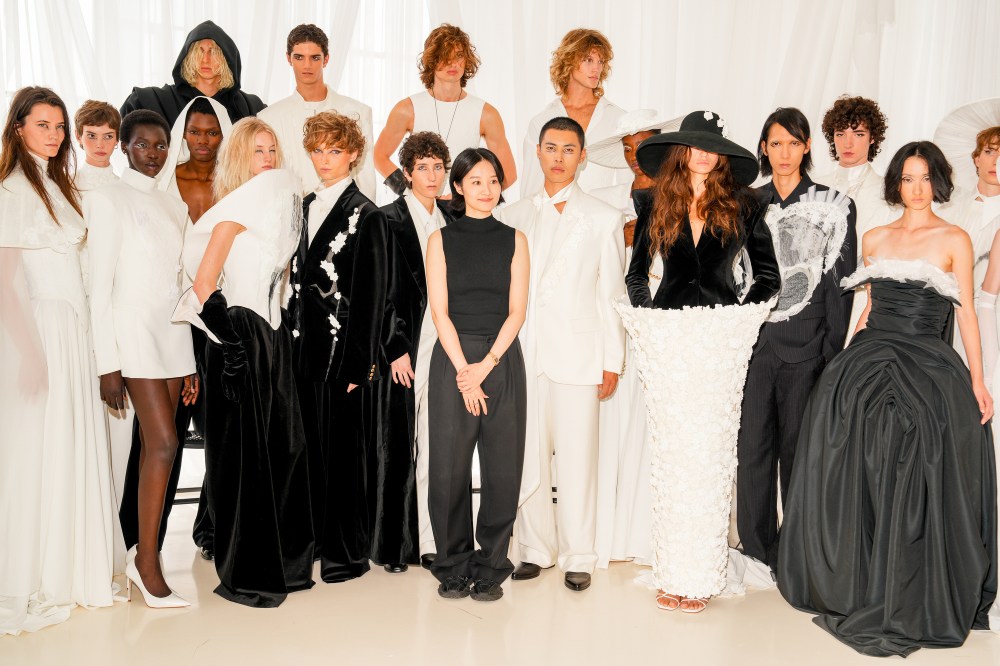
Fashion labels conventionally measure viability through wholesale distribution, inventory turnover, and commercial floor space. When a creator steps outside that circuit deliberately, the decision presents itself as an artistic refusal. Laraine Yu, previously an editor at Vogue China and an established stylist, introduced her label Mankind on Stage during New York Fashion Week without seeking retail buyers. Her calculation shifts the functional purpose of high-end garments away from private wardrobes and directly toward concert spotlights and red-carpet appearances.
The mechanics of this choice reflect an acute understanding of modern exposure. Yu conceived her Spring 2027 presentation around garments treated with photochromic paint over molded plaster lilies and peonies, engineering pieces that shift from stark white to delicate pastel tones under direct lighting. The visual payoff belongs naturally to flashbulbs and stage production rather than the static lighting of a department store rack. For an industry where digital visibility frequently substitutes for immediate cash flow, positioning an entire brand strictly as spectacle appears consistent with modern celebrity dressing.
Yet the structural tension of this model lies in cash conversion. Bypassing stockists eliminates inventory overhead, showroom fees, and markdown liabilities, allowing an independent creator to treat garment construction as sculptural experimentation. Celebrity dressing can generate measurable brand heat across mainland China and the wider region, establishing cultural influence faster than standard seasonal collections. A stylist who understands VIP dressing possesses existing channels to place garments directly on public figures, removing intermediate agency costs that typically burden emerging houses.
The Real Limits of Spotlight Exposure
The counterargument insists that pure stage visibility builds sufficient leverage to monetize downstream through private commissions or advisory contracts. If high-profile talent wears a piece under stadium lights, the resulting attention can sustain bespoke operations without commercial distribution agreements. Furthermore, working entirely outside commercial retail calendars protects artisanal fabrication techniques, such as hand-applied photochromic coatings, from the strict pricing compression demanded by wholesale partners.
Light transforms the garment, but stage visibility alone cannot resolve the long-term balance sheet.
That dynamic, however, overlooks the persistent financial requirements of independent production. Garments fabricated from molded plaster and chemical coatings represent high development costs with zero volume return. Red-carpet placements rarely involve direct procurement payments; luxury houses traditionally subsidize dressing programs through high-margin leather goods, eyewear licenses, and commercial ready-to-wear lines. When an enterprise excludes retail distribution from its corporate design, it forfeits the primary cash engine that finances sustained fabrication.
Celebrity interest is notoriously volatile. Talent stylists rotate through conceptual garments according to media cycles, rarely demonstrating lasting institutional loyalty to an unbacked independent label. Mankind on Stage relies entirely on cultural velocity while absorbing the real material expenditures of couture-level development.
Yu has demonstrated that visual engineering can capture attention during New York Fashion Week without submitting to retail buyers. What remains entirely unresolved is how an enterprise structured solely around performance spotlights covers the capital required to keep producing when the flashes stop.
Sources
Newsletter
Pacific Daily
A curated briefing from Thailand, Asia-Pacific and the world.