BYD's Wagon Strategy Marks a Cultural Shift in Asia-Pacific Commuting
The arrival of the Seal 6 Touring challenges established automotive norms, reflecting a subtle, yet significant, evolution in consumer choice.
SINGAPORE
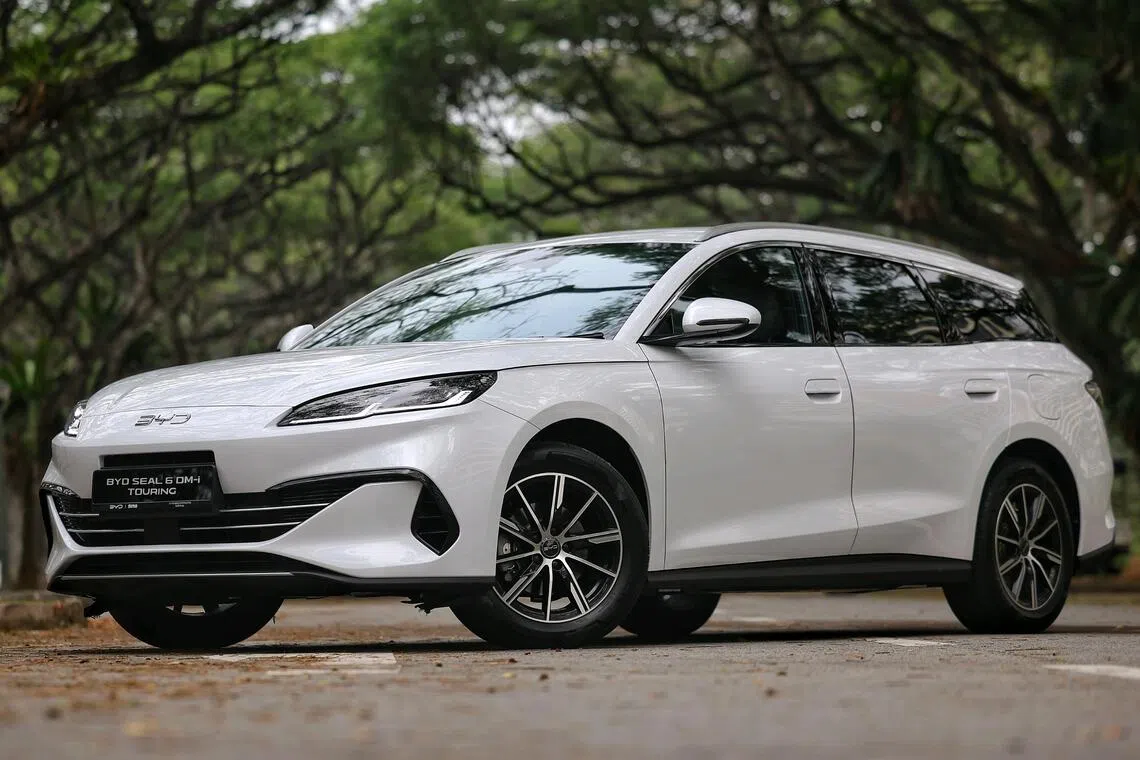
A specific, verifiable scene begins to play out on Singapore’s roads. The BYD Seal 6 DM-i Touring, a long-roof vehicle, now takes up space where few mass-market estate cars have been seen for years. Its entry effectively doubles the number of such cars available for sale today, according to The Straits Times Life on September 18, 2026. This is not simply a new model; it marks a distinct intervention in a segment largely vacated by traditional players like Volkswagen and Opel more than five years ago.
The question isn’t merely about market share, but what this vehicle's presence signifies about evolving habits. Previously, the Honda Shuttle, a parallel-imported wagon, held sway. Its dominance reflected a practical choice, often for families or small businesses prioritizing utility. The Seal 6 DM-i Touring, described as looking "smarter than the four-door saloon version" by The Straits Times Life, suggests a contemporary reinterpretation of this utility, blending it with design considerations.
BYD's broader strategy, as described by The Straits Times Life, involves "plugging every conceivable market niche until rivals surrender." This approach extends beyond Singapore. In South Korea, for example, BYD plans to double its sales network, as reported by the South China Morning Post on April 3, 2025, posing a direct challenge to established brands like Hyundai and Kia. This expansion comes despite a report from The Korea Herald in late 2024 stating BYD would set no sales target in its Korean debut year, indicating a long-term, patient market penetration strategy.
The re-emergence of the estate car, particularly a plug-in hybrid version, speaks to a convergence of practical need and evolving environmental consciousness. While electric vehicles often capture headlines, the hybrid wagon offers a transitional solution, acknowledging infrastructure limitations while still addressing fuel efficiency. The consumer behavior shifting towards such vehicles, especially in urbanized regions of Asia-Pacific, points to a measured adoption of new automotive technologies.
However, attributing this shift solely to consumer preference for wagons overlooks the concentrated effort by BYD. They are not merely filling a gap; they are actively shaping the demand by introducing new options. The perceived need for a long-roof vehicle, a form factor that had largely faded from mass-market offerings, is now being subtly cultivated through its renewed availability and modern design. The question remains whether this is a genuine resurgence of a vehicle type or a manufactured demand, expertly crafted by a company intent on occupying every available niche.
This introduction of the Seal 6 DM-i Touring therefore represents more than an automotive launch. It is a subtle indicator of how urban mobility and consumer values are being reshaped, not through dramatic revolution, but by the steady introduction of carefully designed alternatives into spaces previously considered dormant or niche. The cars appearing on the road are simply the most visible manifestation of these underlying shifts.
Sources
Newsletter
Pacific Daily
A curated briefing from Thailand, Asia-Pacific and the world.