A Grocery Aisle and the Slow Standardization of Cultural Memory
The retail expansion of Vallarta Supermarkets reveals how diaspora food spaces evolve from defensive cultural enclaves into corporate regional systems
Retail food spaces establish their legitimacy through repetition long before they ever achieve scale.
When an immigrant culinary tradition first takes root inside an unfamiliar municipal grid, the earliest storefronts function primarily as protective shelters for collective memory. Shelves do not merely stock dried chiles or specific cuts of meat. Rather, they preserve an everyday sensory vernacular against the homogenizing pressures of a wider commercial landscape. That domestic preservation changes character entirely once the distribution network grows broad enough to open its 66th outlet.
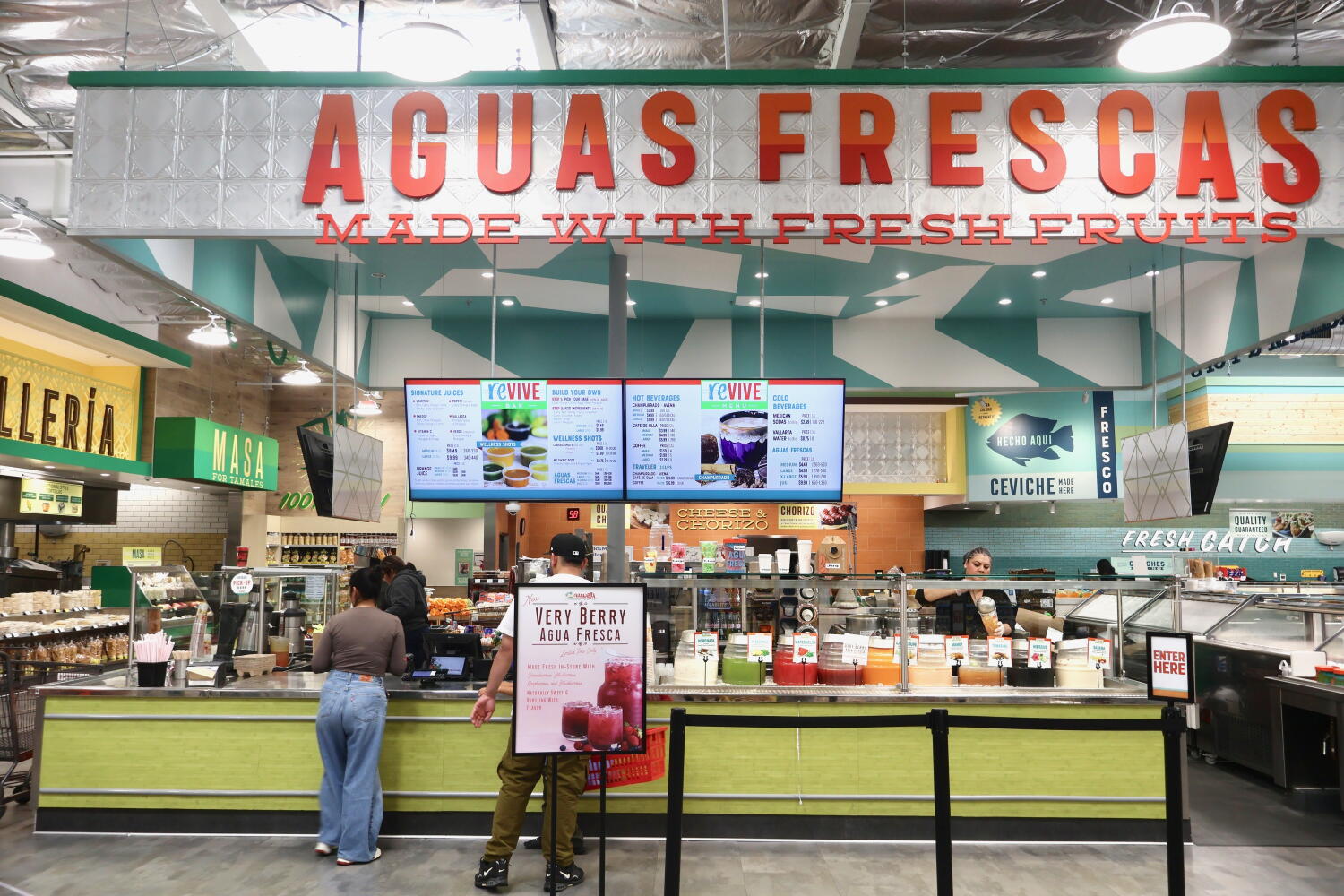
The Latin American grocery chain Vallarta Supermarkets marked that exact threshold on Wednesday with the opening of its newest location in Duarte. Beginning in 1985, the Southern Californian enterprise built its presence by catering directly to regional immigrant neighborhoods, creating expansive commercial halls where customary foodways remained central rather than decorative. At a separate site in Carson, employees serve aguas frescas and ice cream behind dedicated counters, maintaining physical stations designed around communal assembly and direct transaction. Yet the firm now maintains a presence in Arizona, and a spokesperson confirmed that the enterprise is eyeing expansion into other states.
The Architecture of Replicated Heritage
Scale inevitably alters what an ethnic grocer preserves and what it quietly replaces.
In its earliest communal iterations, diasporic trade depends on intimate supplier networks, uncodified domestic knowledge, and personal obligations between clerks and patrons. These relationships mirror the traditional market systems found across the Pacific Rim, from the urban wet markets of Southeast Asia to the historic trade corridors of Latin America. In both settings, grocery shopping operates less as an isolated transaction than as an act of shared cultural maintenance conducted through negotiation and familiar sight.
Corporate expansion, however, introduces mechanical consistency. When a retail banner multiplies across dozens of municipalities and crosses state lines into Arizona, the organic idiosyncrasies of local procurement must yield to computerized inventory cycles and standardized logistical lanes. The external cultural signifiers remain intact—the agua fresca dispenser still turns, and the prepared food counters still draw queues—yet the underlying social architecture transforms into corporate infrastructure. What begins as community survival gradually reorganizes itself as efficient commercial reproduction.
The organic idiosyncrasies of local procurement must yield to computerized inventory cycles.
Diaspora Trade Across the Pacific Basin
This retail trajectory carries direct analytical resonance for observers charting consumer shifts across the Pacific Rim. Throughout modern migration history, diaspora populations in California and beyond have sustained their cultural footing through independent grocers that serve as commercial anchors. Whether Latin American grocers navigating the American interior or Asian supermarket chains replicating wholesale systems abroad, the transition toward a multi-state footprint creates an unavoidable paradox. Growth brings unprecedented economic visibility and political weight to immigrant communities, but it can also sanitize the granular, vernacular quirks that made those environments protective in the first place.
The commercial ambition expressed in Duarte illustrates that immigrant gastronomy is no longer an informal secondary market within the United States. It constitutes an institutional force capable of asserting its own geography across state borders. What remains uncertain is whether the intimate cultural texture that nourished the original customer base can survive intact inside a sprawling corporate apparatus. When a diaspora food space achieves continental scale, the goods on the shelf may well taste identical, but the communal shelter that originally gathered around them has quietly become an enterprise of logistics.
Sources
Newsletter
Pacific Daily
A curated briefing from Thailand, Asia-Pacific and the world.