The Civic Rhetoric of Elevation in a Subsiding Basin
Clara Brugada frames Mexico City through social renewal while geological subsidence tests municipal ambition
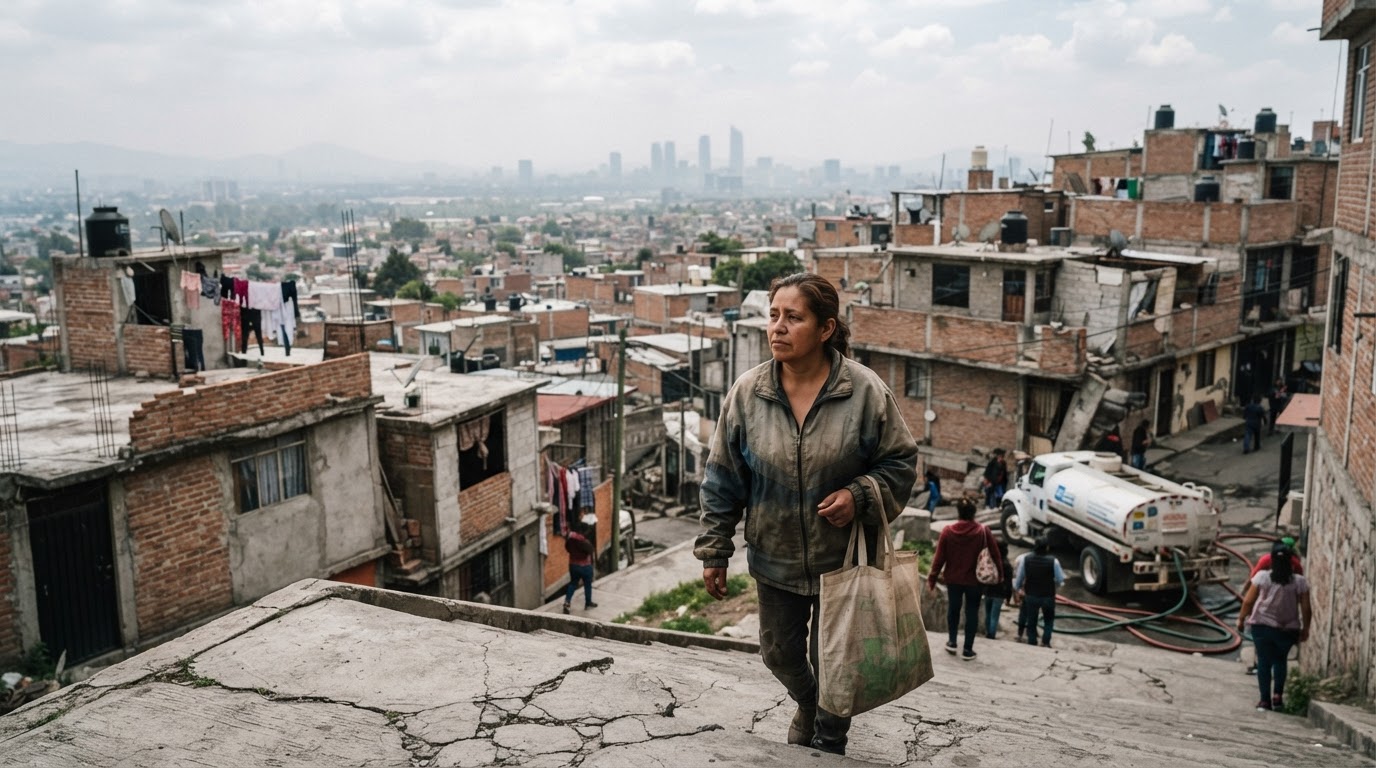
Municipal halls often cultivate an architecture of permanence, even when the ground beneath them tells a different story. In Mexico City, civic ceremonies unfold against an uneven basin floor where stone flagstones slowly tilt, recording the gradual compacting of an ancient lakebed. Earlier this month, Mayor Clara Brugada delivered her second annual address since she assumed office on Oct. 7, 2024. Her presentation framed civic progress through the conceptual banner of utopias, pointing to administrative gains in healthcare delivery and municipal infrastructure. Beneath that expansive vocabulary lies an inescapable material paradox: the capital continues to sink, even as local governance attempts to curb fugitive methane emissions.
Civic administrations across the Pacific Rim repeatedly encounter this friction between institutional optimism and geological vulnerability. Mayors understandably gravitate toward public projects that yield quick social dividends, such as community clinics or neighborhood policing. Such interventions provide legible markers of administrative competence. Yet the physical basin of CDMX rarely bends to policy cycles, moving instead on an ecological timeline that defies standard political calendars.
The Gravity of Infrastructure
Brugada anchored her public balance sheet in social welfare, seeking to remedy disparities that have long divided the metropolis. Directing municipal funds into community healthcare and neighborhood safety delivers immediate relief to dense districts where public services have historically failed to match population growth. For families navigating water shortages or precarious streets, these municipal investments represent tangible progress.
Simultaneously, the physical ground demands an unyielding engineering response. Ongoing research highlights the capital's sinking problem, which places constant structural tension across subterranean drainage networks and building foundations. Municipal officials are pursuing targeted efforts to reduce methane emissions from waste sites, attempting to tame another environmental liability. Addressing subsurface subsidence and atmospheric venting requires capital expenditure that remains largely hidden from view. A reinforced drainage conduit or a sealed methane vent cannot easily match the political warmth of an opened community facility.
Rhetoric Against the Lakebed
Here lies the core municipal contradiction. An administration can record measurable progress across security and social programs, yet still see its foundational urban systems threatened by environmental forces. Sinking ground does not wait for social policy to mature, nor do shifting strata suspend their movement while city planners assess long-term upgrades. When civic authorities foreground ideological optimism, they risk obscuring the stubborn physical limits that govern the basin.
Defenders of the administration point out that municipal governance cannot postpone social equity until geological dilemmas are solved. Protecting vulnerable residents through targeted social services remains an urgent civic responsibility. Both obligations persist at once, setting up a demanding governing dilemma. Pacific metropolitan centers must determine how to protect basic environmental stability while answering immediate public needs.
In CDMX, political ceremonies conclude, but the compacting clays below continue their quiet descent. Utopias provide a potent vocabulary for social renewal, yet the lakebed settles according to physical mechanics alone. A city can expand its welfare reach, but its municipal future still rests on the unyielding soil beneath.
Sources
Newsletter
Pacific Daily
A curated briefing from Thailand, Asia-Pacific and the world.