Singapore's Civic Shift: A Challenge to Bangkok's Bureaucracy
The call for Singapore's public service to engage citizens differently suggests a new direction in governance, one that Southeast Asia might watch closely.
BANGKOK
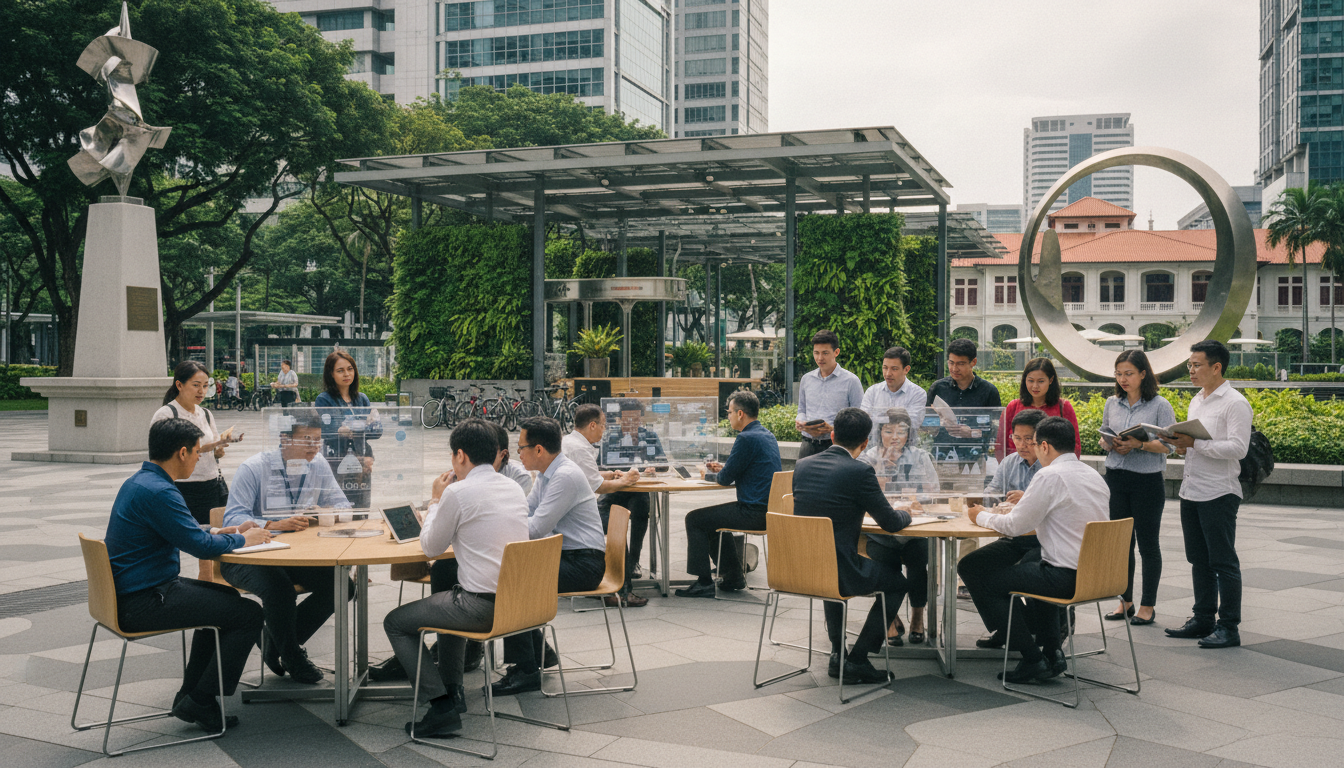
The convention hall at Marina Bay Sands, a familiar Singaporean landmark, recently hosted a discussion about the public service. Coordinating Minister Chan Chun Sing, speaking on September 18, 2026, articulated a shift in approach: from doing things ‘for’ Singaporeans to doing them ‘with’ them. This is not merely a change in rhetoric; it speaks to a deeper recalibration of the civic contract, offering a window into how an established bureaucracy might evolve.
Singapore’s public service has long been known for its efficiency and clear directives. The minister’s examples — Maju Forest and Gillman Barracks redevelopments — illustrate policy decisions with visible community impact. The call for an ‘honest articulation of trade-offs’ suggests a recognition that even well-intentioned policy can create friction if not collaboratively managed. This acknowledgement of the public’s role in shaping outcomes, even contentious ones, positions citizens not as mere beneficiaries, but as partners in the process of national development.
For cities like Bangkok, where urban planning and public works often proceed with less public consultation, Singapore’s stated intention presents a potent contrast. Thailand’s capital, with its sprawling infrastructure projects and constant negotiation of space, frequently faces public sentiment ranging from resignation to outright protest. The idea of transparently laying out ‘trade-offs’ before, rather than after, decisions are made offers a different model. It implies that a public service must not only be competent in execution but also adept in communication and collaboration, perhaps requiring a different kind of public servant altogether.
However, the practicality of such a shift in a vast, multi-layered bureaucracy remains a significant question. While the minister’s statement indicates intent, the deep-seated mechanisms of large governmental bodies, whether in Singapore or beyond, tend toward established procedures. As one public servant’s journey to reform, reported by The Guardian Nigeria News, indicates, systemic change often emerges from the middle, not just from pronouncements at the top. The New Zealand Initiative, for example, advocated for 'slashing public sector jobs' in May 2026, pointing to alternative pressures on public services globally. The challenge is not just in articulating a new philosophy but in embedding it within institutional culture, particularly when the impulse for efficiency can sometimes override the patience required for genuine collaboration. The shift from ‘for’ to ‘with’ demands more than just policy; it requires a fundamental re-evaluation of authority and expertise, a process that is often slow and fraught with resistance.
This reorientation from Singapore’s coordinating minister asks what kind of place a city should be: one shaped by directives, or one co-created with its inhabitants. The answer, if successfully implemented, could redefine the relationship between state and citizen across the region.
Sources
Newsletter
Pacific Daily
A curated briefing from Thailand, Asia-Pacific and the world.