Singapore's Enduring Gravitational Pull
A concert scene, not just a destination for capital, offers a glimpse into a persistent regional dynamic.
SINGAPORE
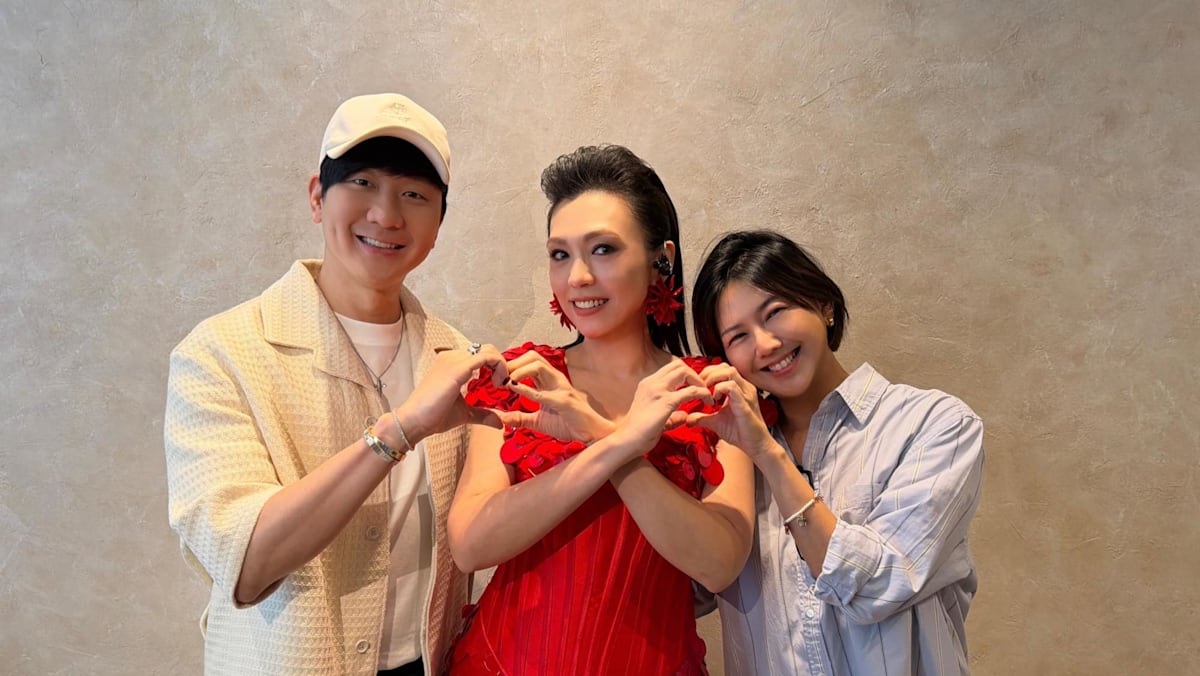
The Singapore Indoor Stadium, a familiar landmark in the city’s skyline, became a focal point on a recent Saturday evening. Within its confines, a concert by Kit Chan played out, drawing an audience that included prominent local singers Stefanie Sun and JJ Lin, as reported on September 21, 2026. Chan’s performance also paid tribute to other musicians, David Tao and the late Leslie Cheung.
This gathering, at first glance a local entertainment event, signifies a broader characteristic of Singapore: its consistent ability to draw and concentrate regional talent and attention. The presence of established figures like Sun and Lin, alongside Chan’s own reach, illustrates a cultural magnetic field that operates much like the city-state's economic one. It reflects a place that not only generates its own stars but also serves as a nexus for the region’s creative energies, providing a stage for both local and broader Asian cultural exchange. The fact that the concert was sold-out implies a robust appetite for such events within the city, or at least a significant catchment area of attendees.
Yet, this concentration also presents a peculiar dynamic for other destinations. While Singapore attracts cultural capital and financial investment—Hong Kong property investors, for example, recorded $2.2 billion in bulk flat purchases in July 2026, amid a rental boom, suggesting a similar pull for capital into rival hubs—it also highlights a challenge for countries seeking to develop their own cultural prominence. The Singaporean state, by its nature, is not a large or sprawling nation. Its success as a hub is predicated on its capacity to centralize and optimize, drawing from a wider sphere rather than relying purely on internal scale. This includes not just entertainment but also sectors like healthcare, where Singapore’s medical cost inflation was predicted to hit a record 16.9% in March 2026, according to an insurers' body, indicating a high-demand, high-value service ecosystem.
The question for destinations beyond Singapore’s immediate borders, particularly in Southeast Asia, becomes: how does one cultivate a self-sustaining cultural ecosystem that can both retain its own talent and attract outside audiences without replicating Singapore’s unique model? The city-state’s specific blend of governance and economic policy, which has been subject to scrutiny regarding perceived scandals in August 2023 and requests for corrections to reporting in September 2023, is not easily transferable. Its focus on efficiency and order has created an environment conducive to event hosting and investment. This environment is less a natural outgrowth of a large population and more a deliberate construct.
For a nation like Thailand, with its rich cultural heritage and growing infrastructure, the pathway may lie not in direct competition for every headline act, but in fostering unique, localized cultural scenes that resonate on their own terms. Singapore’s ability to gather a regional constellation of stars on its stage is undeniable. The enduring challenge, then, for its neighbors, is to ensure their own lights burn brightly enough to draw their own crowds, defining their cultural identity without needing to emulate a hub designed for gravitational pull. The Singapore Indoor Stadium’s bright lights, attracting a confluence of musical talent, thus reveal not just a city at the heart of regional entertainment, but also the enduring question of how others navigate its undeniable draw.
Sources
Newsletter
Pacific Daily
A curated briefing from Thailand, Asia-Pacific and the world.