The Uniform's Shadow: A Punggol Parking Lot, and the Burden of Trust
Singapore's military confronts a stark reality in the quiet spaces of daily life.
SINGAPORE
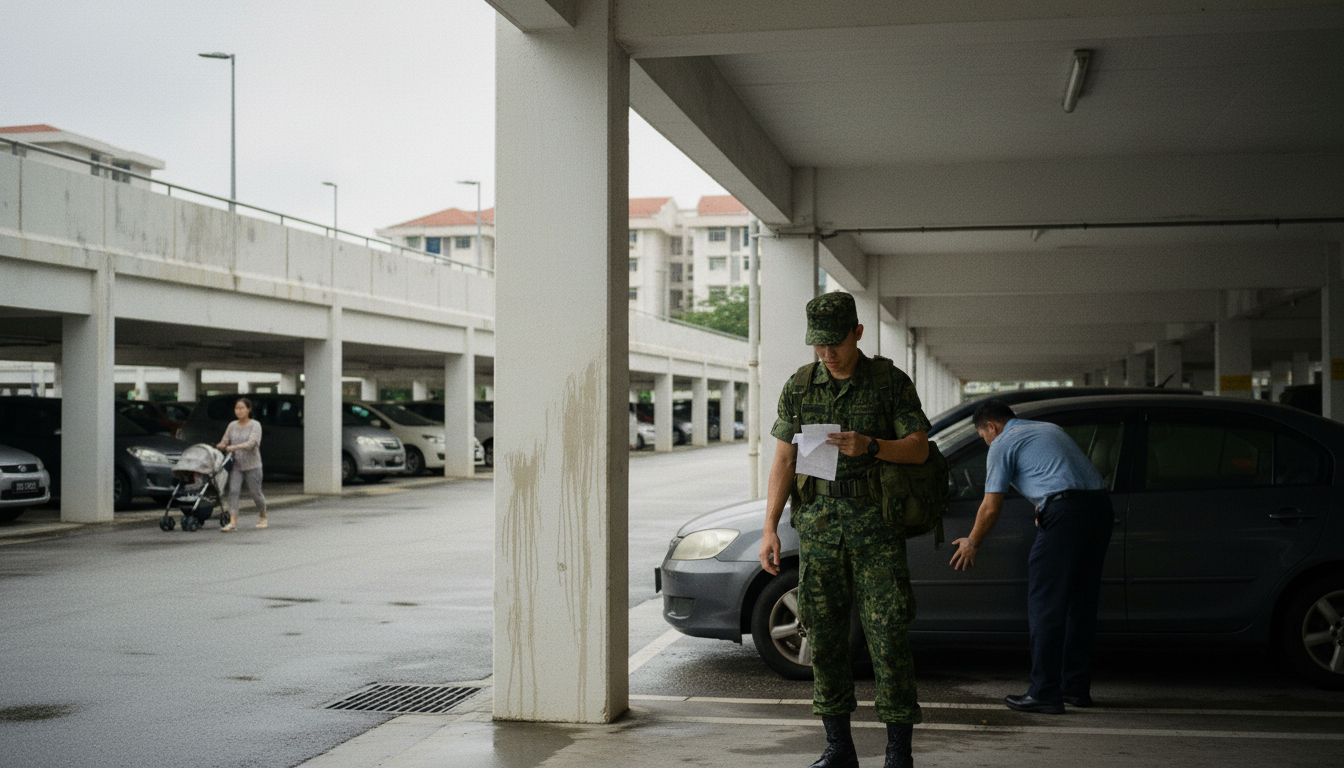
A multi-storey car park in Punggol, Singapore, served as the backdrop for a grim incident. Here, a former chef with the Republic of Singapore Navy, meeting a 15-year-old boy encountered online, engaged in sex acts with him. An army captain was also involved in the abuse of the same minor. This precise location, designed for temporary stasis, becomes etched with a different kind of permanence.
Singapore’s armed forces find themselves confronting a dark stain. The individuals involved were not just private citizens; one was a former navy cook, the other an army captain. The State Courts building stands as a physical representation of the legal consequences, but the broader implications ripple through the institutions these men once represented. It is a fact that one captain was charged with possessing sexually explicit child abuse materials, an event reported separately months earlier, in July 2026. This adds a layer of concern, suggesting a pattern rather than an isolated aberration.
The public square, in this case, a digital one where the 15-year-old boy was met, facilitated the encounter. The juxtaposition of the online world's anonymity with the stark reality of a concrete car park highlights a societal vulnerability. When individuals in positions of trust – or who have recently held such positions – commit such acts, the impact extends beyond the immediate victims. It challenges the perceived integrity of the institutions themselves. The question this raises for those who observe Singapore from afar is not about the specific criminal act, but about the trust placed in those who wear a uniform.
It could be argued that these are individual failings, isolated cases that do not reflect on the broader integrity of military institutions. The prompt legal action and the jailing of the former navy cook for this incident, reported in September 2026, suggest a system designed to address such transgressions. However, the presence of multiple individuals connected to military service in such cases – a captain charged in July, and the two men involved in the Punggol incident – compels a different assessment. The sheer fact that these incidents occurred, involving individuals from different branches of the military, presents a challenge to the reputation of an institution that relies on public confidence.
The uniform, designed to embody discipline and protection, in these instances became a cloak for exploitation. It asks of the people who encounter Singapore’s military: how deep does the shadow of these incidents reach? The Punggol car park, stark and functional, now carries the weight of a betrayal that echoes far beyond its concrete walls, challenging the very foundation of trust in places where it should be absolute.
Sources
Newsletter
Pacific Daily
A curated briefing from Thailand, Asia-Pacific and the world.