Taiwan's Coast Guard Signals Evolving Regional Security Incentives with Southernmost Palau Deployment
The recent mission to Pulo Anna Island underscores a strategic shift, leveraging maritime capabilities for diplomatic influence and asserting presence in the wider Pacific.
SINGAPORE
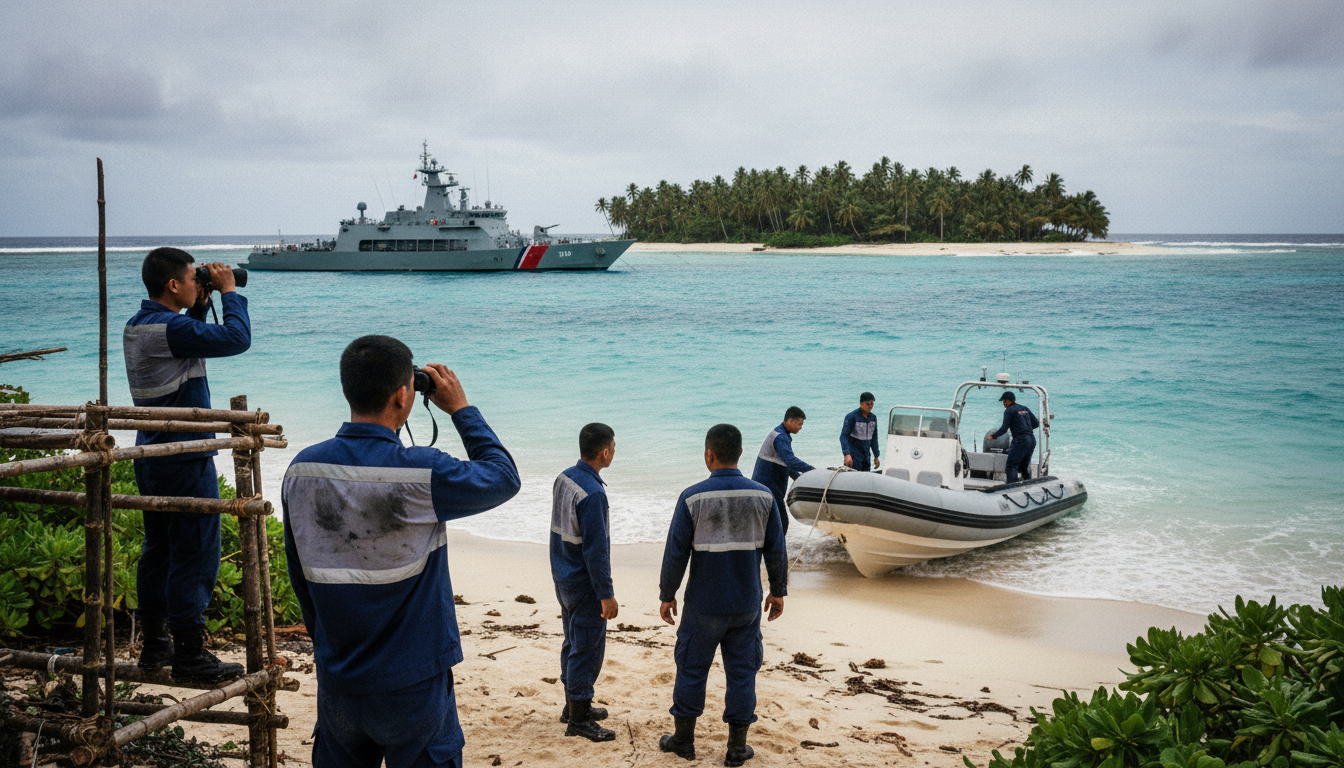
The Taiwan Coast Guard Administration (CGA) extended its operational reach on Saturday, with the vessels Chiayi and Penghu completing a record southernmost deployment to Palau’s Pulo Anna Island. This mission, reaching approximately 1,220 nautical miles from Taiwan’s southernmost point, Oluanpi, represents the furthest south a CGA vessel has sailed. It surpasses the range of prior diplomatic visits by the Hualien and Taipei ships last year. The journey to Pulo Anna Island, located about 217 nautical miles southwest of Koror in the Palauan state of Sonsorol, marks a notable expansion of Taiwan's maritime presence in the Pacific.
Such an extension of operational boundaries suggests a recalibration of incentives driving Taiwan's maritime security assets. The CGA’s role appears to be expanding into a more overt instrument of regional diplomacy, moving beyond its traditional focus on domestic enforcement and search-and-rescue operations. This deployment frames maritime security not merely as a defensive measure but as a proactive tool for fostering international relationships, particularly with allies in the Pacific. While the immediate objective is framed as a cooperative exercise, the strategic signal sent by penetrating new southern latitudes is clear: Taiwan can and will project its maritime capabilities beyond its immediate periphery.
Palauan President Surangel Whipps has acknowledged such engagements in the past, indicating a receptivity to Taiwan's outreach. The collaboration offers Palau a visible partner in maritime domain awareness and potentially resource protection, aligning with its own national interests in a region where larger powers are increasingly active. For Taiwan, these missions cultivate goodwill and reinforce diplomatic ties with a critical ally. The recurring nature of these visits, now enhanced by increased range, suggests an established pattern of engagement rather than an isolated event.
However, this expanded reach also introduces new operational considerations and potential challenges. Maintaining vessels like the Chiayi and Penghu, which are larger and more capable, on extended deployments at such distances demands significant logistical support and sustained budgetary allocations. The costs associated with prolonged blue-water operations—fuel, maintenance, personnel deployment—increase proportionally with distance and duration. The strategic benefit of these deployments must therefore be weighed against the escalating financial commitment.
Implications for regional maritime governance also arise from this deployment. While presented as a cooperative exercise, any expansion of state-affiliated naval or coast guard presence can alter the perceived balance of power or influence in sensitive maritime zones. The question remains how this expanded operational pattern will be interpreted by other regional actors and whether it prompts reciprocal actions or rhetorical responses. The direct incentives for Taiwan are clear: bolstering diplomatic ties and showcasing capabilities. The indirect effects on regional security dynamics will depend on how frequently such missions occur and what specific activities they encompass.
The current engagement primarily involves cooperation with the Palauan Division of Maritime Security, focused on areas like Fish and Wildlife Protection. This aligns with a non-provocative, humanitarian framing of the mission, which is strategically advantageous for Taiwan. The choice of partners and the stated objectives allow for a projection of capability without necessarily invoking direct geopolitical tension. The long-term efficacy of this strategy will depend on Taiwan's consistent ability to deploy these assets and the sustained willingness of its partners to engage in such high-profile cooperative ventures, especially as regional maritime interests continue to converge and occasionally conflict.
Sources
Newsletter
Pacific Daily
A curated briefing from Thailand, Asia-Pacific and the world.