Taiwan Snack Maker Strike Signals Regional Labour Stress
The ongoing industrial action at Kuai Kuai over factory relocation underscores a wider tension between economic restructuring and worker protections across Asia-Pacific.
SINGAPORE
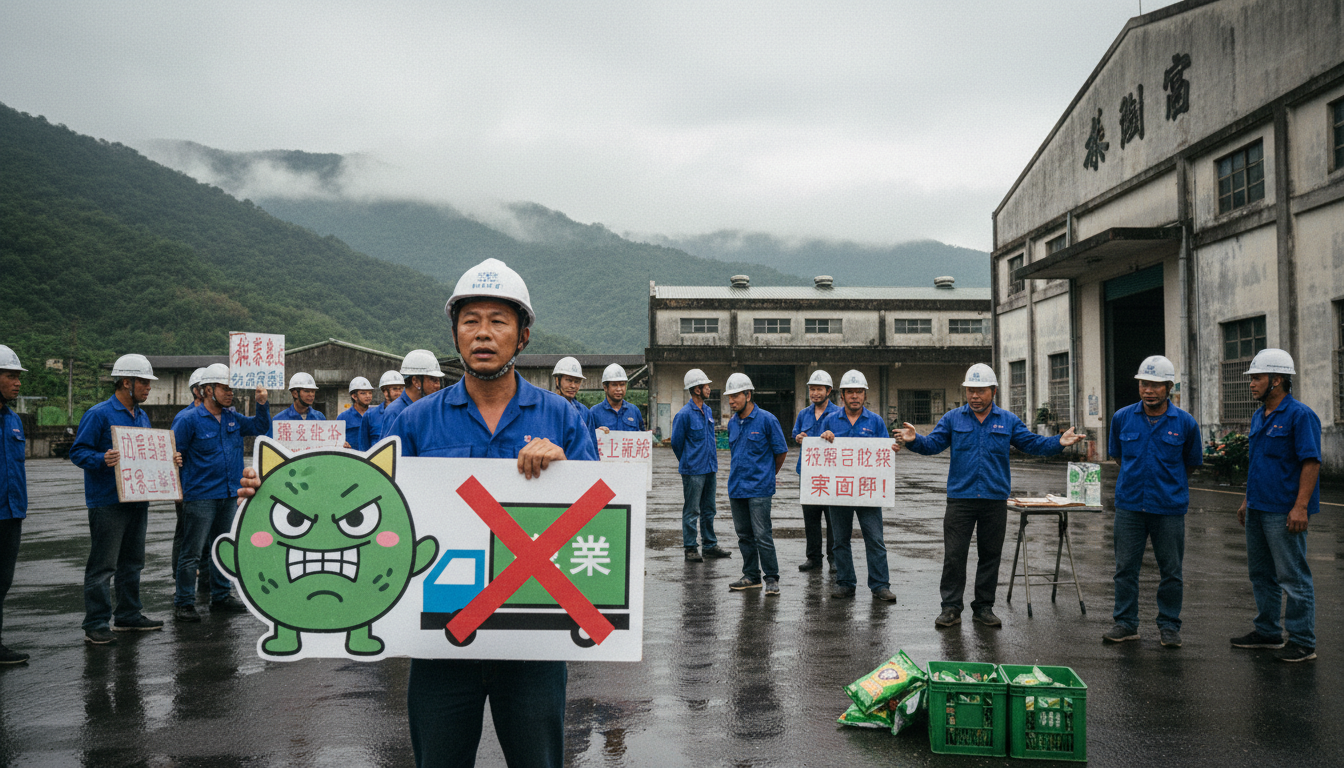
The extended strike by workers at Taiwan’s Kuai Kuai snack maker, initiated on October 2, 2026, marks an interruption of established labour dynamics, revealing fundamental tensions in regional economic development. The dispute, stemming from the company's announced factory relocation and associated land sale, centres on employee compensation demands, initially protested on September 15, 2026. This situation, while local, illustrates a pattern of industrial transformation affecting workforces across the Asia-Pacific.
Historically, economic growth in many Asia-Pacific economies has relied on a flexible labour pool, often implicitly trading job security for industrial expansion. However, as economies mature and global supply chains shift, companies like Kuai Kuai face pressures to optimize operations, frequently involving factory relocations or consolidation. Such decisions, while framed as necessary for business continuity or competitiveness, directly impact the livelihoods of long-serving employees. The Kuai Kuai workers are extending their strike because their demands for adequate compensation following the land sale remain unmet, highlighting a critical gap between corporate strategy and social responsibility.
The International Labour Organization, on September 10, 2026, emphasized the need for stronger links between trade, investment, and decent work in the Asia-Pacific. This statement directly addresses the type of friction now visible in Taiwan. The Kuai Kuai case is not an isolated incident; it reflects an underlying pressure across the region as economies grapple with structural changes. The United Nations Development Programme noted on June 25, 2026, that the gig economy is reshaping work in Asia and the Pacific, questioning whether governance can keep pace. This observation underscores a broader shift in the nature of employment, where traditional, stable manufacturing roles are giving way to more precarious forms of work or facing disruption from automation and relocation.
The challenge for policymakers in Taiwan and beyond is to reconcile the imperative for economic evolution with the necessity of protecting existing workforces. The question is not merely about compensation, but about the social contract between employers and employees in an era of rapid industrial and technological change. While companies assert the right to manage assets and adapt to market conditions, workers assert a right to security and fair treatment, especially when their tenure represents years of contribution to a company's success. The Diplomat’s July 10, 2026, article questioning if AI is truly transforming work in the Asia-Pacific touches upon the technological drivers of this change, further complicating the employment landscape.
The Kuai Kuai strike demonstrates that ignoring the human cost of economic reorientation can lead to prolonged disputes, affecting production and reputation. The unresolved demands of these workers pose a constraint not just for Kuai Kuai, but for other enterprises considering similar restructuring. The capability that has actually changed is not merely the relocation of a factory, but the increasing willingness of workforces to mobilize and demand accountability for the social implications of corporate decisions, even against established employers. This signals a potential shift in the balance of power, where labour is less likely to passively accept decisions that erode their long-term economic security.
Sources
Newsletter
Pacific Daily
A curated briefing from Thailand, Asia-Pacific and the world.