Regional Sporting Success Points to Persistent Disparities, Not Equal Growth
Netball victories for Tonga and Samoa highlight a pattern of focused achievement within a broader landscape of uneven development across the Pacific.
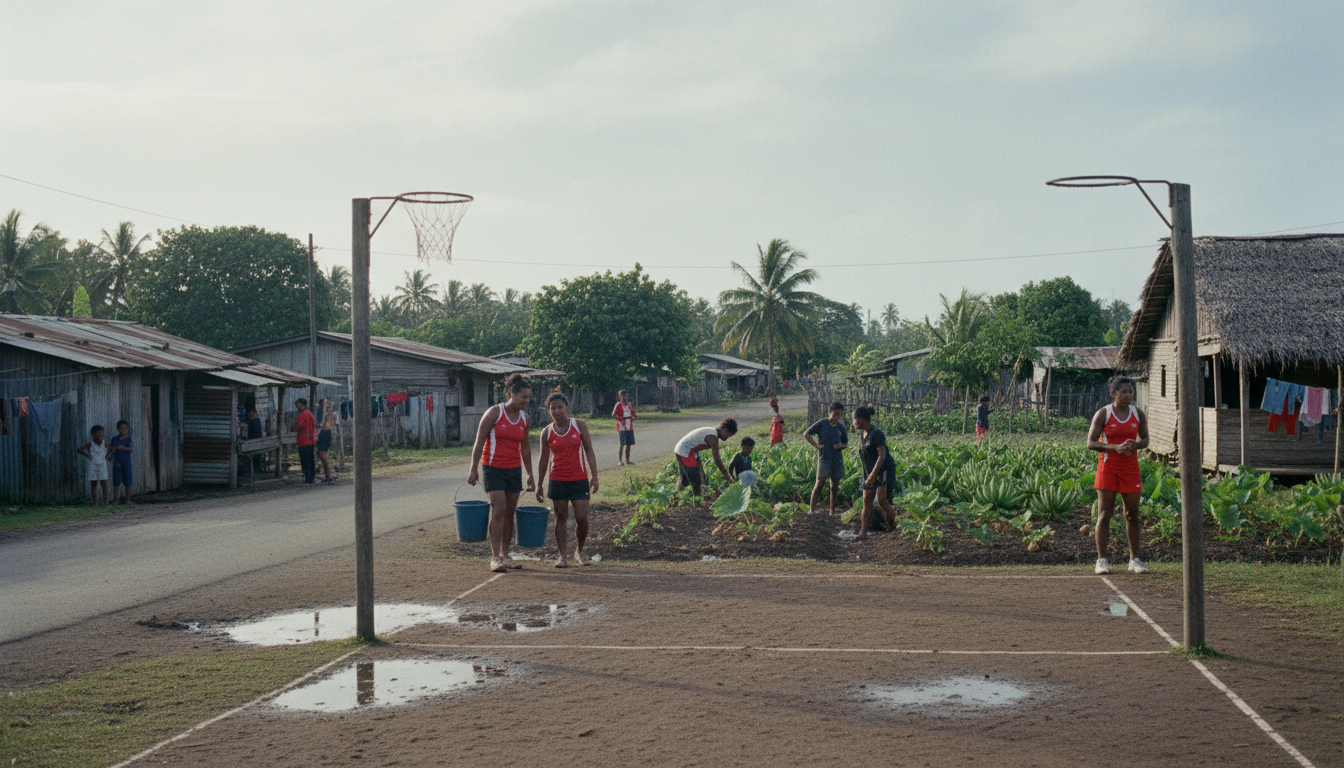
The qualification of Tonga and Samoa for the 2027 Netball World Cup marks a sporting milestone for both nations. The Tonga Tala defeated Fiji 72-60, while Tifaimoana Samoa beat the Cook Islands 72-50. These results, secured at the Oceania Netball Championship in Nuku'alofa, confirm their invitations to the global tournament in Australia. World Netball's head of events, Kate Agnew, confirmed that while results-based qualification is complete, documentation processes remain.
This success, however, offers a specific lens on regional development, rather than indicating a uniformly progressing Pacific. Historically, resources for development across island nations have been disproportionately allocated, often driven by metropolitan interests or specific geopolitical agendas. While sport can be a significant unifier and a source of national pride, the focused investment required to achieve such high-level performance in a niche sport like netball does not inherently translate to broader advancements in critical sectors such such as climate resilience, infrastructure, or economic diversification.
The regional focus on certain sports, while laudable for the athletes involved, can inadvertently mask the persistent challenges faced by these nations. The infrastructure and training required for international sporting success often represent isolated pockets of investment. For instance, the hosting of the Oceania Netball Championship in Tonga indicates a local capacity for such events. However, the question remains whether the benefits of such investment radiate outwards to support comprehensive, long-term regional stability, especially in areas vulnerable to the direct impacts of climate change or distant economic policies.
The tension lies in celebrating these achievements while acknowledging the systemic gaps. This netball success is a change from past performances but it is not necessarily a regional transformation. The support structures that enabled Tonga and Samoa to defeat regional rivals like Fiji and the Cook Islands reflect targeted programs, not necessarily widespread improvements in public health, education, or environmental protection funding. The consequence is a situation where specific talents can flourish, yet the foundational challenges that define the region's long-term prospects persist. The pattern is clear: achievements are often concentrated, leaving significant disparities in broader regional development unaddressed.
Sources
Newsletter
Pacific Daily
A curated briefing from Thailand, Asia-Pacific and the world.