Suburban Gunfire in Trappes Exposes the Limits of Counterterrorism Surveillance
A lethal drive-by shooting in France reveals how low-signature violence challenges allied intelligence doctrines across the Asia-Pacific
SINGAPORE
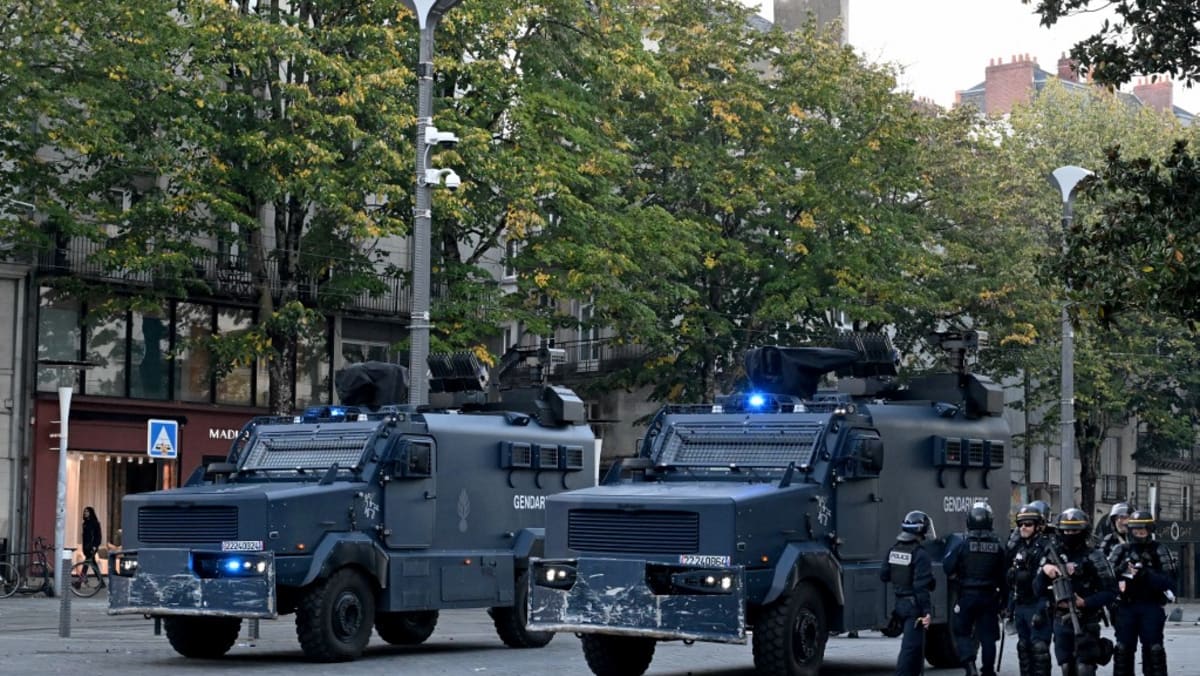
Counterterrorism doctrines across modern security alliances have historically presumed that political violence requires an identifiable logistical footprint. Investigatory agencies designed their surveillance architectures around intercepting communications, tracking financing networks, and monitoring coordinated cells before weapons reached the street. That structural assumption falters when state machinery confronts ultra-low-signature vehicular attacks. On Oct 23, 2026, a gunman firing from a vehicle killed one person and wounded four others in the commuter town of Trappes, outside Paris. French police verified the casualties, and French prosecutors initiated proceedings to investigate the shooting as a suspected terrorist attack. The shooting occurred against an operational environment already under acute stress, as France experienced widespread mass protests across the country.
The critical question is not the formal legal classification assigned by prosecutors, but the operational capability demonstrated on the ground.
The Decoupling of Threat and Infrastructure
When violence shifts from structured conspiracy to a mobile perpetrator operating an ordinary passenger car with small arms, the preventative apparatus of the modern state loses traction. In Trappes, where municipal leadership under figures such as Ali Rabeh confronts persistent socio-economic friction, the dividing line between localized criminality and ideological terror becomes functionally blurred. French prosecutors must evaluate whether this incident was an act of deliberate ideological intent or an opportunistic escalation within a fractured environment. Either interpretation reveals a difficult systemic reality: the barrier to entry for lethal disruption has dropped beneath the threshold of routine counterterror intercept capabilities.
The tactical migration toward low-resource attacks undermines standard surveillance doctrines that rely on intercepting logistical preparation.
Divergence in Allied Threat Registers
From an Asia-Pacific vantage point, this tactical reduction demands close institutional scrutiny. Security services from Singapore to partner states across Southeast Asia have constructed elaborate counterterrorism architectures predicated on multi-agency information sharing and digital monitoring. Bilateral intelligence agreements between European capitals and Asian ministries depend fundamentally on mutual threat definitions and early warning exchanges. If European security partners find themselves forced to designate single-vehicle drive-by shootings as terrorism, the shared data sets that inform regional risk matrices lose empirical consistency. A protocol engineered to intercept transnational bomb-making material offers zero predictive utility against a single firearm discharged from a moving sedan.
A defensible counterargument holds that suburban unrest outside Paris bears negligible relevance to Asia-Pacific security dynamics. Jurisdictions such as Singapore maintain strict domestic firearm controls, comprehensive border interception mechanisms, and island-state physical geography that prevent the illicit circulation of weapons seen in continental Europe. Urban policing models in East Asia do not contend with peri-urban transit corridors flooded with illegal handguns. This institutional skepticism is valid; the physical mechanics of European illicit arms trafficking cannot simply be transposed onto Asian metropolitan environments.
Yet geographic divergence does not resolve the institutional strain on allied state capacity. When French police must commit primary personnel and logistical bandwidth to managing sustained nationwide mass protests, the protective coverage available for outer suburban arteries inevitably degrades. Peripheral security becomes porous precisely when public order operations consume metropolitan command centers. For Asian foreign ministries assessing diplomatic security, consular risk, and defense cooperation with European counterparts, the salient variable is the operational overextension of European state machinery during concurrent domestic crises.
What remains unresolved is the structural capacity of state institutions to counter decentralized, low-resource tactical violence without permanently militarizing municipal spaces. As French prosecutors continue their inquiry into whether the Trappes shooting represents an ideological offensive or localized violence, security planners in France and the Asia-Pacific alike face an enduring systemic dilemma: institutional surveillance can map networks, but it cannot easily neutralize an isolated weapon moving through public transit corridors.
Sources
Newsletter
Pacific Daily
A curated briefing from Thailand, Asia-Pacific and the world.