Como Exposes Manchester United's Tactical Fracture
When Bruno Fernandes questions Michael Carrick in public, an away defeat becomes an institutional governance crisis.
SINGAPORE
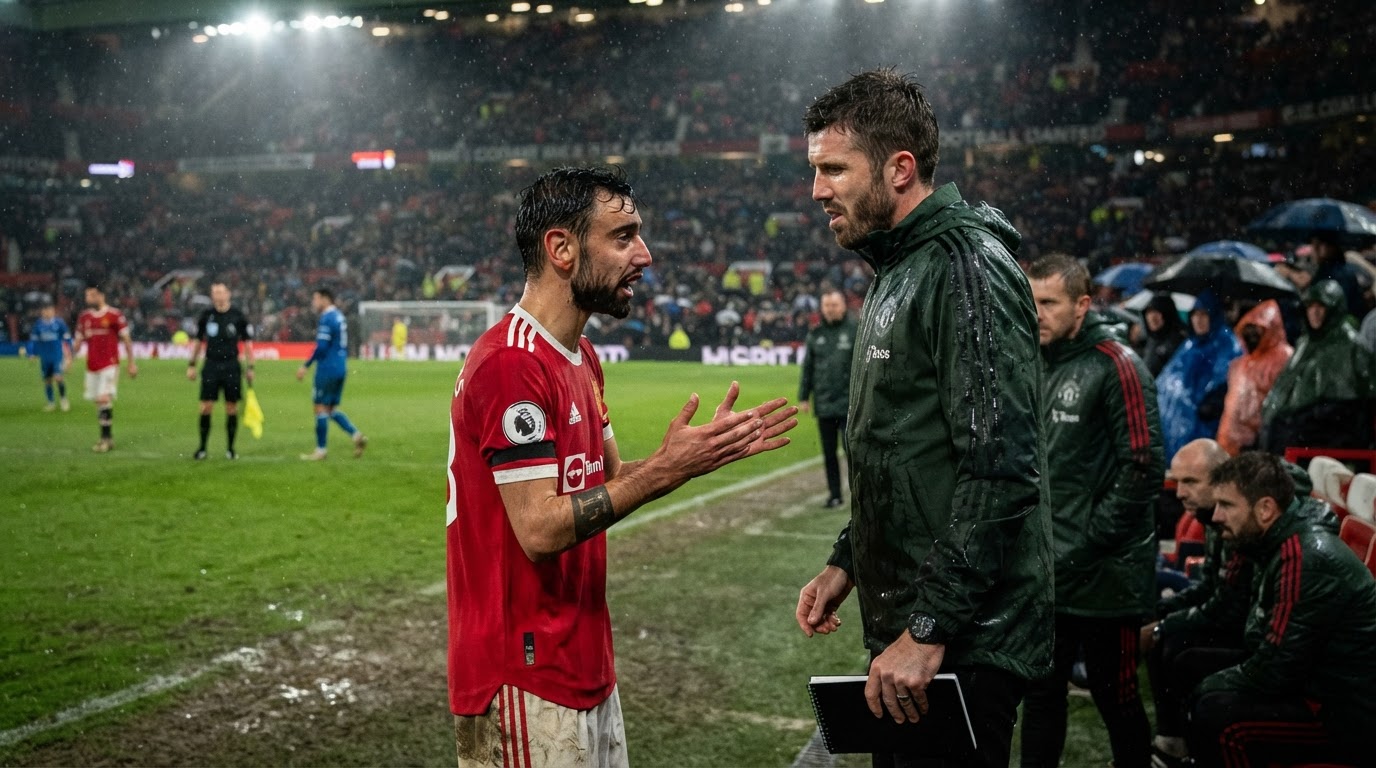
Public deference dissolves when tactical failure can no longer hide behind institutional prestige. At Stadio Giuseppe Sinigaglia on October 21, 2026, Como delivered a decisive defeat to Manchester United in the UEFA Champions League. When captain Bruno Fernandes openly questioned the tactical framework of manager Michael Carrick immediately afterward, an away defeat turned into an open crisis of authority.
Elite sporting organizations depend fundamentally on strict command discipline to protect institutional credibility and commercial value. Managerial hierarchy rests on an established operational convention: players execute instructions on the pitch, while strategic design remains the sole preserve of the technical staff. That division of labor protects the institution against volatility, assuring stakeholders that competitive setbacks reflect transient execution issues rather than structural design failure. By breaking that convention immediately following the final whistle in Italy, Fernandes indicated that this internal pact had fractured. The Portuguese midfielder did not shield his manager or absorb collective responsibility; instead, his public commentary signaled that the dressing room was actively dissociating itself from Carrick's instructions.
The Collapse of Tactical Coherence
The events on the pitch revealed a profound operational mismatch throughout the contest. Como dismantled their opponents systematically, with Yan Couto contesting Fernandes directly across midfield and Nico Paz capitalising on disjointed defending to score their third goal. Both Carrick and Fernandes appeared visibly dejected after the match, yet their post-match demeanours carried opposing implications. While the manager absorbed the embarrassment of structural collapse, his captain publicly repudiated the tactical architecture that produced it.
Tactical discord voiced by a team captain exposes an unravelling chain of command that administrative authority cannot easily repair.
Defenders of the manager may contend that high-stakes European football inevitably generates post-match friction, and that critical assessments from a captain merely reflect demanding competitive standards rather than overt insubordination. Supporters could further argue that volatility in the UEFA Champions League routinely tests tactical coherence against determined home opposition playing in hostile venues. Yet that interpretation minimizes the substance of the challenge. Fernandes did not lament individual fatigue, defensive lapses, or poor finishing. His critique targeted tactical preparation itself, identifying the game plan as fundamentally flawed. In professional sports management, public dissent regarding tactical direction is rarely a sign of healthy dialogue; it is the final symptom of lost collective confidence.
Repercussions Beyond the Pitch
Manchester United operates as an international media property as much as a football club. The brand relies on competitive competence to justify commercial valuation across international markets, making technical chaos an economic liability rather than merely an athletic disappointment.
When tactical dysfunction produces a convincing defeat against Como, reputational damage reverberates well beyond European borders. International commercial partners and regional followings demand institutional competence, expecting elite governance commensurate with top-tier commercial pricing. Fernandes challenging Carrick in public shatters the illusion of corporate alignment, telegraphing to commercial partners and global supporters that leadership is contested. If technical leadership cannot command the respect of its senior personnel, commercial confidence inevitably weakens. Sporting institutions built on global branding discover quickly that authority, once compromised on the European stage, cannot be sustained purely through legacy prestige in distant markets.
The immediate operational dilemma confronting Carrick admits no simple resolution. Disciplining Fernandes risks alienating the squad's chief creative asset, while capitulating to player critique formally invalidates managerial authority. Como demonstrated tactical superiority on October 21, 2026, but the unresolved struggle over strategic direction at Manchester United ensures that the institutional crisis will continue long after the final whistle.
Sources
Newsletter
Pacific Daily
A curated briefing from Thailand, Asia-Pacific and the world.