Institutional Frailty and the Limits of Papal Mobility
Clearance for travel to South America settles an immediate medical concern while leaving centralised governance exposed to physical vulnerability.
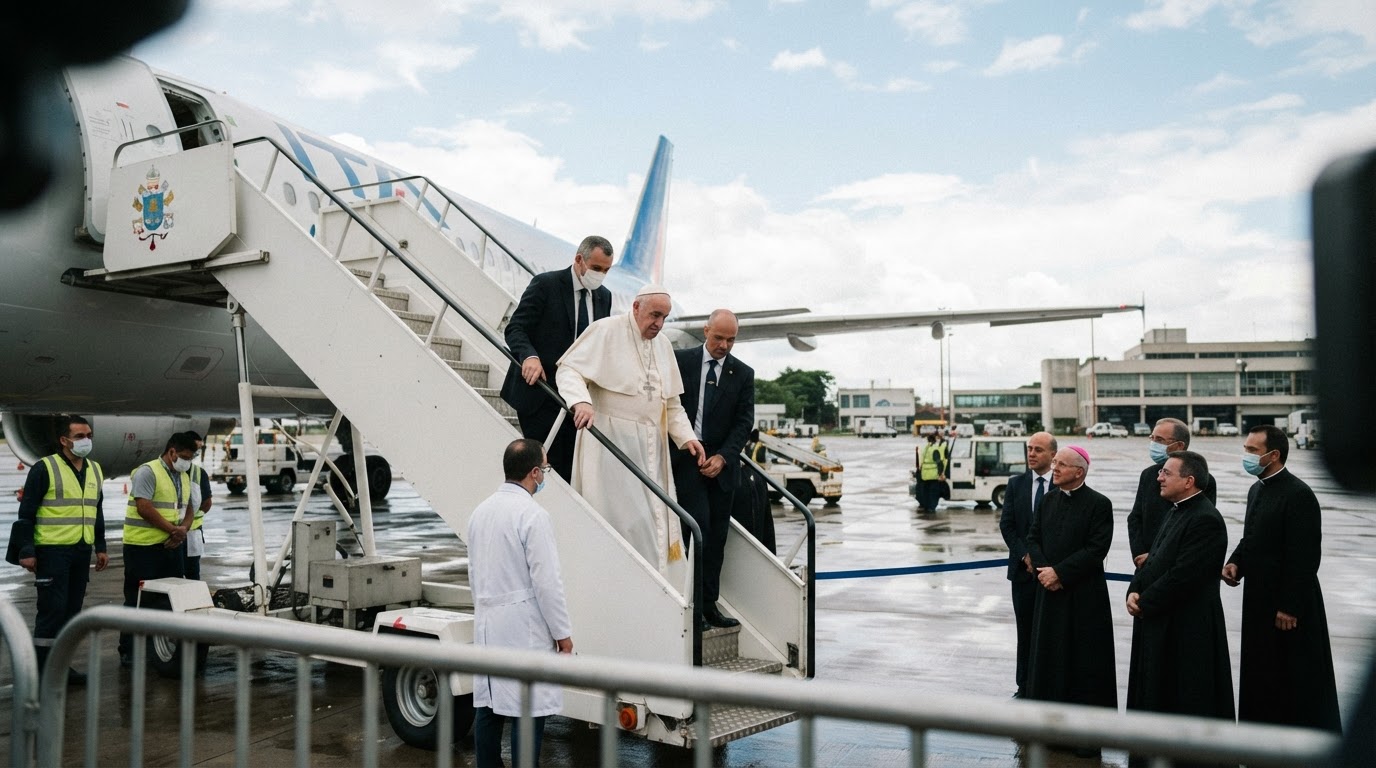
Papal administration functions on a presumption of physical presence that modern secular governance rarely demands. When the Vatican announced on Wednesday, October 21, 2026, that Pope Leo XIV would require no further therapy following surgery to remove a localised lung tumour, the statement was designed to arrest institutional anxiety. Test results confirmed the cancer was contained, clearing the 71-year-old pontiff to resume general audiences in St. Peter's Square and preserve an exacting travel schedule. Yet the relief registered across dioceses obscures how deeply sovereign religious authority remains tethered to individual bodily endurance.
Sovereignty in the Catholic Church concentrates executive, doctrinal, and diplomatic authority in a single office that lacks institutional redundancy. Secular heads of state routinely delegate administrative execution during medical convalescence to constitutional deputies. By contrast, the bishop of Rome exercises direct oversight over a sprawling global communion where delegation carries doctrinal friction and administrative delay. An interruption at the apex stalls curial appointments, diplomatic engagements, and pastoral rulings. Broadcasting rapid medical clearance reflects this structural vulnerability, attempting to project continuity before administrative paralysis could set in.
The Demands of Continental Outreach
The medical resolution arrived barely two weeks before a demanding itinerary spanning Uruguay, Argentina, and Peru from November 6 to 17. Overseas travel is not ceremonial theatre for modern pontiffs; it represents the operational mechanism through which the Vatican projects pastoral authority into distant parishes. For Catholic communities across Latin America and the broader Pacific perimeter, physical visitation reinforces institutional cohesion that distant encyclicals cannot replicate. A cancelled tour signals retrenchment, creating diplomatic vacuums across partner states that negotiate formal accords with central ecclesiastical authorities.
Medical assessments confirming that no post-surgical therapy is necessary allow the November tour to proceed as planned. Church officials view the resumption of normal duties as evidence of administrative resilience. From their perspective, the swift return to public appearances in Rome proves that centralised authority can withstand acute physical shocks without devolving governance. That interpretation, however, mistakes a fortunate surgical outcome for structural stability.
Relief over a successful operation does not resolve the institutional exposure created by concentrating global authority in an aging leadership.
Institutional Succession and Global Stakes
Regional stakeholders assessing Vatican stability must confront the limits of personal governance. In major dioceses across the Americas, Europe, and Asia, pastoral strategy requires years of continuous central policy implementation. Shifts in liturgical posture, diplomatic engagements, and episcopal appointments falter whenever the pontiff undergoes prolonged medical withdrawal. The localised nature of the tumour averted a protracted treatment cycle, yet the incident reminds distant episcopacies that policy continuity hinges entirely on the physical stamina of one septuagenarian leader.
Diplomatic partners who rely on Vatican mediation face parallel uncertainties. Bilateral accords, moral mediation, and pastoral governance depend on a sovereign who cannot easily transfer mandate to subordinates. When health concerns emerge, institutional momentum slows across every portfolio under Roman jurisdiction. The November schedule across Uruguay, Argentina, and Peru will test whether an uncompromised agenda can truly absorb the physical toll of recovery.
Surgical success has postponed the question of administrative succession, but it has not altered the structural contradiction at the core of the Vatican. A global institution navigating modern administrative friction cannot permanently separate its geopolitical resilience from the clinical health of its absolute sovereign. As long as centralized authority demands relentless continental transit from an aging executive, each successful medical clearance merely defers an inevitable systemic strain.
Sources
Newsletter
Pacific Daily
A curated briefing from Thailand, Asia-Pacific and the world.