The Athletic Balance Sheet Behind Singapore’s Para Podium Continuity
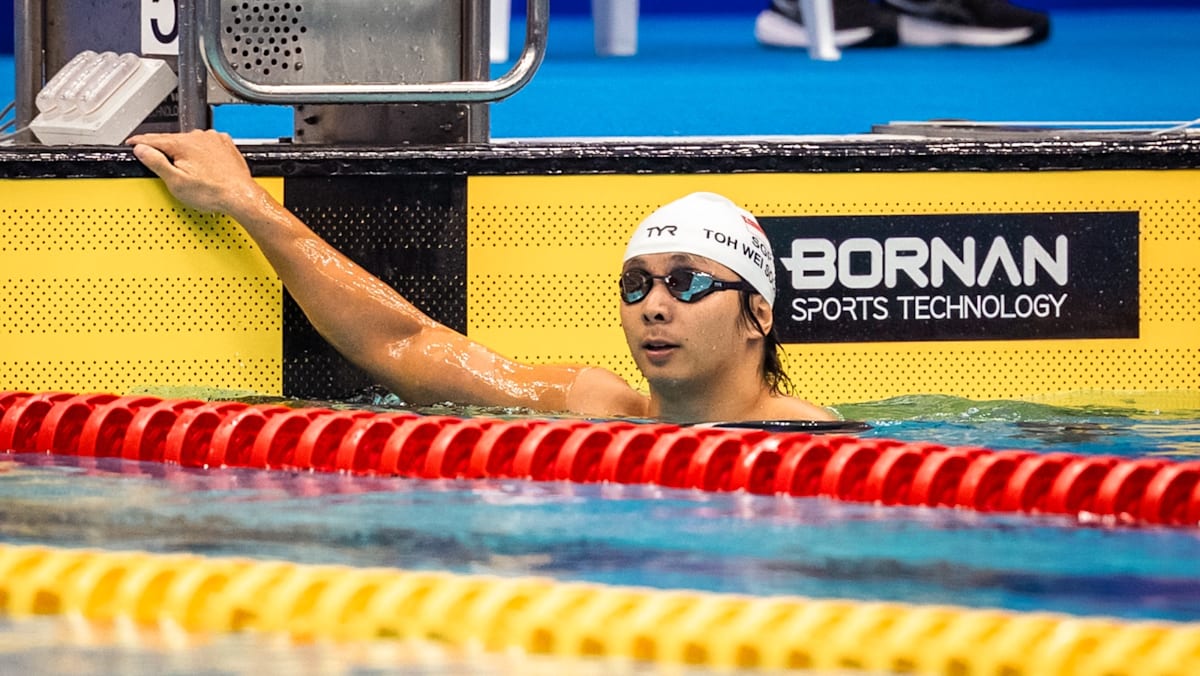
Toh Wei Soong’s five medals in Nagoya highlight how individual endurance sustains regional sporting standing across protracted competitive cycles.
SINGAPORE
Elite athletic systems produce podium finishes through long development timelines, but aggregate medal tables measure only the immediate outcome rather than the underlying bench depth. Across Asia, regional competition reveals a stark divergence in operational scale. Continental sporting programs run by expansive delegations such as China draw from deep domestic cohorts, whereas smaller national contingents rely on a remarkably lean cadre of established athletes to maintain regional relevance across successive competitive cycles.
This structural contrast was on display at the Nagoya City General Gymnasium on Friday, Oct 23, 2026. Swimmer Toh Wei Soong concluded his 2026 Asian Para Games campaign by securing another podium position, finishing the meet with two silvers and three bronzes. The outcome brought the 28-year-old athlete to a cumulative career haul of 12 medals gathered across four Games campaigns. For Singapore, the tally represents an enduring record of individual achievement, yet the arithmetic behind those podiums demonstrates the disproportionate burden carried by single competitors across four-year tournament cycles.
Continuity Across Competitive Cycles
High-performance sporting programs historically depend on converting athletic potential into repeatable podium results over extended horizons. Toh’s progression through four campaigns illustrates the rigorous physical resilience required to stay competitive from early international outings into mature senior competition. Delivering medals across five distinct contests in a single week demands comprehensive preparation, precise physical conditioning, and steady institutional backing.
Yet prolonged individual excellence can obscure persistent developmental vulnerabilities. When an established athlete secures two silvers and three bronzes in one tournament, national administrators celebrate podium continuity. Simultaneously, that concentration highlights how exposed lean delegations become when podium output rests on solitary performers navigating multiple cycles. In athletic ecosystems where secondary pipelines remain narrow, international relevance is effectively staked on the endurance of veteran competitors.
Delegation Scale and Institutional Resilience
Across the wider continent, the structural baseline of tournament competition continues to favor sheer demographic and institutional depth. Large sporting systems, led by China, cultivate vast developmental tiers that replace podium contenders across competitive classifications without experiencing multi-year declines. Smaller delegations operate under entirely different constraints, where creating an athlete capable of medalling across four Games campaigns requires sustained investment in coaching, international travel, and recovery infrastructure.
The arithmetic of multi-medal campaigns demonstrates both athletic discipline and the acute institutional exposure of narrow talent pools.
Defenders of current high-performance structures might argue that extended athletic careers reflect the efficiency of modern athlete welfare programs. Toh’s sustained presence across four Games campaigns indicates that targeted sport science and conditioning regimes can prolong competitive viability well into an athlete’s late twenties. From this administrative viewpoint, retaining experienced champions over multiple cycles represents operational success rather than developmental failure.
Such an argument accounts for the preservation of existing talent but leaves structural replacement unaddressed. Maintaining an elite competitor at an international standard does not resolve the absence of an equivalent successor cohort. Competing across five events in Nagoya demands physical output at the absolute limit of athletic recovery, especially when opposing delegations present fresher rosters backed by sheer institutional scale.
Singapore departs the Nagoya City General Gymnasium with Toh’s 12 career medals validating years of focused training and individual resolve. The broader strategic question confronting sports authorities, however, outlasts the closing of the 2026 Asian Para Games. When international standing depends so heavily on the longevity of proven veterans, high-performance strategy ultimately succeeds or fails on whether new generations emerge before that veteran cohort departs the pool.
Sources
Newsletter
Pacific Daily
A curated briefing from Thailand, Asia-Pacific and the world.