Storm Margins and the Real Vulnerability of Pacific Berths
Severe weather off Colima and Jalisco tests the commercial assumptions behind coastal export corridors
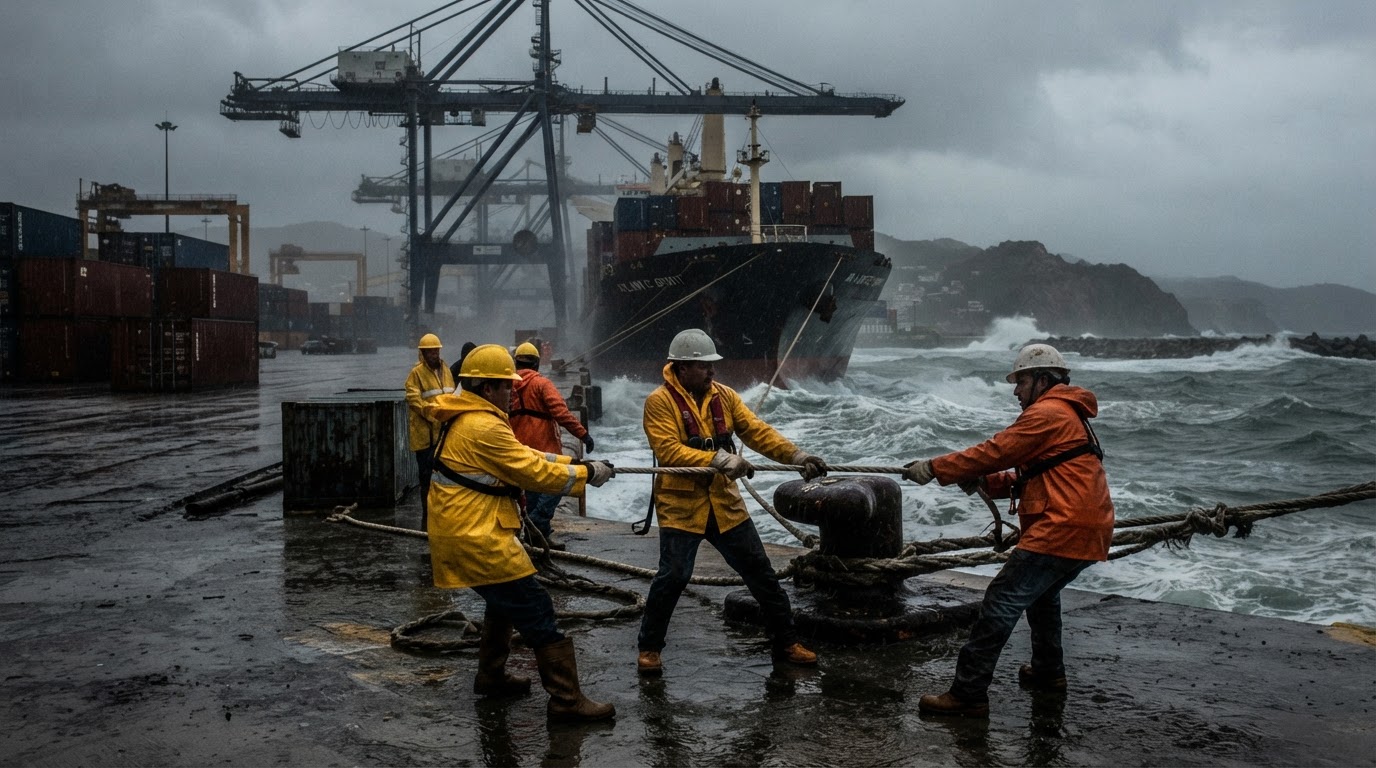
Harbor safety is an exercise in tolerances.
When Category 3 Hurricane Trudy tracked toward the Pacific coastline of Colima and Jalisco heading into Saturday and Sunday, emergency advisories highlighted standard public safety protocols. The maritime reality along commercial anchorages operates under much tighter structural limits. Berthing basins, cargo staging facilities, and vessel moorings along Mexico's Pacific coast depend on delicate physical margins that deteriorate rapidly once severe wind envelopes intersect with tidal surges. According to the National Meteorological Service, the cyclonic system warranted high vigilance across exposed coastal sectors.
Export logistics rarely account for multi-day operational freezes until open water routes become impassable. President Sheinbaum’s Friday press briefing projected confidence regarding national export performance. Yet oceanic transit corridors cannot simply absorb extreme cyclonic pressure without immediate logistical friction. Offshore weather systems moving through the eastern Pacific basin disrupt vessel scheduling, drive up container dwell intervals, and strain marine insurance parameters. The warning issued by meteorological officials signals that commercial shipping approaches can turn unviable within hours.
Exposure Along the Waterfront
Commercial maritime operations depend on an unyielding equation of water depth, breakwater design, and channel clearance. When a Category 3 system approaches a shoreline, harbour masters must balance the economic cost of premature vessel evacuation against catastrophic mooring failures. Tug availability drops as wave heights climb. Crowded docks become hazardous impact zones where steel hulls shear bollards and rupture utility lines.
While federal officials urge caution among coastal populations, waterfront industrial assets face distinct mechanical exposures. Cranes must be locked down in deadweight configurations. Shore power disconnects to prevent electrical fires, and tugs reposition to deepwater anchorages. The disruption is never confined to the hours when gale-force gusts sweep across the pier heads. Clearing backlog queues, conducting sonar sweeps for shifted seabed silt, and certifying navigation marks routinely consume several operational cycles after clear skies return.
Political leadership often treats export volume as an abstract aggregate unaffected by physical choke points. Officials framed the impending weather front through civil defense updates on Friday, yet international shipping lines measure these events by daily charter hire losses and demurrage accumulation. Even minor navigational shifts alter arrival slots across wider maritime routes that feed goods into larger Pacific networks. A disruption at primary coastal hubs ripples through container handling schedules across maritime hubs worldwide.
The Unresolved Operational Squeeze
Balancing immediate storm readiness against broader administrative commitments presents acute friction for state institutions.
At the same Friday briefing where coastal warnings dominated the forecast, Sheinbaum addressed domestic operational strains, including healthcare labour protests within IMSS. Records indicate that Robledo and public administrators remain tasked with balancing operational budgets against rising domestic demands. That parallel tension mirrors maritime asset management: public resources stretched between maintenance investments and crisis response.
Sustaining ambitious commercial trade numbers requires acknowledging the physical vulnerability of coastal infrastructure. Port authorities cannot build infinite breakwaters, nor can terminal operators insulate cranes against violent gusts. The structural question facing this active corridor is whether regional berth investments can keep pace with intensifying Pacific weather shocks.
Sources
Newsletter
Pacific Daily
A curated briefing from Thailand, Asia-Pacific and the world.