Infrastructure oversight carries a human cost for Asia-Pacific communities
A coroner's finding on a Singapore basketball fatality highlights systemic failures in public facility maintenance, impacting real estate values and community trust.
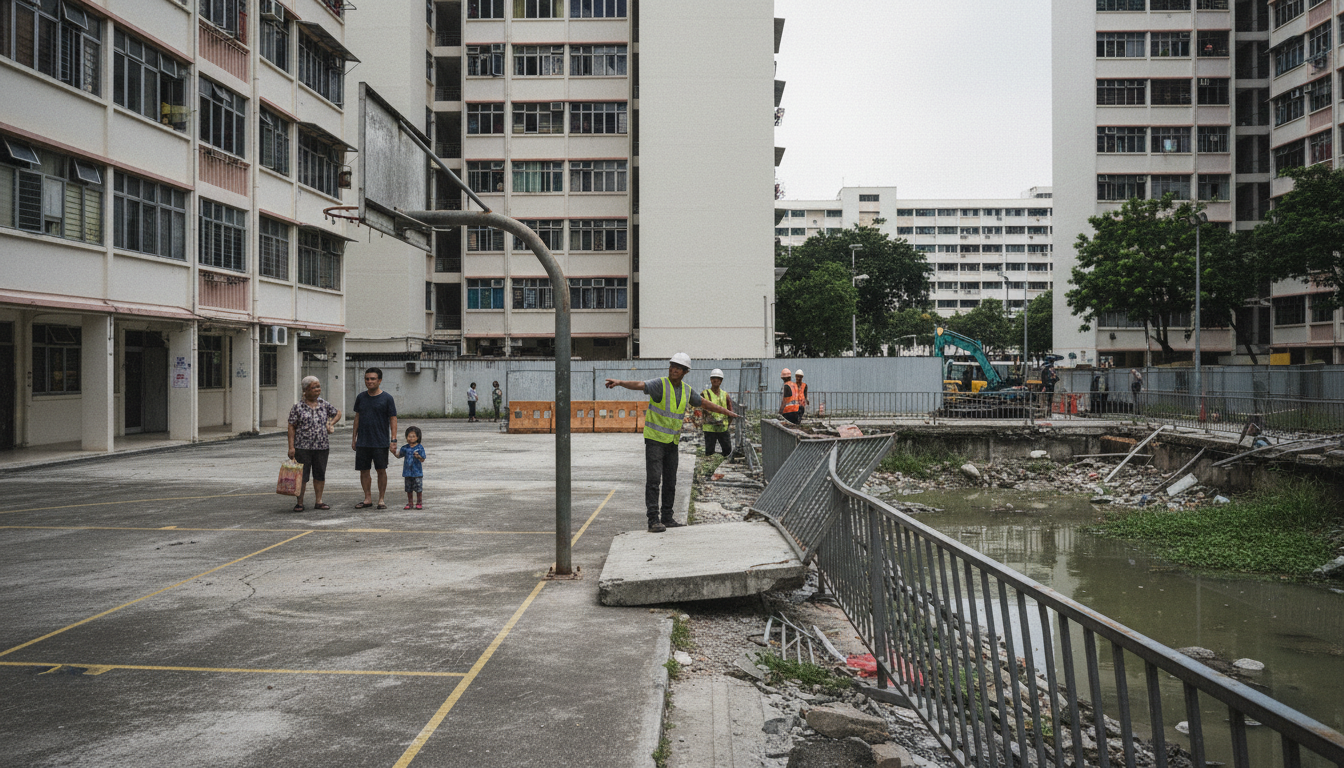
SINGAPORE
The State Coroner's recent ruling regarding the death of a 17-year-old in Singapore, attributing it to a basketball frame that should have withstood standard play, points to a deeper and more pervasive issue than a single tragic misadventure. The assertion that dunking is “part and parcel of the game” and that the structure should have been resilient enough is a direct indictment of maintenance standards for public infrastructure. This incident, reported by CNA Lifestyle on September 18, 2026, occurred near Block 18 Bedok South Road in July 2021.
From a market realist perspective, this fatality represents an externality, a cost not borne directly by the operators but by the community. Public facilities, including sports courts, are integral to urban planning and directly influence the quality of life, and by extension, property values in their vicinity. When such infrastructure proves unsafe, it generates a negative signal for residents and potential investors. The implied promise of public safety and utility is broken.
Accountability for such failures often diffuses across various stakeholders: the initial developer, the managing agent, and the regulatory bodies responsible for inspections. While the coroner has identified the immediate cause, the underlying incentives for rigorous maintenance often fall short. Maintenance budgets are frequently among the first to be pared down, particularly in sectors where the direct revenue generation from a specific facility is low. This creates a disincentive for proactive investment in longevity and safety, favoring reactive repairs over preventative measures. The question then becomes: who pays the true cost of this deferred maintenance, and what occupancy rate, metaphorically speaking, is required for these public amenities to be self-sustaining, not just in terms of usage, but in their capacity to cover their full lifecycle costs including rigorous safety protocols?
The broader implications for the Asia-Pacific region are significant. Many urban centers are experiencing rapid growth, with a corresponding expansion of public amenities. If the Singapore incident is indicative of a wider trend in facility management, then communities across the region face similar risks. The economic model for public facilities, especially those not directly generating revenue, often relies on minimal upkeep. This incident serves as a stark reminder that the cost of neglect far outweighs the cost of proper, consistent maintenance. The immediate human tragedy is undeniable, but the long-term impact on public trust and perceived safety of shared spaces can erode community engagement and even affect real estate valuations, particularly in densely populated urban blocks like those found throughout Bedok South Road. Without transparent and robust inspection and maintenance regimes, the implicit subsidy provided by residents accepting these facilities as safe becomes a liability rather than an asset. The outcome now depends on whether this misadventure leads to systemic re-evaluation of public facility maintenance or if it remains an isolated, albeit tragic, footnote in urban development.
Sources
Newsletter
Pacific Daily
A curated briefing from Thailand, Asia-Pacific and the world.