South Korea’s Fuel Exports to Russia Signal Shifting Energy Alliances and Regional Risks
The flow of petroleum products from South Korean ports to Russia, following drone strikes on Russian refineries, highlights an ongoing reordering of global energy supply lines and the complexities facing Asia-Pacific nations. This transaction underscores the economic pragmatism that often overrides geopolitical tensions.
SINGAPORE
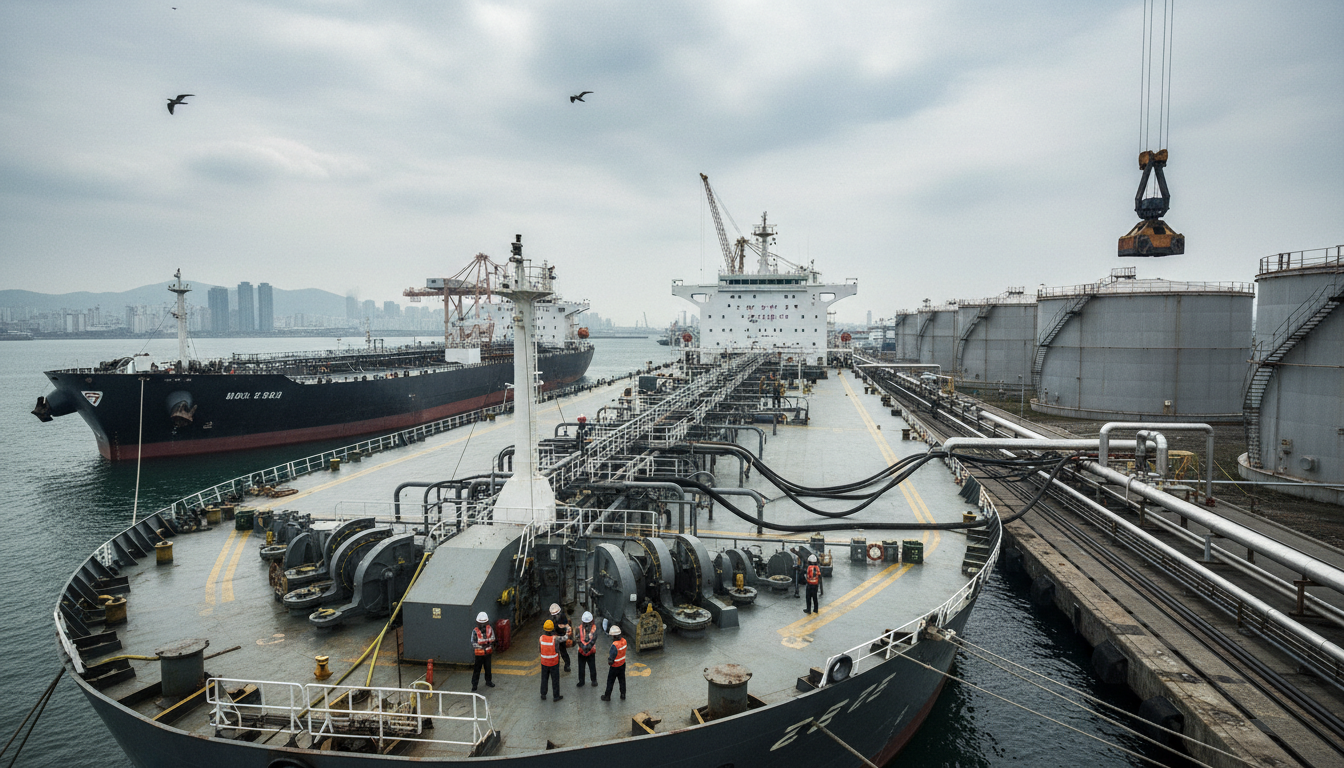
South Korea exported over 176,000 tons of petroleum products to Russia in July and August. Ukraine’s top sanctions official, Vladyslav Vlasiuk, stated this supply reportedly eased a fuel crisis stemming from Ukrainian drone attacks on Russian oil refineries. These shipments constituted 31 percent of Russia's August fuel imports, according to Mr. Vlasiuk on October 6, 2026. Tankers, some reportedly under Western sanctions, were used for this trade. The transaction presents a tension between stated international positions and the economic necessities driving trade flows.
The immediate impact of these exports was to stabilize Russia's domestic fuel supply. This demonstrates the country's capacity to reroute its energy logistics in the face of external pressure. The larger implication for the Asia-Pacific region concerns the evolving role of key industrial economies like South Korea in a fragmenting global energy market. South Korea is a significant energy importer, yet its refined product output positions it as a critical supplier, capable of addressing immediate shortfalls wherever demand arises. This flexibility shapes regional energy security in ways that sometimes diverge from established political alignments.
The reliance of one sanctioned nation on another’s industrial output underscores the limits of sanctions when confronted with acute market needs. South Korea’s role in this context contrasts with previous instances where other nations have stepped in to stabilize global energy markets. India’s increasing refined product exports eased an Asian fuel crisis earlier in 2026. A combination of Chinese and US efforts mitigated a Middle East oil shock in 2026. These events collectively demonstrate a pattern: when disruptions occur, alternative supply chains quickly emerge, often leveraging existing industrial capacities regardless of geopolitical friction. The question for regional strategists is whether such transactions represent opportunistic market responses or a deeper, more permanent realignment of economic partnerships.
For Southeast Asian nations, including Thailand, such developments present both challenges and potential adjustments. Diversification of energy sources and suppliers gains renewed urgency as global supply chains prove increasingly adaptable but also less predictable in their political implications. A country like Thailand, reliant on imported energy, must assess how these new flexibilities in supply routes might affect future pricing stability and diplomatic relations. The precedent of South Korea supplying Russia indicates that economic actors will seek to maintain trade relations where commercial benefits outweigh perceived political costs, complicating efforts to isolate any single actor through sanctions alone.
The supplies from South Korea made up 31 per cent of Russian fuel imports in August, according to the official, Vladyslav Vlasiuk.
The enduring constraint remains the physical infrastructure and economic incentives that shape these trade patterns. Policies made inland, in capital cities, contend with the practicalities of port logistics and commercial agreements that span continents. This interplay between geopolitics and market reality suggests a future where energy security for Pacific Asia will increasingly depend on the agility of its major trading partners to navigate a complex and often contradictory international landscape, rather than on rigid adherence to a single bloc. The South Korean exports to Russia illustrate this dynamic, revealing how immediate economic imperatives can create temporary, yet significant, shifts in global resource flows.
Sources
Newsletter
Pacific Daily
A curated briefing from Thailand, Asia-Pacific and the world.