Maritime Alignment Reshapes South China Sea Dynamics
Manila and Taipei monitor Chinese vessels, indicating a pragmatic response to regional pressures and shifts in security strategies.
SINGAPORE
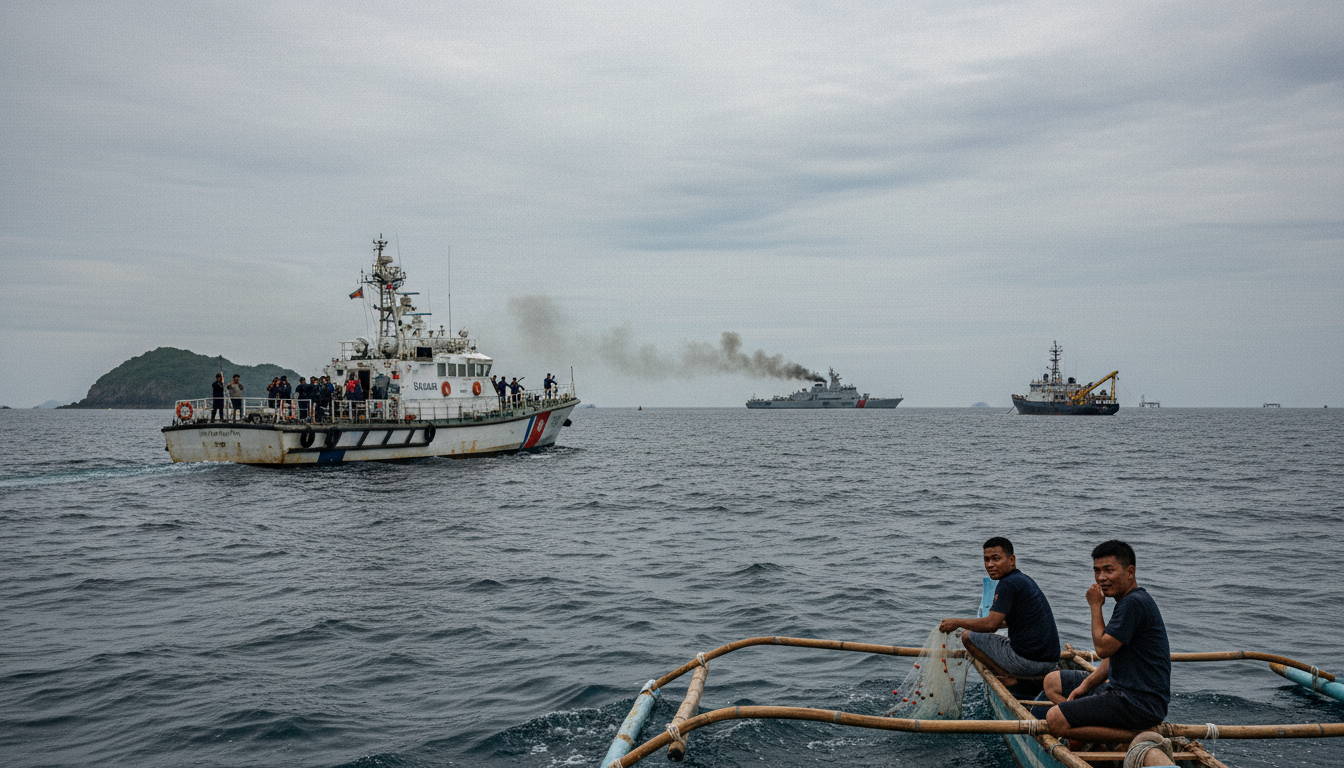
The coordinated monitoring of Chinese ships by Manila and Taipei on October 3, 2026, represents a notable development in the South China Sea’s contested waters. Philippine and Taiwanese patrol vessels tracked Chinese maritime activity near the Philippines, as reported by the Taipei Times and Focus Taiwan. This event suggests an operational alignment of interests between two sovereign entities facing shared regional challenges.
Historically, maritime surveillance and response operations have often occurred unilaterally or within formal alliance frameworks. This recent monitoring activity deviates from that long-standing approach, indicating a more fluid regional security landscape. For decades, the area's maritime dynamics have been shaped by historical claims, resource competition, and evolving geopolitical ambitions. The current situation reflects a hardening resolve among smaller coastal nations, specifically Taiwan and the Philippines, to assert their maritime rights. The Japan Times reported similar deployments in June 2026 when Taiwan's coast guard responded to a China operation, and the Taipei Times in June 2026 underscored Taiwan's emphasis on maritime rights.
This deployment aligns with Japan’s updated ‘Free and Open Indo-Pacific’ strategy, which The Diplomat reported in July 2026 as extending from Hanoi to Manila. This initiative aims to bolster maritime security and uphold international law in the region. The collaborative monitoring by Manila and Taipei, even without formal alliance structures, illustrates how regional actors are seeking pragmatic ways to enhance their deterrence capabilities and collect intelligence in areas of contention. Focus Taiwan noted in September 2026 that Taiwan closely monitors Chinese coast guard vessels, indicating a consistent pattern of vigilance.
However, the sustained presence and actions of the Chinese fleet, including its coast guard, present a counter-narrative: these monitoring activities do not fundamentally alter China’s operational objectives or its assertive posture. From this perspective, the combined patrols might be perceived as a symbolic gesture, lacking the capacity to deter effectively. China’s long-term strategy in the South China Sea has historically involved incremental advancements, establishing facts at sea, and normalizing its presence through sustained operations. The challenge for Manila and Taipei is to move beyond monitoring to robustly defend their claims without provoking an escalation.
Thailand, while not directly involved in this specific monitoring event, faces similar considerations regarding its maritime boundaries and regional stability. The patterns observed between Manila, Taipei, and Beijing serve as a case study for any nation with interests in the South China Sea. Policy decisions in Bangkok concerning maritime security, resource management, and international partnerships are linked to these evolving dynamics. For Thailand's policymakers, and others in Southeast Asia, the question is how to navigate an increasingly complex maritime domain where the costs of inaction may ultimately be borne by those along the coastlines, while policies are often formulated in inland capitals. The current developments underscore a regional strategic re-evaluation, where traditional bilateral relationships are being augmented by issue-specific cooperation, creating a web of interactions that remains largely unstructured yet highly consequential.
Sources
Newsletter
Pacific Daily
A curated briefing from Thailand, Asia-Pacific and the world.