Persistent Expulsions Near Pratas Underline South China Sea's Unresolved Tensions
Repeated coast guard actions near Taiwanese-controlled islands signal an ongoing challenge to maritime boundaries, affecting regional stability and economic calculations.
SINGAPORE
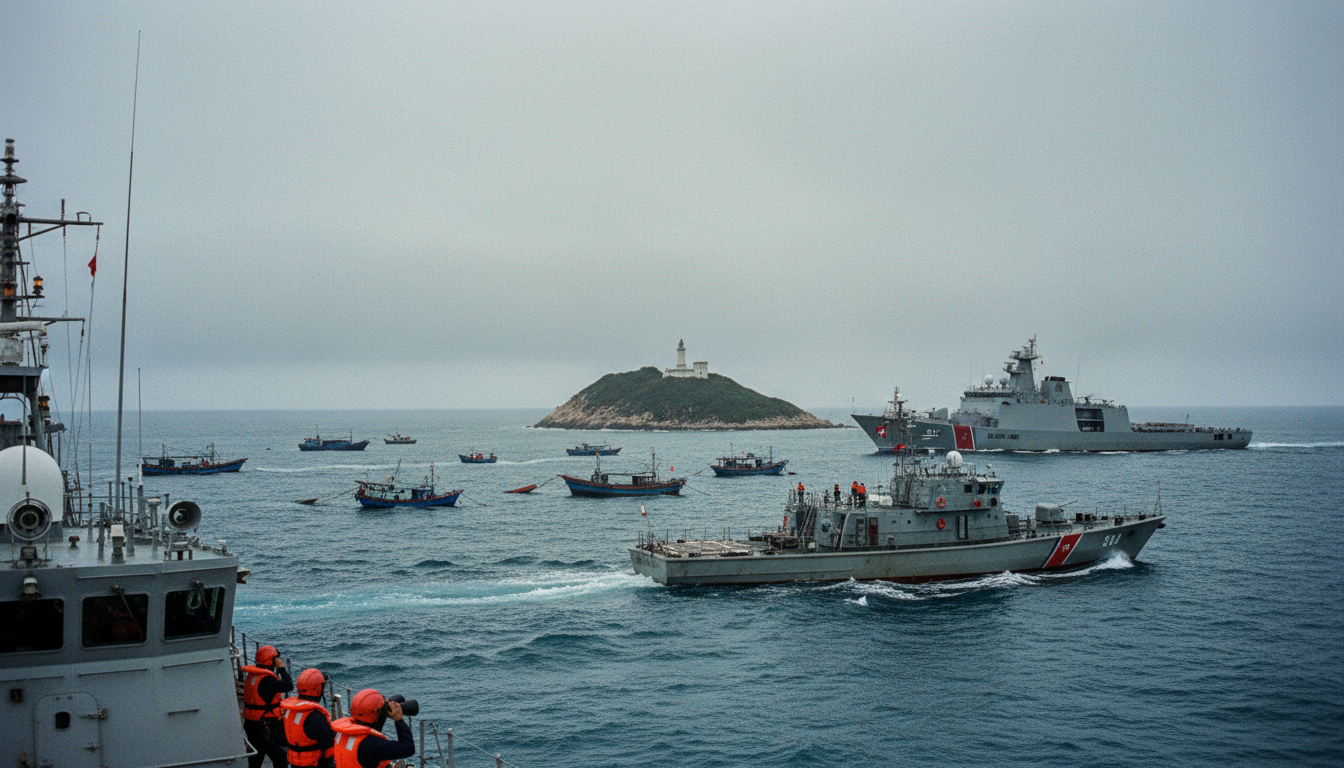
The frequent expulsions of Chinese vessels by Taiwan’s Coast Guard Administration (CGA) near Pratas and Taiping islands in 2026 highlight a pattern of persistent maritime contention. In October 2026, the CGA again expelled Chinese boats near Pratas, following a similar incident the previous day. This comes after earlier expulsions in June near Taiping Island and Pratas, as well as an interception in March. These events are not isolated incidents but recurring manifestations of unresolved claims in the South China Sea.
Taiwan maintains control over these islands, and its coast guard activities are consistent with enforcing its declared maritime jurisdiction. The repeated presence of Chinese boats in these areas, despite regular expulsions, indicates a deliberate, low-level probing of established boundaries. This continuous assertion of presence by Chinese vessels, whether fishing boats or other non-military craft, contributes to a state of sustained ambiguity and friction, rather than outright confrontation. The pattern suggests a long-term strategy of testing responses and normalizing presence in disputed waters.
The strategic importance of the Pratas, also known as Dongsha, and Taiping islands is significant. They represent outposts for territorial claims and provide potential vantage points in a critical international waterway. While these specific incidents involve Taiwan and China, the broader implications extend across the Asia-Pacific region. States like Vietnam, the Philippines, Malaysia, and Brunei also have competing claims in the South China Sea, and the actions of major claimants, such as China and Taiwan, resonate throughout the complex geopolitical landscape.
The economic consequences of such persistent tensions are often understated. Shipping lanes through the South China Sea are vital arteries for global trade, and any perceived instability, even from minor skirmishes or expulsions, can influence insurance premiums, transit times, and investment decisions. For Thailand, a nation with significant maritime trade and a strategic position in Southeast Asia, these developments warrant close attention. Though not a direct claimant in the immediate vicinity of Pratas or Taiping, Thailand's economic prosperity is inextricably linked to the unimpeded flow of commerce through these waters. Increased uncertainty or militarization in the South China Sea can impact its supply chains and export markets.
Moreover, the nature of the expulsions—conducted by coast guards rather than naval forces—underscores a deliberate effort by all parties to manage escalation. However, the sheer frequency of these encounters elevates the risk of miscalculation. Each expulsion, while routine in its occurrence, carries the potential for unintended incidents that could swiftly transform maritime friction into a broader security challenge. The continuous activity also draws attention to the disparity in resources and capabilities between various claimants, potentially exacerbating existing power imbalances.
The reported establishment of a new Chinese military presence in a Southeast Asian neighbor in September 2026, though separate from the Pratas and Taiping incidents, adds another layer to the regional security puzzle. It suggests a wider pattern of strategic positioning that extends beyond specific island disputes. The unresolved tension lies in how these seemingly isolated actions—coast guard expulsions and military build-ups—collectively reshape the maritime domain. The regional question remains: how do these localized assertions of sovereignty impact the collective security and economic stability of nations whose coastlines depend on the open and predictable movement of goods and vessels through these contested waters?
Sources
Newsletter
Pacific Daily
A curated briefing from Thailand, Asia-Pacific and the world.