Border Control as Statecraft: A Regional Shift in Capability
Taiwan's denial of entry to a Chinese official signifies an evolving capacity for sovereign control over movement, a trend evident across the Asia-Pacific.
SINGAPORE
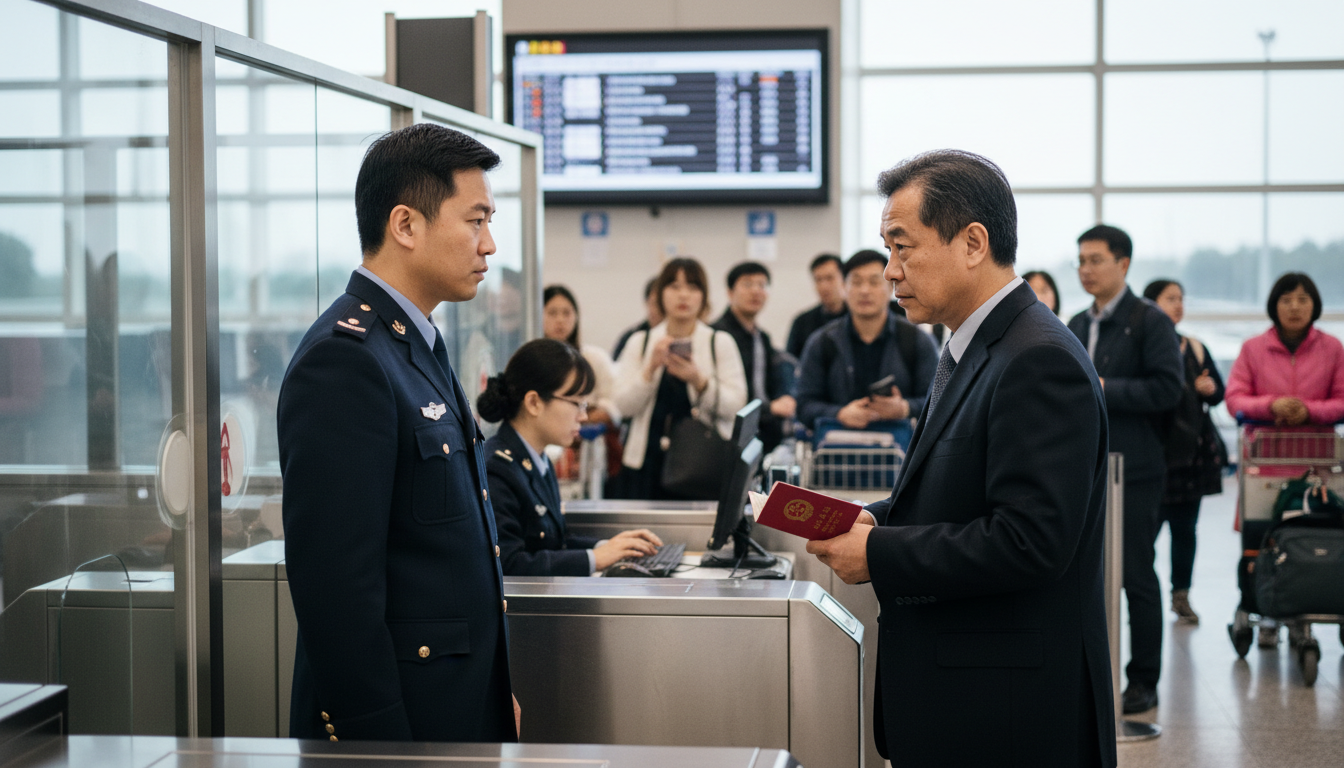
On September 22, 2026, the Taipei Times reported Taiwan's defense of denying entry to a Chinese official. This action represents more than a routine administrative decision; it reflects a demonstrated capacity to exercise precise sovereign control over who crosses its borders. The event stands as a specific instance of a broader shift in regional statecraft, where immigration procedures are increasingly employed as instruments of policy.
Historically, the movement of officials across geopolitical divides has been subject to various forms of state discretion, often calibrated to the prevailing political climate. The current action by Taiwan parallels other recent instances of entry denial that indicate a tightening of immigration protocols in various jurisdictions. In April 2025, an AP News report noted Hong Kong's defense of its immigration procedures following the denial of entry to an individual described as a British MP. Similarly, in June 2026, multiple outlets, including the South China Morning Post, ABC News, and The Hindu, reported that a football official defended visa issues and ticket prices for the FIFA World Cup, mentioning a referee being denied U.S. entry. These events, though distinct in their immediate circumstances, collectively illustrate an increasing willingness among entities to assert control over who enters their territories, regardless of prior understandings or official status.
This trend holds particular significance in the Asia-Pacific, a region marked by complex geopolitical dynamics. Taiwan's decision inserts a new data point into the calculus of cross-strait relations, demonstrating an enhanced capacity to enact specific restrictions. This marks a departure from periods where certain movements might have been implicitly facilitated or tacitly accepted. While the action was defended, the underlying change resides not in the defense itself, but in the precedent of the denial as an exercise of sovereign capability. The implication for countries like Thailand, while not direct, lies in the regional precedent. As states across the region demonstrate an increasing capacity for autonomous decision-making regarding entry, it influences the broader landscape of sovereignty and diplomatic engagement.
One might argue this denial is a reactive measure, a direct consequence of escalating tensions or specific incidents between Taiwan and mainland authorities, rather than a proactive assertion of capability. Such a view would frame the decision as a response within an existing framework of disagreement, intended to signal displeasure without fundamentally altering the operational parameters of interaction. However, the consistent application of such measures across different entities—from Hong Kong's action regarding an individual described as a British MP to the U.S. denial of a referee, and now Taiwan's denial of a Chinese official—points to a more systemic transformation. This indicates a change in the *how* of state interaction, moving beyond mere declaratory statements.
For regional states like Thailand, this implies a recalibration of expectations concerning official movements and diplomatic flexibility. The growing emphasis on explicit border control by various states suggests that previous assumptions about routine official travel may require re-evaluation. It signals a heightened environment where national prerogative in immigration matters is being exercised with greater frequency and with potentially reduced deference to informal understandings. This development, while seemingly procedural, alters the baseline for diplomatic engagement in a region already navigating intricate geopolitical currents. The unresolved tension remains in how consistently and broadly these enhanced border control capabilities will be exercised, and what new operational norms might emerge from their repeated application.
Sources
Newsletter
Pacific Daily
A curated briefing from Thailand, Asia-Pacific and the world.