Singapore's Grand Prix: Beyond the Spectacle, a Persistent Haze
The annual Formula 1 race in Singapore, a fixture on the global sporting calendar, continues despite environmental challenges, raising questions about its long-term appeal.
SINGAPORE
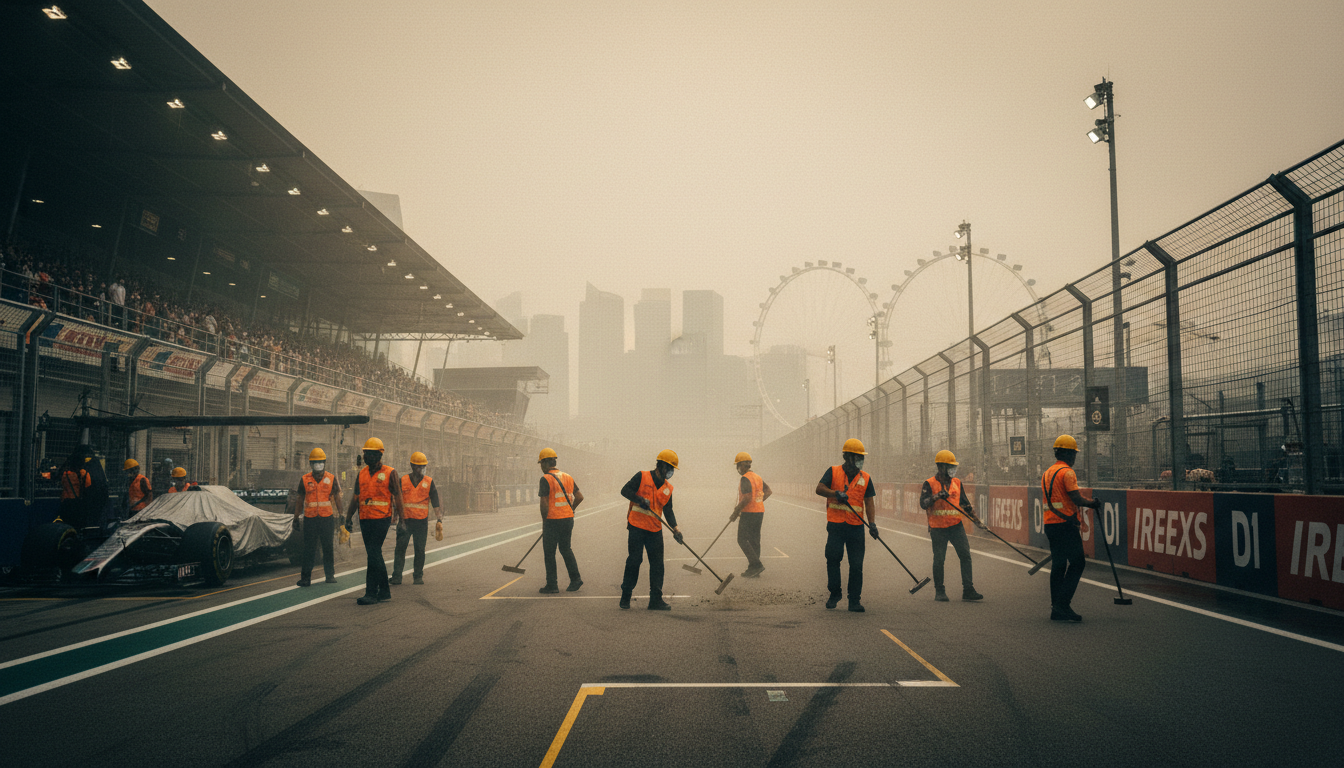
On October 11, 2026, Singapore hosted its annual Formula 1 Grand Prix. Red Bull's Max Verstappen claimed victory for the first time in his career on that Sunday, leading the pack at the start of the race. The event unfolded with racing fans in attendance, even as air quality hovered in the unhealthy range, a direct consequence of the haze.
This recurring environmental issue offers a counterpoint to the spectacle. The presence of haze during an international event like the Singapore Grand Prix is not an isolated incident. Each year, the race draws attention, with figures like Superman actor David Corenswet reportedly flying to Singapore for the F1 race in 2025. Yet, the persistent air quality concerns underscore an environmental reality that transcends the event's promotional gloss. The city-state presents itself as a hub for major events and tourism, but the natural environment, driven by seasonal haze, introduces a layer of unpredictability that marketing campaigns cannot fully control.
The commitment to hosting such a high-profile race suggests a strategic calculation. The Singapore Grand Prix, a night race, has become a distinctive fixture, combining sport with entertainment and tourism. The crowds that turned up in full force, as reported, indicate a strong immediate draw. This attendance occurs despite the air quality issues, suggesting that for many, the allure of the event outweighs environmental discomforts.
The long-term implications for a destination like Singapore are complex. While the Grand Prix undoubtedly brings global attention and economic activity, the environmental cost and potential health impacts are less frequently highlighted in the immediate aftermath of such events. The image of a world-class city hosting a premier sporting event is powerful, but it coexists with the reality of natural phenomena that affect daily life. The challenge for Singapore is to balance the economic benefits of these large-scale attractions with the underlying environmental conditions that periodically affect its urban environment and its residents.
The continued staging of the Formula 1 Grand Prix in the face of varying environmental conditions suggests an enduring value placed on its economic and branding benefits. However, it also subtly reshapes the narrative of the modern urban destination, adding a seasonal variable to the otherwise meticulously planned urban experience. The 2026 race, with Max Verstappen’s win, will be remembered for its sporting outcome, but the context of unhealthy air quality adds another dimension to its memory, one that the seasons dictate more than any promoter.
Sources
Newsletter
Pacific Daily
A curated briefing from Thailand, Asia-Pacific and the world.