A Steady Course: Singapore's Aviation Strategy and the Regional Horizon
The recent Skytrax recognition for Singapore Airlines and Scoot points to a consistent approach rather than a sudden triumph.
SINGAPORE
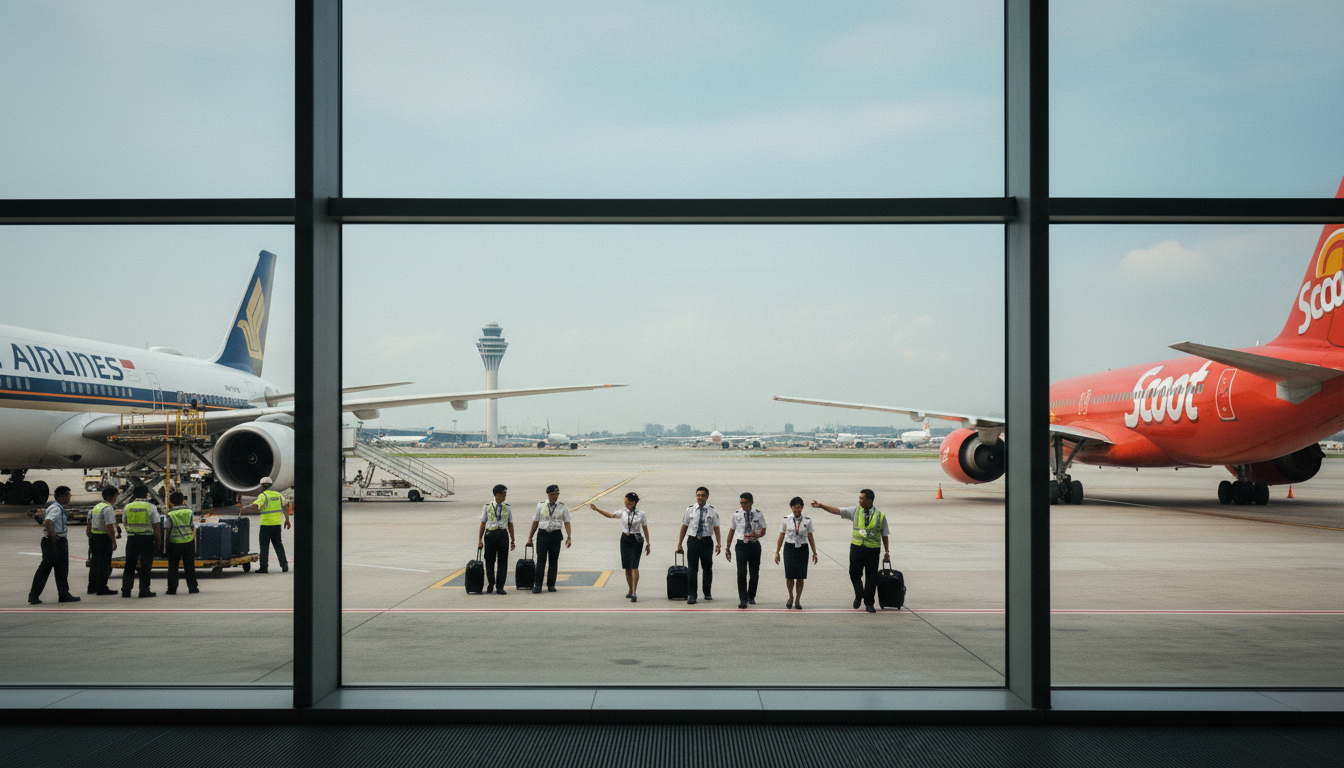
The image of aircraft lining the tarmac at Singapore's Changi Airport, observed on March 11, 2020, might suggest a period of stasis. Yet, for Singapore Airlines, the subsequent years have been anything but. On September 18, 2026, Singapore Airlines was named the world’s best airline for 2026 by Skytrax. This was not an isolated achievement; the carrier also secured three additional Skytrax awards. Its low-cost subsidiary, Scoot, received the world’s best long-haul low-cost airline title for a sixth consecutive year.
This latest recognition places Singapore Airlines back at the top, a position previously held by Qatar Airways, which ceded the top spot. The trajectory of these rankings can be fluid. The Business Times, on March 19, 2026, reported SIA as ranking 3rd in its category, with Scoot 5th. VnExpress International, on April 6, 2026, referred to Singapore Airlines as the 'world's second best airline' at that earlier date, indicating shifts in perception or measurement over the period leading up to the September announcement.
The persistent high-ranking performance of Singapore Airlines and Scoot, rather than a singular event, suggests a measured strategy in a competitive aviation landscape. The continuous acknowledgment of Scoot, specifically for its long-haul low-cost model, highlights the enduring relevance of hybrid travel options. For a region as geographically diverse and economically dynamic as Asia-Pacific, the presence of both full-service and low-cost long-haul leaders provides a structured framework for air travel. It acknowledges that travel demands range from premium experiences to budget-conscious long-distance journeys.
### Patterns in the Air
The consistency evident in Singapore’s aviation sector, particularly in the face of varying global conditions, offers a lens through which to consider regional economic approaches. The country’s position as a transit hub, facilitated by such air carriers, is a long-standing feature of its economic narrative. The sustained performance, despite shifts in global travel patterns and competitive pressures, indicates a focus on operational reliability and service standards.
However, it is pertinent to consider the nature of these accolades. Skytrax awards, while widely cited, represent a particular metric of evaluation. Other rankings and assessments may present differing results, as seen in the earlier March reports. An attributed claim from CNA Lifestyle on September 18, 2026, states that Singapore Airlines won the world’s best airline award. This is a specific recognition from one body. The continuous presence of other strong carriers, such as Qatar Airways, which previously held the top spot, underscores the competitive intensity within the industry.
What this consistent performance by Singaporean carriers might signal for Thailand and other Asia-Pacific nations is the importance of a bifurcated aviation strategy: fostering both high-quality full-service airlines and efficient long-haul low-cost options. For destinations dependent on tourism and trade, reliability in air transport is a foundational element. The ongoing success of Singapore Airlines and Scoot suggests that a steady hand in airline management, rather than reactive shifts, contributes to sustained recognition. It reflects a commitment to a defined approach in a sector continually influenced by geopolitical and economic currents, where passenger expectations are consistently evolving.
Sources
Newsletter
Pacific Daily
A curated briefing from Thailand, Asia-Pacific and the world.