The Silent Journey of Singapore's Discarded Textiles
Beneath the surface of everyday disposals, a shift in consumption is reshaping regional waste streams.
SINGAPORE
The simple act of placing unwanted clothing into a recycling bin in Singapore initiates a complex journey, often far beyond the city-state's shores. This process, rarely visible to the public, points to evolving habits and the quiet reordering of goods across the Asia-Pacific.
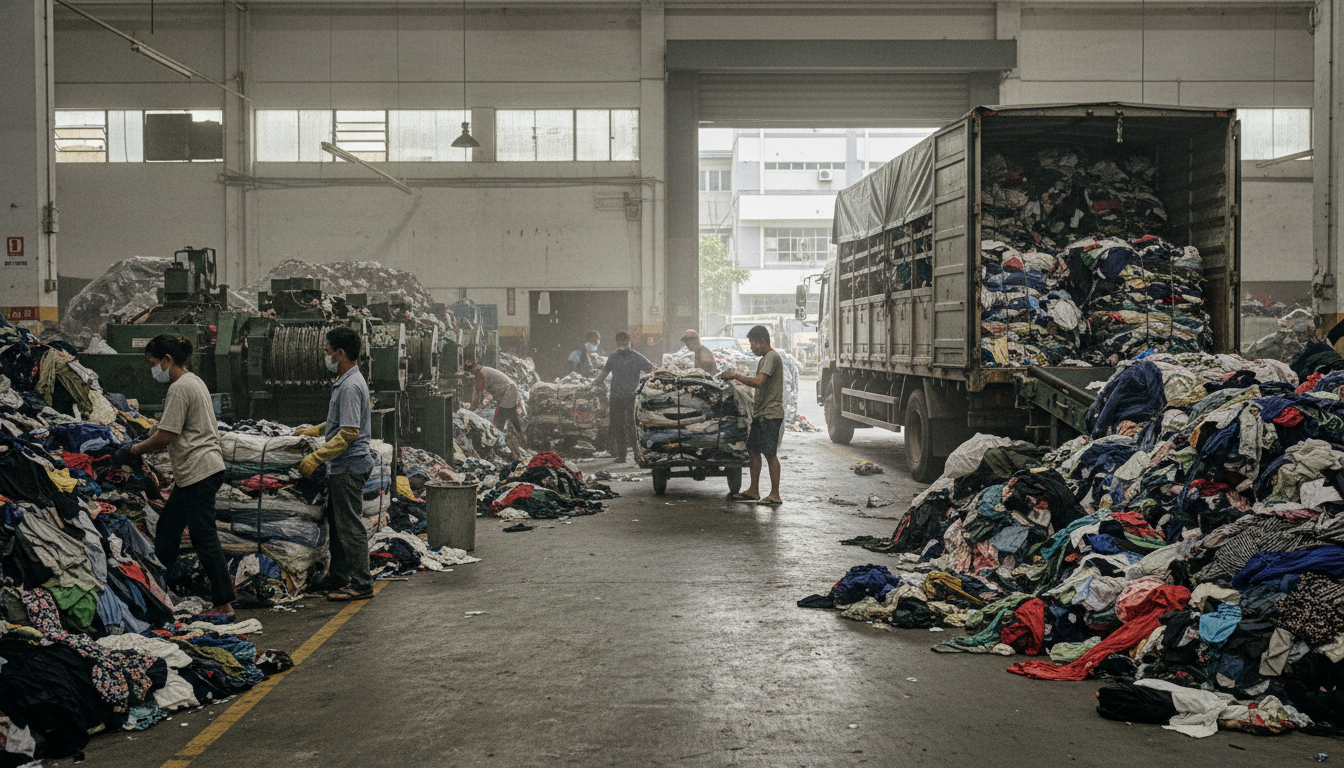
Textiles gathered from Singapore's recycling bins are frequently directed towards facilities like the one in Port Klang, Malaysia, where workers sort them. This operational reality, reported by CNA in August 2026, highlights a transnational movement of materials. It is not merely about disposal, but about a secondary life cycle facilitated by regional infrastructure. This movement is a response to what CNA describes as a "growing demand for secondhand fashion in Singapore," indicating a notable change in consumer behavior on the island.
This increased demand for used clothing is not an isolated trend. Events such as the "Go Green SG 2026" line-up, which included textile recovery workshops and guided tours in Sentosa, signal a public and institutional acknowledgment of textile waste. These initiatives, reported by The Straits Times in May 2026, suggest a societal engagement with the lifecycle of consumer goods that extends beyond mere acquisition. The focus shifts from new purchases to the longevity and reuse of existing items.
The challenge, however, lies in the practicalities of this system. While the aspiration for recycling is clear, the problem of "recycling contamination," highlighted by The Straits Times in July 2024, complicates the process. This contamination renders some collected textiles unusable for their intended second life, diverting them from reuse or repair into other, less sustainable outcomes. It raises a tension between intent and execution: consumers might believe they are contributing to a circular economy, but the reality is more nuanced.
The observation of secondhand goods moving across borders, processed in facilities like Port Klang, reveals a habit changing not just at the point of sale, but at the point of discard. Singaporeans' increasing embrace of secondhand fashion, alongside public initiatives to address textile waste, marks a cultural signal. It indicates a growing consciousness about material consumption, even if the practicalities of waste management remain complex. The story of Singapore's unwanted clothes is therefore not just about waste, but about the quiet redefinition of value for everyday objects, reshaping economic flows in Southeast Asia and beyond.
Sources
Newsletter
Pacific Daily
A curated briefing from Thailand, Asia-Pacific and the world.