Shanghai's K11 Towers and the Cost of Capital in Asia's Urban Futures
New World Development's move to spin off its Shanghai assets suggests a new calculus for Hong Kong developers navigating the mainland's financial currents.
SHANGHAI
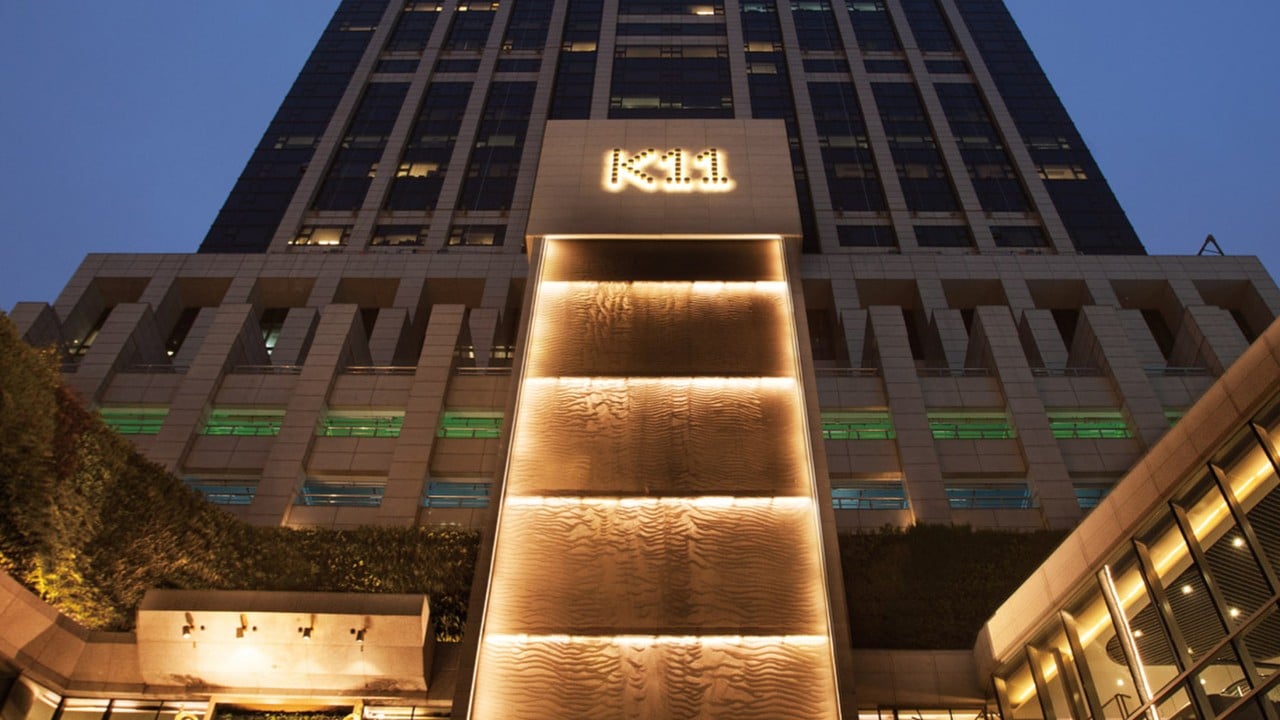
The K11 towers rise in Shanghai, a distinctive silhouette on a city horizon that constantly reimagines itself. Their recent financial maneuver — the Hong Kong-based New World Development (NWD) securing approval from the Shanghai Stock Exchange to spin off these assets into a real estate investment trust (Reit) — signals a profound shift. This is not simply a transaction; it is a recalibration of how value is perceived and extracted from the architectural statements that define modern Asian cities.
NWD, controlled by one of Hong Kong’s wealthiest families, gained approval for its NWD C-Reit, targeting an offering size of approximately 3.82 billion yuan (US$570 million). The estimated net proceeds for the group are stated as 3.24 billion yuan. This move, reported on 2026-09-21 by SCMP Travel and other outlets, comes from a developer described as 'distressed' in the original reporting. While an analyst quoted on the same day in SCMP Travel suggests the move will 'recycle capital for more value-accretive projects,' the underlying narrative is more complex.
Consider the scale. A US$570 million offering for assets in one of China's most dynamic cities seems, on its surface, a sign of robust market activity. Yet, the framing of NWD as 'distressed' immediately colors this perception. It suggests that even the titans of Hong Kong development, long adept at capital allocation, are facing pressures that necessitate such asset reconfigurations. The question arises: what are these assets truly worth to NWD as a whole, beyond the immediate capital injection?
For years, Hong Kong developers have been architects of both skylines and financial fortunes across the Asia-Pacific. Their expansion into mainland China was often seen as a natural progression, leveraging expertise and capital into a booming market. However, the last few years have presented a starkly different landscape. Reuters reported on 2026-02-02 that developers were skeptical of "hopeful signs" in China's property market. Reuters also detailed the seizure and sale of China developer Shimao's Hong Kong hotels by lenders on 2026-06-24, a potent symbol of distress.
This K11 Reit listing, therefore, can be read as a calculated adaptation. Rather than an aggressive expansion, it appears to be a strategic deleveraging, a means to shore up financial health by monetizing mature assets. The Shanghai Stock Exchange's approval indicates a willingness within mainland financial circles to facilitate such restructuring, offering a pathway for developers to tap local capital markets. This mechanism, while providing immediate liquidity, also redistributes ownership and potential returns. It invites Chinese investors to participate directly in the ownership of prime urban real estate, subtly shifting the balance of economic control.
From one perspective, this is a pragmatic move to unlock value and secure capital. From another, it represents a concession, a retreat from full control, acknowledging the current economic gravity. The analyst's term 'value-accretive' implies an ambition to reinvest for growth, yet the immediate need seems to be one of financial stability. The buildings themselves, once symbols of an outward-looking Hong Kong developer’s ambition, now become instruments for inward-focused capital management.
What this asks of those who observe, particularly in places like Thailand, is a re-evaluation of capital flows and investment strategies. Are the grand projects that dot Bangkok's skyline equally susceptible to such financial gymnastics? The NWD case highlights that even in Asia’s most vibrant economies, the towering structures that define urban identity are not immune to market forces that compel their owners to divest, restructure, and ultimately, share control. The future of urban development in the Asia-Pacific may well be less about sole ownership and more about shared stakes, managed through the nuanced mechanisms of local bourses.
Sources
Newsletter
Pacific Daily
A curated briefing from Thailand, Asia-Pacific and the world.