Scale and Scarcity at Fifty Thousand Square Feet
Porto’s Bakery tests whether expansive physical retail can preserve the queue discipline that made it an institution
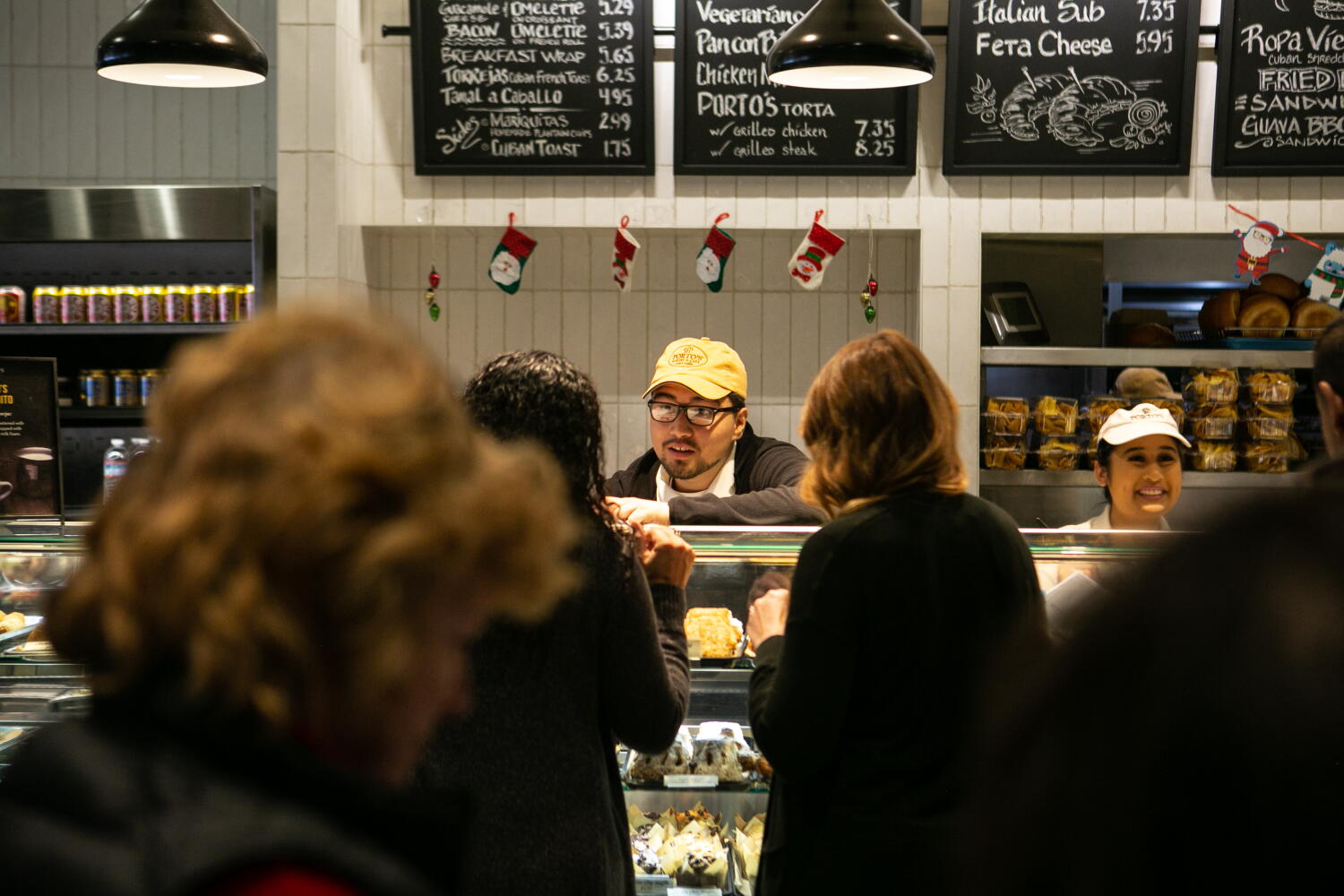
Customer queues operate as commercial proof, but physical footprint functions strictly as fixed overhead. Across Southern California, Porto’s Bakery has long extracted brand value from localized concentration, relying on locations like Glendale to pull regional consumers across deliberate travel friction. The Los Angeles Times Food reported in October 2026 that the Cuban-American enterprise will expand into Ontario, anchoring a 50,000 square foot commercial development. On paper, the expansion monetizes suppressed demand across the Inland Empire. In operational terms, committing to a floor plate of that magnitude changes the underlying unit economics.
Founded in 1976, the bakery built durable regional equity around core high-volume goods, specifically its potato balls and cheese rolls. Scarcity was never engineered through production ceilings, but through spatial distribution. When patrons absorb highway travel to purchase bakery boxes, the commute itself reinforces the perceived value of the transaction. By placing 50,000 square feet into a peripheral commercial node, the brand exchanges geographic scarcity for physical throughput capacity.
The Floor Plate Dilemma
Commercial real estate developers in outer suburban corridors routinely contract destination culinary operators to secure baseline automobile traffic. For the Ontario development, securing a verified regional tenant delivers immediate footfall. For the tenant, however, the balance sheet must absorb structural carrying costs that cannot be resolved through peak-period customer volume alone.
Manufacturing and serving bakery lines at massive scale requires continuous morning-to-evening turnover. Glendale established that rapid inventory cycling thrives inside dense municipal clusters. Yet an expansive complex in the Inland Empire demands a transition from occasional destination travel to habitual daily transactions. In retail analysis, physical convenience often degrades brand pricing power because accessibility removes the urgency that justifies waiting in long queues.
The analytical counterargument rests on demonstrated consumer retention. For decades, regional customer willingness to drive across county lines generated substantial goodwill without ongoing advertising expenditure. Demand inside the Inland Empire is not theoretical; local patrons have historically traveled west to buy these products. Capturing that pre-existing transaction volume substantially mitigates customer acquisition risk, providing baseline stability that conventional retail tenants rarely command upon opening.
The Margin for Error
Operational capacity nevertheless reshapes consumer psychology. Destination retail benefits from compressed physical density, where visible queues outside a store signal freshness, velocity, and communal consensus. When floor space expands tenfold to absorb volume seamlessly, the psychological validation tied to scarcity dissipates. Proximity makes products convenient, but convenience exposes baked goods to direct daily substitution.
Commercial developments slated through 2028 confront a consumer market marked by spending scrutiny and defensive household budgeting. At 50,000 square feet, the capital outlay leaves negligible tolerance for seasonal softness or mid-week lulls. In earlier expansion phases, regional food companies protected working capital precisely by limiting their real estate commitments and maintaining artificial pressure at the counter.
Suburban retail nodes across the Pacific Rim navigate this identical friction between scaling physical access and retaining operational authority. The expansion in Ontario serves as an empirical test of whether cultural cachet can offset the operational liabilities of massive square footage. The underlying tension remains unresolved: once physical distribution removes consumer friction, the balance sheet must rely entirely on perpetual daily volume to service the space.
Sources
Newsletter
Pacific Daily
A curated briefing from Thailand, Asia-Pacific and the world.