Digital Barriers and Green Spaces: Access in the Age of Scarcity
The new BC Parks pass system, designed to secure access, reveals a broader tension in managing natural spaces when demand outstrips supply.
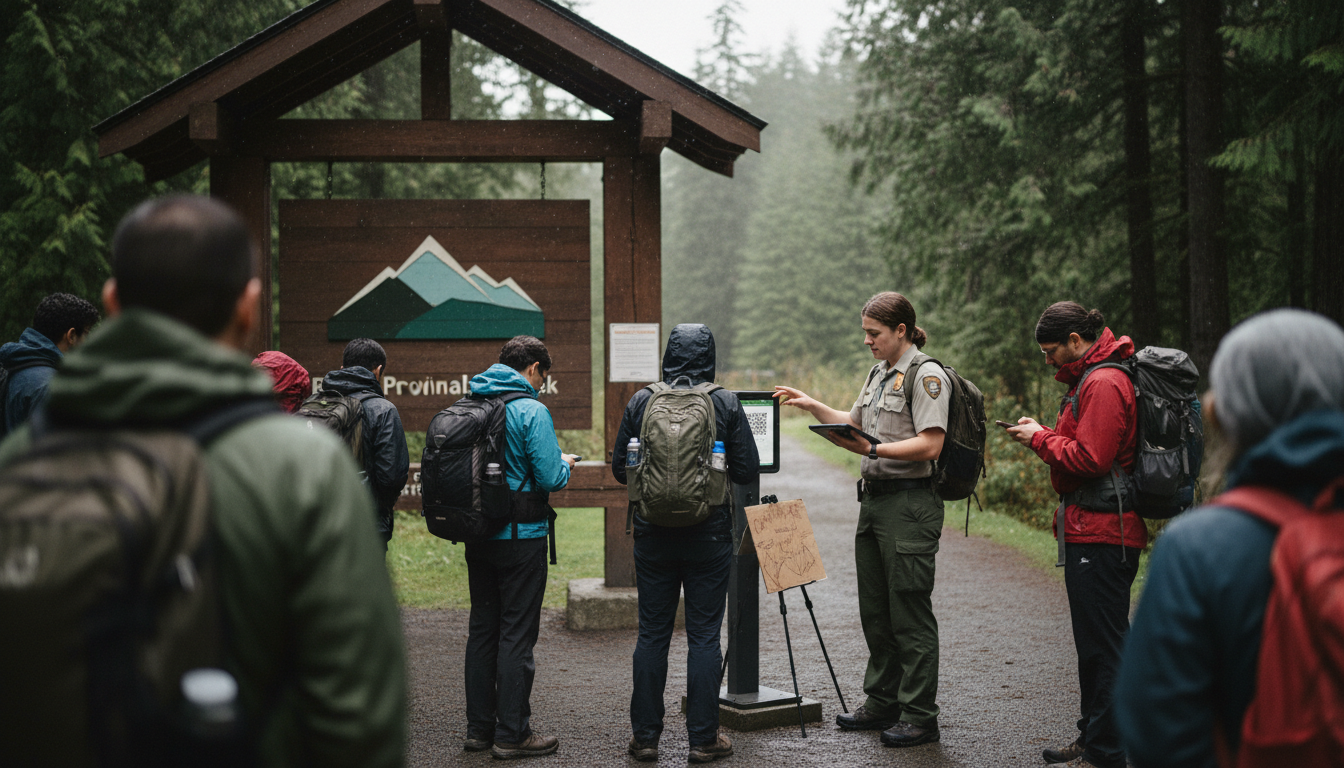
The trails of the Sea-to-Sky corridor, a region already witnessing shifts in its natural landscape, are set to be governed by a new digital process. BC Parks announced that, starting September 22, accessing day-use areas will require a verified online account. The stated purpose is to "strengthen security and improve distribution of the passes," a measure BC Parks says will help prevent "misuse and interference from digital bots."
This move, framed as an effort to ensure passes are "reserved by real people and distributed more fairly during periods of high demand," marks a significant shift. No longer is access solely a matter of proximity or willingness to arrive early. Now, it requires digital literacy and a pre-existing registration with a government agency. The company Daily Hive Vancouver reported on September 17, 2026, that many visitors found these changes insufficient, even as they introduce a new layer of control.
The friction points become apparent here. On one side, public bodies like BC Parks contend with escalating demand for natural areas, exacerbated by recent events. For instance, the August 11, 2026, evacuation of famed tourist destinations in California’s Big Sur due to wildfire threats underscores the fragility of these environments. Such incidents, whether natural or human-induced, inevitably push more visitors into accessible, perceived-safe spaces, intensifying pressure on existing infrastructure.
On the other side, the introduction of a digital gatekeeper, while intended to solve one problem, creates another. It formalizes a new kind of barrier, shifting the focus from physical presence to online proficiency. For some, this might streamline their experience, but for others, particularly those less comfortable with digital interfaces or without reliable internet access, it transforms a straightforward recreational activity into a bureaucratic hurdle. The change impacts how people – from regular hikers to casual weekend visitors – plan their engagement with nature, compelling a pre-registration that was previously optional.
The real question that emerges is not just about bots, but about the implicit redefinition of access. Is access to natural beauty now predicated on an ability to navigate a digital ecosystem, rather than the simple act of showing up? This administrative adjustment by BC Parks suggests that public spaces, even those ostensibly wild, are increasingly managed like a limited resource, with entry conditions evolving to reflect both environmental pressures and the digital expectations of an urbanized population. It is a subtle but profound change in how a habit, the simple act of visiting a park, is now framed and controlled.
Sources
Newsletter
Pacific Daily
A curated briefing from Thailand, Asia-Pacific and the world.