The Hotel Credit Discount and the Quiet Squeeze on Dining Rooms
Andaz Singapore joins an industry trend bundling food vouchers into overnight rates, shifting pricing pressure onto floor operations
SINGAPORE
Room inventory generates a hotel's primary operating cash, while kitchens absorb the direct financial friction of perishable stock and skilled labour. When hospitality operators package dining allowances into lodging tariffs, that structural divergence between rooms division accounting and kitchen margins becomes apparent.
In October 2026, Andaz Singapore introduced two promotional accommodation packages structured around food and beverage credits for stays of at least two nights. The Deluxe Room Offer gives guests a 15 per cent reduction in room rates, daily breakfast and S$50, or US$39, in dining credit per stay. A separate Suite Offer reserved for World of Hyatt members pairs a 20 per cent suite discount with breakfast and S$100 in dining credit, with membership listed as complimentary. Marketing desks treat these allocations as basic incentives to secure multi-night occupancy. On the restaurant floor, however, the financial mechanics present an entirely different operational balance.
Accounting Ledger Versus Kitchen Margin
Corporate revenue managers tend to regard a food voucher as an efficient lever. Offering a S$50 or S$100 dining credit on a two-night stay allows a property to protect headline room rates while delivering an incentive with a high perceived retail value. Because the raw wholesale food cost of a restaurant order typically represents only a segment of the printed menu price, lodging executives view dining subsidies as low-cost customer acquisition.
Dining credits function less as culinary patronage and more as captive accounting mechanisms designed to protect room yields.
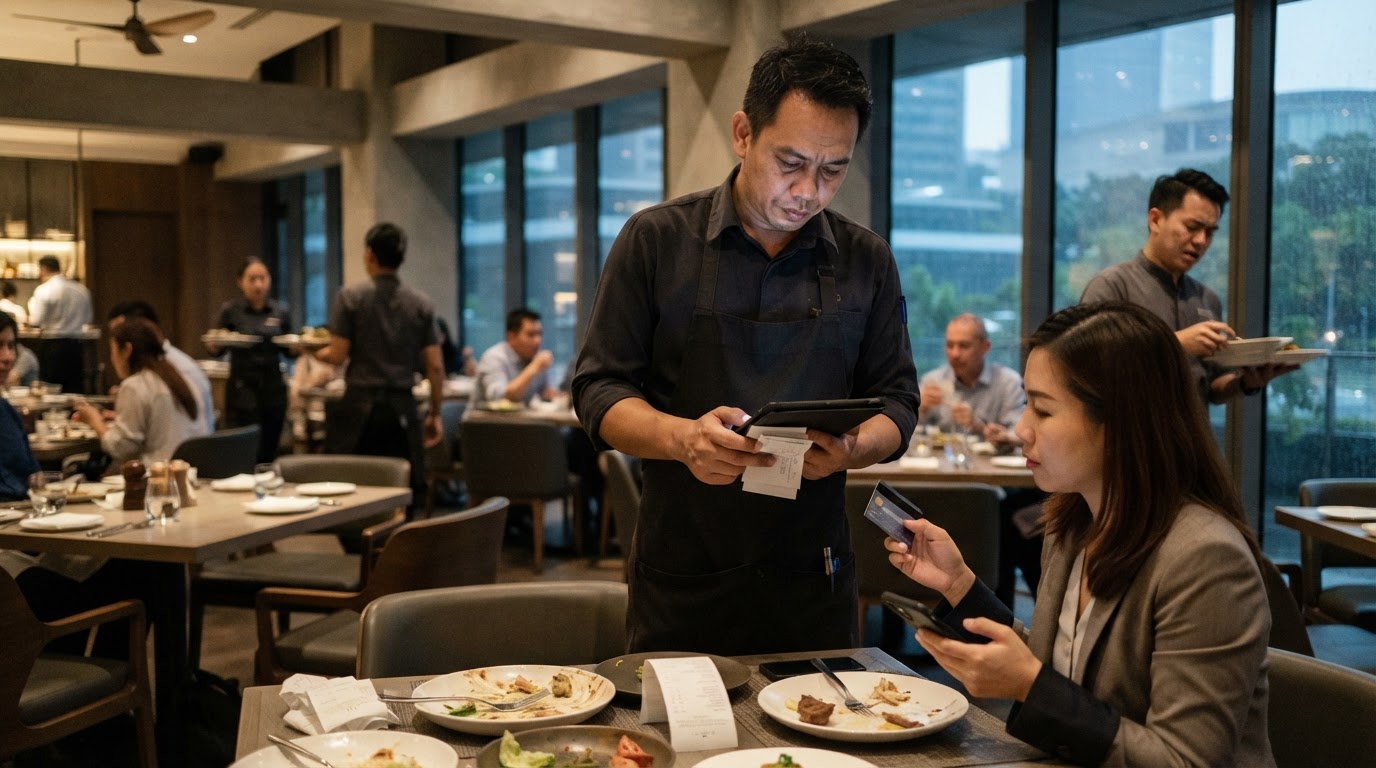
Yet culinary operations do not run on wholesale ingredient cost alone. An occupied table settling an account through lodging credits incurs the exact same operational overhead as one paying undiscounted retail prices. Floor staff must attend the table, line cooks fire proteins under fixed timing requirements, and dishwashing stations handle the same turnover. In Singapore, where commercial kitchen space, utility rates and specialised culinary labour constitute substantial baseline hurdles, an outlet operates under narrow operating breathing room. When a property drives occupancy by pre-allocating meal allowances, the food and beverage division effectively absorbs an uncompensated discount against its own revenue targets.
The Limit of Bundled Vouchers
There is, to be sure, a defensible occupancy rationale behind these promotional combinations. Urban hospitality assets face constant corporate and leisure booking volatility, meaning empty covers on mid-week evenings can erode operational efficiency almost as severely as vacant beds. Enforcing a two-night minimum stay provides culinary teams with predictable cover counts, enabling procurement stations to schedule butchery and prep work against known guest volumes. By capturing meal spending on the property, the hotel retains dining dollars that might otherwise disperse into surrounding neighbourhood venues.
Still, that captured patronage operates under tangible balance-sheet limits. A credit of US$39 or S$100 distributed across two or more evenings covers only an introductory portion of a full dining bill at an upscale property. Service staff often find themselves guiding guests toward beverage pairings or carbohydrate courses to absorb the balance, as kitchens work to protect plate margins against rising wholesale procurement expenses. The voucher establishes an initial ceiling on spend, compelling outlet managers to engineer menu exposure around volume rather than culinary execution.
The commercial logic of room sales and the margin realities of restaurant lines remain pulled in opposite directions. Lodging operators can continue deploying restaurant vouchers to stimulate multi-night occupancy, but that mechanism leaves kitchen managers with the unresolved burden of financing guest acquisition out of plate-level margins.
Sources
Newsletter
Pacific Daily
A curated briefing from Thailand, Asia-Pacific and the world.