Dining Retail Decouples From Exclusivity in Ventura
Round One Entertainment pairs regional food stalls with bowling alleys to subsidise commercial floor space
SINGAPORE
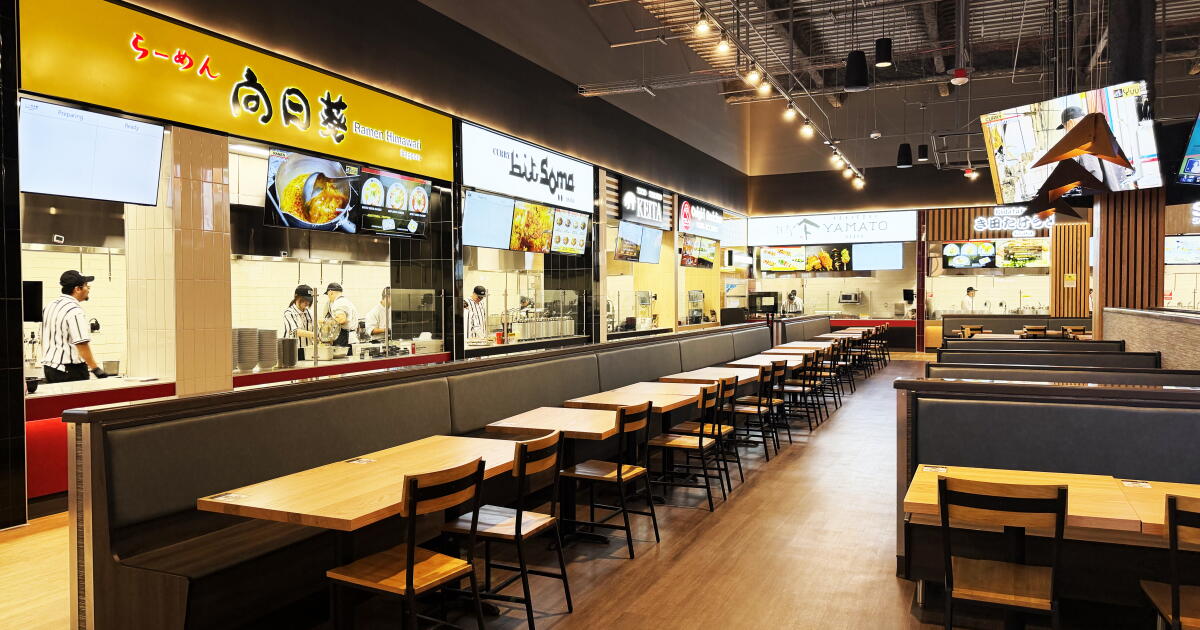
Commercial real estate developers frequently treat regional culinary identity as an upscale marketing premium, yet low-margin food halls operate on volume rather than prestige. In October 2026, Round One Entertainment Inc opened Yuu Japanese Food Hall in Ventura, assembling stalls serving ramen, karaage, yakitori, curry, and Neapolitan pizza beside an arcade and a bowling alley. That juxtaposition exposes the central operating tension of suburban dining developments. High-volume recreation must subsidise specialized food stalls because artisanal food alone rarely covers large square footage.
Corporate operators routinely argue that gathering regional dishes under one roof creates a culinary anchor capable of pulling suburban consumers across municipal lines. In Ventura’s Pacific View site, the physical inventory relies on familiar comfort food formats. Offerings include yuzu-kosho karaage, silken udon noodles crowned with crispy chicken tempura, and regional soup bases ranging from tonkotsu to Sapporo miso and dried-sardine niboshi broths. Stated intentions emphasize gastronomic authenticity, yet real estate requirements dictate that casual foot traffic remains constant from morning until night.
Arcade Subsidies and Floor Efficiency
Dining concepts face rising baseline operational overheads, from energy consumption to complex kitchen ventilation systems. Food halls attempt to mitigate these expenses by condensing kitchen lines and sharing shared dining tables. In Ventura, the enterprise relies on amusement infrastructure rather than culinary scarcity to sustain long-term operations. Bowling lanes and coin-operated arcade machines carry high margins and minimal per-customer labor, generating steady revenues that absorb volatile kitchen margins.
Amusement floor space buffers the underlying economic fragility of multi-vendor kitchen venues.
Skeptics might argue that experiential hybrid models devalue dining by treating regional food preparation as a secondary amenity to competitive games. Enthusiasts counter that co-locating family recreation with varied food counters improves operational efficiency for independent food stalls, shielding smaller vendors from steep commercial property rents. Both assessments point to a single economic reality. Food vendors survive in major development schemes only when paired with high-yield retail or mechanical entertainment that cushions slow weekday footfall.
The Limit of Suburban Aggregation
Physical food hall developments in suburban zones eventually encounter demographic constraints. Ventura is not a dense metropolitan transit corridor where daily office workers sustain midday lunch counters. Suburban entertainment centers depend on discretionary weekend patronage, meaning foot traffic surges on Saturday while mid-week shifts struggle with unused seating.
Aggregating diverse culinary options—from wood-fired Neapolitan dough to broth kettles—does not eliminate vendor churn. Kitchen operators still face narrow unit economics, high food wastage risks, and seasonal shifts in consumer leisure spending. Entertainment halls can aggregate foot traffic, but they cannot manufacture regular household dining demand. Until multi-tenant concepts prove durable through extended consumer downturns, these developments function less as dining breakthroughs and more as calculated retail space management strategies.
Sources
Newsletter
Pacific Daily
A curated briefing from Thailand, Asia-Pacific and the world.