Hawaiʻi's Food System Reassessment Offers Lessons for Asia-Pacific Resilience
The shift from local crop production to integrated planning in Hawaiʻi highlights critical vulnerabilities relevant to the region's climate-exposed nations.
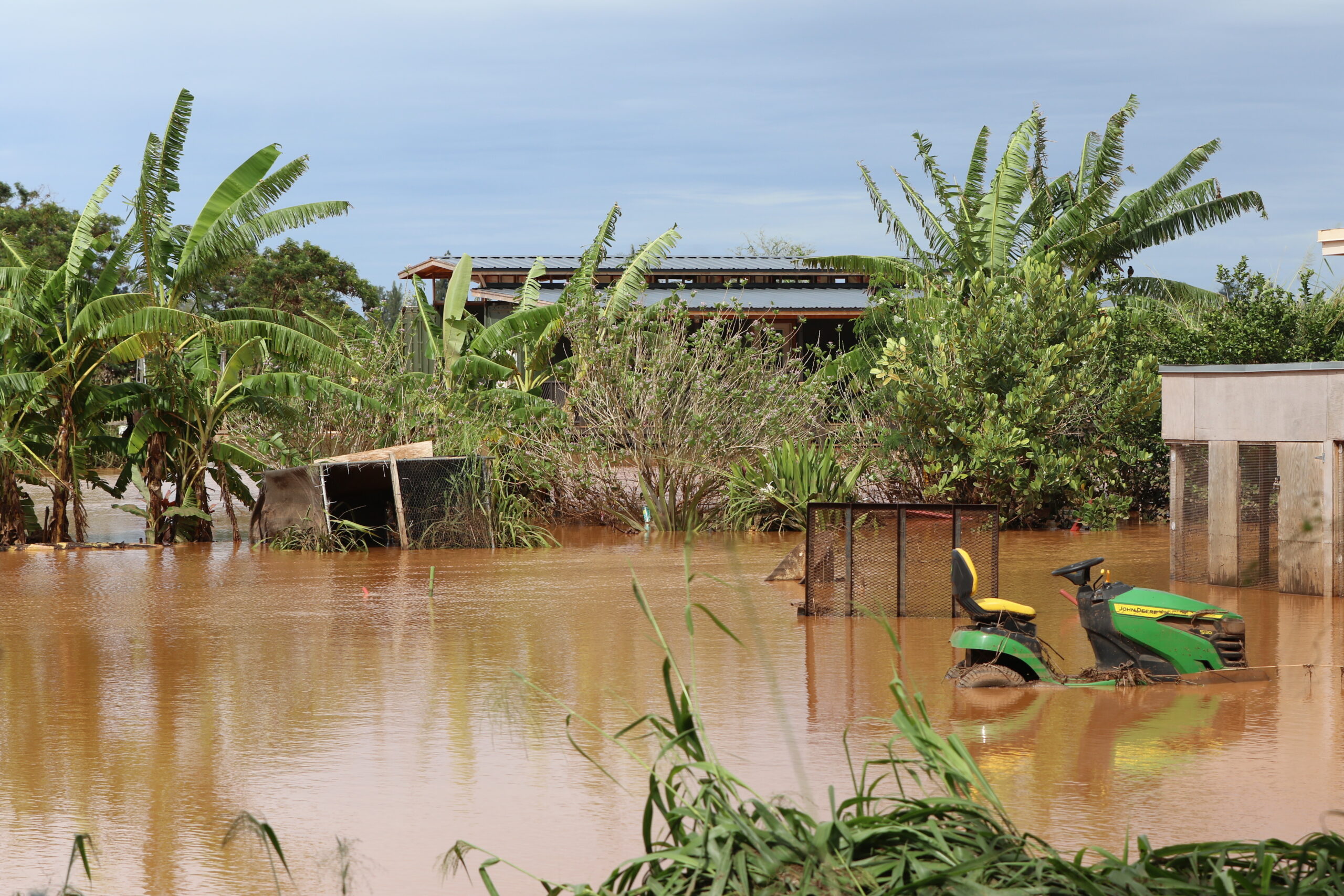
Recent discussions regarding Hawaiʻi's food future indicate a critical re-evaluation of its approach to food security. The Honolulu Civil Beat reported on 2026-09-20 that conversations have traditionally centered on increasing local crop production. However, the publication asserts that this focus is insufficient, citing mounting climate risks and the disruption of everyday networks by extreme heat, wildfires, and flooding.
The premise that 'growing more local crops is not enough' suggests a need for an 'integrated system of planning and investment in the foods that sustain us.' This perspective acknowledges that food systems are vulnerable not only to production shortfalls but also to disruptions in supply chains and infrastructure, which are exacerbated by climate-related hazards. For regions within the Asia-Pacific that share similar dependencies on both local agriculture and complex global supply chains, such as Thailand, this reframing holds significant implications.
The Asia-Pacific, like Hawaiʻi, faces increasing exposure to climate events. While Hawaiʻi contended with severe weather and a 6.0 magnitude earthquake detected off its coast on 2026-05-23, other nations in the region routinely experience typhoons, droughts, and sea-level rise. These events directly threaten agricultural output and the distribution networks essential for food availability. An approach that prioritizes a narrow focus on local production without robust infrastructure and diversified supply planning may prove inadequate in the face of such systemic pressures.
The inherent challenge lies in reconciling the desire for self-sufficiency with the realities of global trade and climate volatility. Hawaiian Airlines, for example, sought growth towards Asia as early as 2017, illustrating the established interconnectivity of these regions. The US Senate's push for Taiwan to attend the Rimpac drill, reported on 2025-10-13, further underscores geopolitical dynamics that can influence resource allocation and trade routes.
Critically, the commitment to integrated planning for food systems must survive contact with national capital plans. Funding allocation for resilient infrastructure, strategic food reserves, and diversified sourcing mechanisms requires long-term governmental commitment beyond immediate agricultural subsidies. Without explicit policy documents and statistics demonstrating a shift in investment patterns, the assertion for 'integrated planning' remains a theoretical framework rather than an implemented strategy. The unresolved tension lies between a recognized systemic vulnerability and the tangible reorientation of fiscal priorities required to address it.
Sources
Newsletter
Pacific Daily
A curated briefing from Thailand, Asia-Pacific and the world.