Marine heatwave impact on Pacific whale populations signals broader regional food security risks
Declines in forage species due to ocean warming represent a structural shift that extends beyond marine ecosystems to coastal economies.
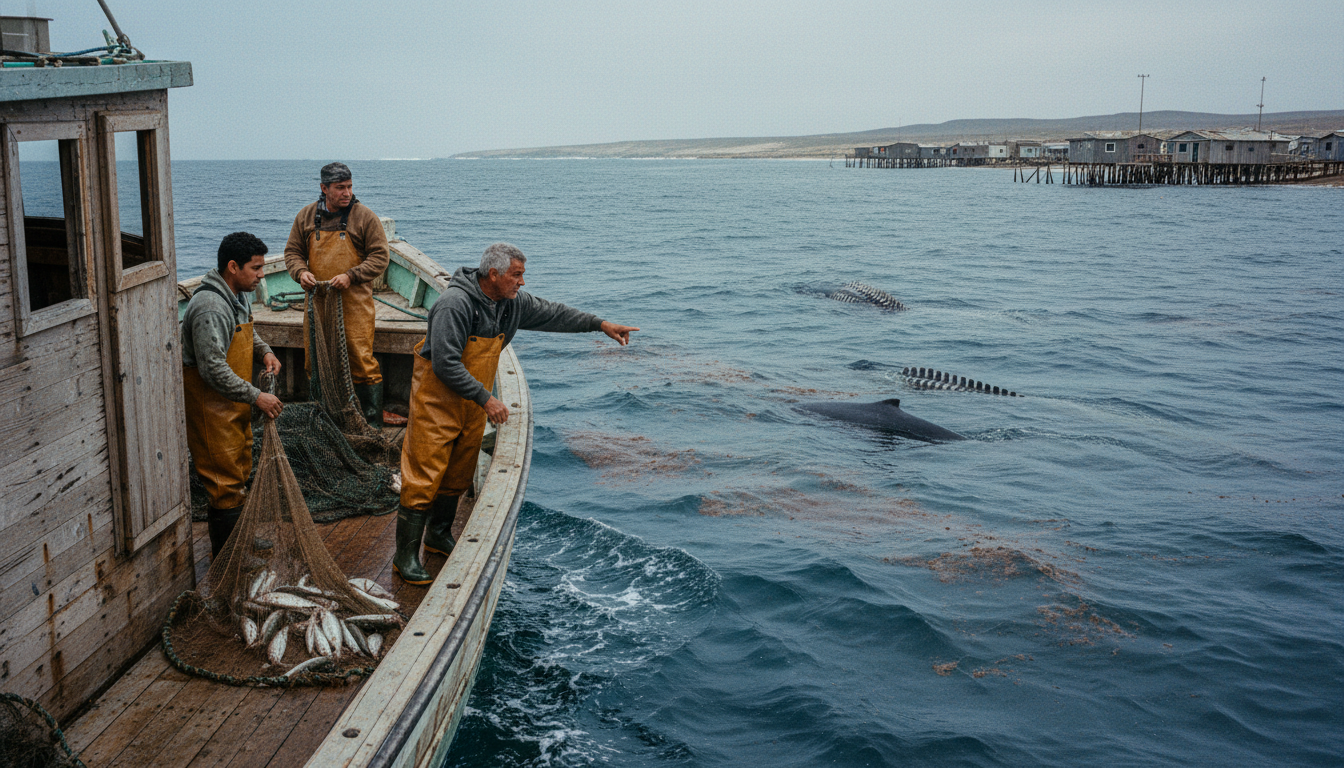
The sharp decline in Hawaiian humpback whale populations following the 2013-16 marine heatwave in the northeastern Pacific Ocean represents a structural shift with implications that extend beyond endangered species conservation. A recent study, reported by Mongabay Asia on 2026-09-15, concluded that the decrease in humpback whales, which feed in Alaskan and Canadian waters before migrating to Hawaii to breed, directly correlates with a dramatic decline in forage fish and krill populations during the same heatwave period. This event reveals a direct link between ocean temperature anomalies and the fundamental base of the marine food chain.
The initial impact was a reduction in krill and small fish, critical food sources for humpback whales. The subsequent consequence was the sharp decline of the whale population, which has reportedly not yet recovered. This sequence, from environmental change to forage species collapse, then to higher trophic level impacts, is not isolated. The Guardian reported on 2023-10-20 that billions of snow crabs in Alaska also vanished due to warm ocean conditions. Another report from The Guardian on 2024-02-28 questioned if a marine heatwave caused 7,000 humpback whales to starve to death, further highlighting the widespread nature of these ecological disruptions.
While the specific instances cited focus on the North Pacific and Alaskan waters, the underlying mechanism — marine heatwaves affecting foundational marine life — is a global phenomenon. BBC reported on 2026-07-08 an 'extreme' marine heatwave expected for parts of the UK with risk to sea life, and The Guardian on 2026-05-22 detailed why an immense marine heatwave off the US west coast has alarmed scientists. These events indicate a pattern of recurring environmental stress that alters ocean ecosystems. The crucial implication for Thailand and the broader Asia-Pacific region is that such oceanic shifts can directly compromise food security and coastal livelihoods.
The region's reliance on marine resources, particularly for protein and economic activity, means that changes to the marine food web are not merely ecological concerns. The fishing industry, which underpins significant portions of the Asia-Pacific economy, is vulnerable to similar collapses in forage species. If krill and small fish populations decline in Southeast Asian waters due to warming events, the impact will be felt across the entire seafood supply chain, from local fishermen to international markets. This would affect not only marine predators but also the human populations dependent on them.
The primary constraint that remains unresolved is the predictable recurrence and increasing intensity of these marine heatwaves. While the evidence clearly points to ocean warming as the cause of these forage species declines, policy responses aimed at mitigating these structural changes are not yet demonstrating equivalent scale or efficacy. The outcome now depends on whether regional and international governance structures can adapt to address the fundamental alteration of marine ecosystems, moving beyond isolated conservation efforts to broader strategies for marine food security.
Sources
Newsletter
Pacific Daily
A curated briefing from Thailand, Asia-Pacific and the world.