Pulau Bukom and the Slow Geometry of Clean Air
Singapore Airlines buys its first fuel distilled from industrial emissions, trading immediate scale for an experimental refinery off its southern shore
SINGAPORE
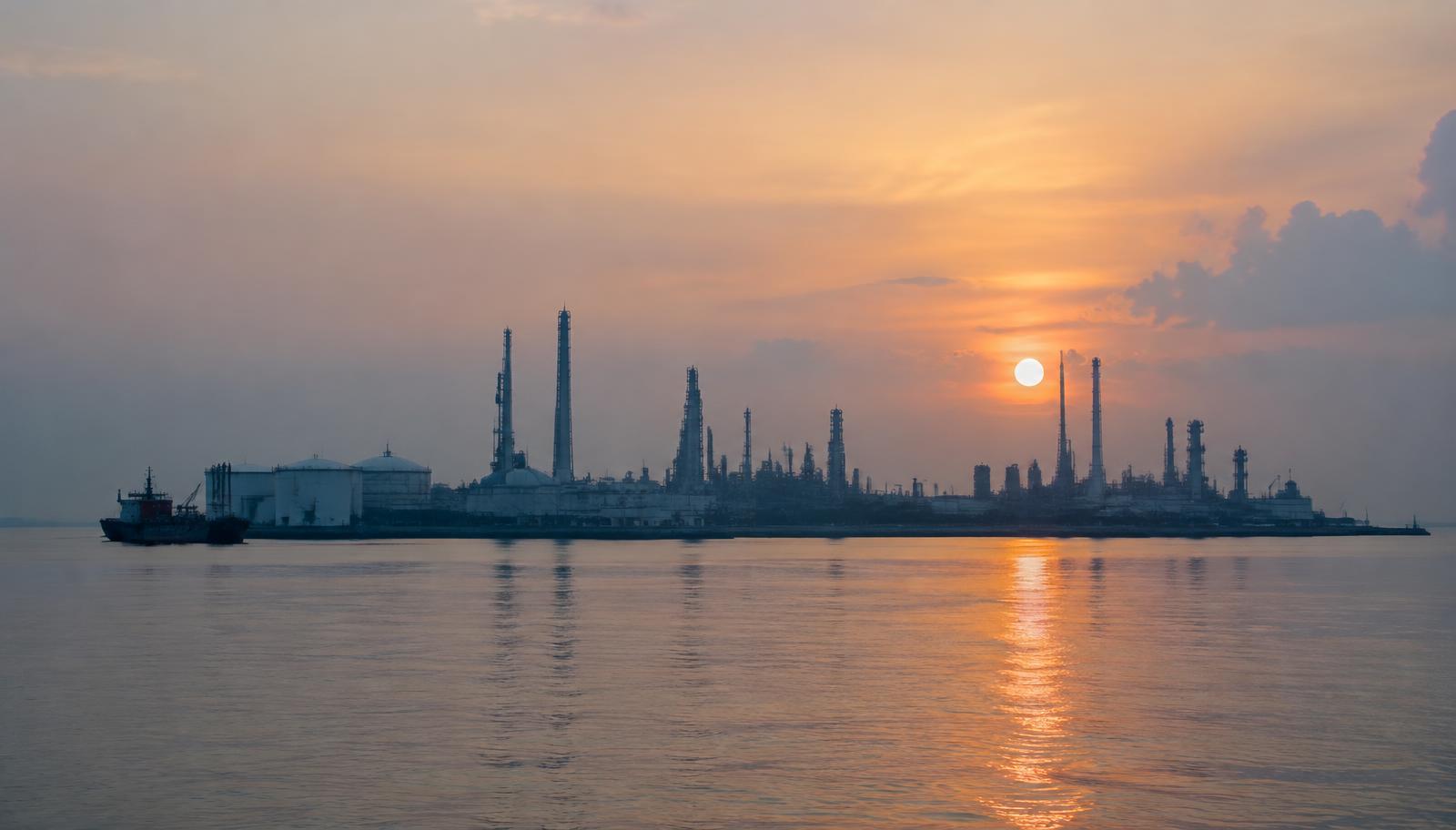
Across the water from the southern quays of Singapore, the low silhouette of Pulau Bukom carries the metal chimneys and cooling towers of industrial refining. The island sits in the roadstead where merchant ships anchor before entering the Malacca Strait, functioning as a silent processing engine behind the spotless transit terminals of Changi. For decades, aviation treated this petroleum reserve as an unquestioned domestic baseline. That physical compact is shifting toward something far more tentative.
Singapore Airlines has agreed to purchase up to 4,800 tonnes of sustainable aviation fuel from Aether Fuels across three years, taking deliveries starting in 2028. The supply will originate from Project Beacon, a processing unit being built at the Aster refining complex on Pulau Bukom. Unlike standard alternative fuels derived from discarded cooking oils and animal tallow, this supply will extract hydrocarbons from captured waste gases.
At 4,800 tonnes distributed over thirty-six months, the volume barely registers against the continuous burn of long-haul aviation. Singapore Airlines operates flights crossing continents, where a single departure consumes dozens of tonnes before reaching cruising altitude. The commercial numbers reveal an acute operational reality. Long-range aviation cannot instantly replace conventional fuel, leaving carriers to accumulate modest forward contracts to secure future compliance.
The Carbon Horizon
Regional carriers face an intricate test of timing and capital. Frameworks like the Carbon Offsetting and Reduction Scheme for International Aviation, known as CORSIA, demand structural emission cuts, yet physical production of compliant fuels remains negligible across Asia. The industry points toward net-zero targets in 2050, yet actual supply deals remain small.
Physical production of compliant fuel remains negligible across Asia, turning every regional procurement into an experiment in industrial survival.
Sceptics argue that contracting a few thousand tonnes of unbuilt capacity amounts to reputational insulation rather than ecological transition. Aether Fuels must prove that Project Beacon can transform volatile industrial fumes into certified aviation fuel at industrial scale without prohibitive cost penalties. Until deliveries commence in 2028, the fuel exists only as engineering diagrams and pilot equipment.
Industrial Reality
Yet dismissing the agreement as symbolic misses how commercial aviation builds its logistical pipelines. Singapore Airlines is entering early into gaseous synthesis precisely because waste oils face agricultural ceilings and food-chain conflicts. Securing fuel derived from industrial emissions hedges against the scarcity of agricultural feedstocks. It grounds the carrier’s future supply chain inside sovereign coastal waters rather than relying on distant overseas agricultural imports.
Pulau Bukom remains what it has always been, an offshore processing platform taking whatever volatile material modern commerce generates and refining it for transport. As travelers walk through the polished corridors of Changi toward departures for London or Sydney, the journey still depends on that smoky industrial anchorage across the harbour. The island once supplied the kerosene that built Singapore into a global air hub. It now asks the airlines navigating its airspace to learn whether a carrier can outrun carbon by harvesting the exhaust of its own factories.
Sources
Newsletter
Pacific Daily
A curated briefing from Thailand, Asia-Pacific and the world.