The Shophouse Blueprint for Regional Memory
Muara Arts Gallery tests whether restored colonial facades in Kuala Lumpur can sustain a shared South-East Asian vocabulary beyond curated renewal.
SINGAPORE
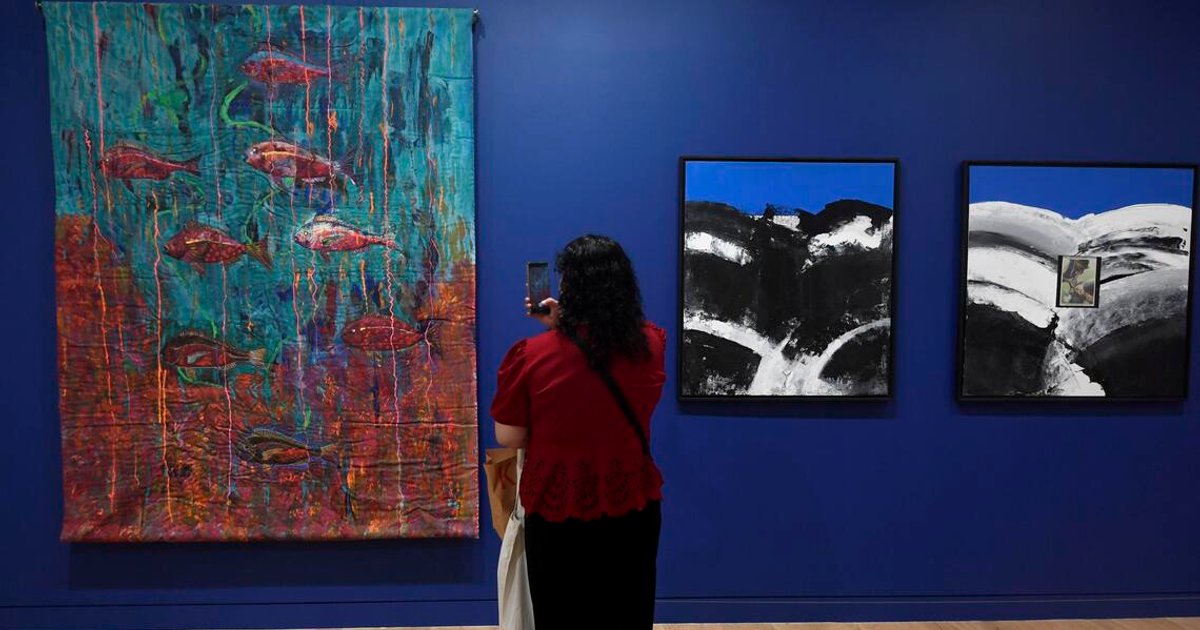
Six restored 1930s shophouses in Medan Pasar now form the physical footprint of Muara Arts Gallery, anchoring an effort to reposition old commercial quarters in Kuala Lumpur through contemporary visual culture. The institution set its public arrival for Nov 1, presenting an inaugural showcase titled "A-Z of South-East Asian Art: A Critical Dictionary". Scheduled to run until April 4, 2027, the presentation gathers work from more than 40 artists, drawing structural inspiration from Singapore artist Ho Tzu Nyen and his ongoing regional inventory project.
Medan Pasar carries an architectural legacy where mercantile exchange historically preceded civic formality.
By occupying six adjoining mercantile units from the 1930s, the gallery attempts to substitute wholesale trade with institutional cultural stewardship. The immediate civic appeal of such conversions is obvious across South-East Asian capitals, where municipal planners routinely equate architectural conservation with street-level vitality.
The Encyclopedic Instinct
The inaugural exhibition employs the alphabet to parse regional histories and contested politics. Organizing contemporary expression through an encyclopedic mechanism reveals a familiar institutional impulse: assembling fragmented national trajectories into a coherent South-East Asian collective. Borrowing conceptual momentum from Ho Tzu Nyen, whose practice interrogates the linguistic layers of regional identity, the project suggests that common ground can be mapped across national borders.
Yet this systematic framing runs into an enduring spatial contradiction.
Converting pre-war commercial properties into exhibition halls changes the social metabolism of the surrounding streets. Across historic urban cores, cultural infrastructure often arrives as the precursor to property appreciation, drawing mobile professionals while gradually displacing vernacular trades. The shophouse ceases to function as a dense node of domestic and commercial life, re-emerging instead as a climate-controlled white cube behind historic timber shutters.
The shophouse ceases to function as a dense node of domestic and commercial life, re-emerging instead as a climate-controlled white cube behind historic timber shutters.
Organizers emphasize public access, incorporating family guides and learning sessions designed to demystify conceptual art. Proponents argue that high-density heritage quarters need sustainable institutional tenants capable of preserving complex structures that would otherwise suffer decay or commercial demolition. From this perspective, an active gallery space offers a protective civic buffer, maintaining public access to historical urban fabric while generating critical cross-border scholarship that private developers rarely subsidize.
Limits of Curated Belonging
That preservation argument carries genuine weight, particularly in commercial downtowns facing uneven tenancy and rapid redevelopment. Yet an exhibition space organized around intellectual solidarity across South-East Asia must contend with the realities of its immediate pavement. A dictionary of regional art suggests open borders and mutual literacy. The street outside remains governed by localized leases and speculative property acquisition.
When cross-border identity is curated inside spaces detached from their original commercial ecosystem, regional affinity risks becoming a specialized pursuit for transnational audiences rather than a lived civic reality.
Whether a six-building complex in Medan Pasar can transform regional memory into neighborhood cohesion depends less on curatorial rigor and more on whether public life actually crosses its threshold through 2027. Old shophouses in Kuala Lumpur were constructed for the movement of everyday commodities across maritime frontiers. Replacing that tangible traffic with abstract lexicons of regional identity honors the memory of exchange, but it also measures how far urban heritage has traveled from the practical trades that funded its construction.
Sources
Newsletter
Pacific Daily
A curated briefing from Thailand, Asia-Pacific and the world.