Climate Diplomacy Meets the Afghan Quarantine
Allowing Kabul observer status at COP31 acknowledges ecological reality while testing the boundaries of diplomatic isolation.
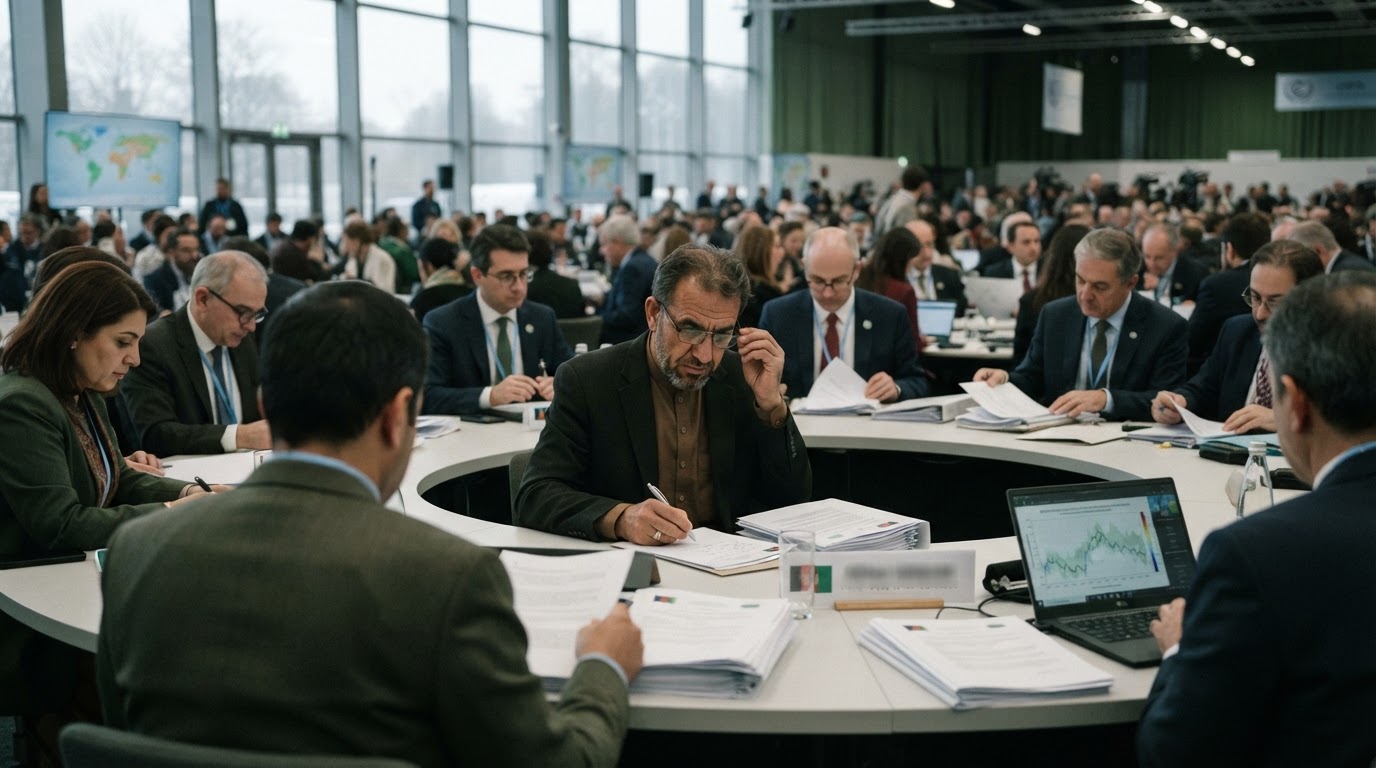
Diplomatic isolation demands firm institutional boundaries, yet transboundary environmental degradation regularly ignores political non-recognition. Multilateral institutions have spent five years attempting to balance the ostracism of the governing authority in Kabul with the practical necessity of addressing compounding ecological emergencies. That unresolved tension surfaced directly on Tuesday when Turkish and Kabul officials confirmed that Afghan Taliban delegates will attend the upcoming United Nations climate summit in Antalya, Turkey.
Convening under the auspices of the Conference of the Parties, known as COP31, the gathering marks the group's second appearance at the annual global summit since returning to power in 2021. Observer status provides access to plenary discussions without granting formal diplomatic recognition. For United Nations member states, severe restrictions imposed on women remain the primary political justification for withholding formal endorsement of the Kabul administration.
Critics argue that granting Taliban delegates badges in Antalya offers unearned political rehabilitation to a regime that systematically suppresses fundamental civic rights. Admitting representatives to multilateral corridors, from this perspective, signals that diplomatic sanctions become negotiable whenever institutional agendas require complete territorial accounting. Each technical badge distributed at an international summit risks eroding the broader quarantine established by the international community.
Proponents of attendance offer an opposing, strictly ecological argument. Afghanistan confronts severe climate pressures that operate entirely independent of political recognition. Drought has dried up agricultural basins, while recurring flooding ravages rural districts lacking basic civil defense systems. These environmental disruptions alter river flows and trigger population movement across borders. Managing shared river basins and technical crisis mitigation while ignoring the de facto administration governing the territory creates functional paralysis.
The Friction Between Norms and Geography
Environmental policy continually collides with sovereign recognition when multilateral frameworks demand total physical participation. The global climate mechanism rests on the operational premise that physical systems cannot be insulated through political censure. Atmospheric changes, heat stress, and water depletion do not stop at borders where diplomatic recognition ceases. When upstream precipitation declines or flash floods breach earthen embankments, adjacent territories absorb the downstream consequences regardless of who presides over state ministries.
Antalya highlights how regional host governments frequently seek practical arrangements to contain nearby instability. Turkey's decision to facilitate observer status reveals an operational preference for functional engagement over total diplomatic exclusion. Bilateral diplomacy may remain stalled over human rights, yet cross-border environmental risks create immediate pressure for working relationships that bypass formal sovereignty disputes.
The Boundary of Technical Accreditation
Yet technical accreditation carries sharp functional limitations. Observer standing allows Afghan Taliban officials to attend diplomatic sessions, but it does not open frozen international financial channels. Crucial adaptation resources, disaster defense funding, and infrastructure lending remain blocked by international sanctions and compliance protocols. The presence of Kabul officials inside conference rooms will not deliver capital to rural communities facing water shortages or build engineered flood defenses along vulnerable river valleys.
This dynamic preserves a deep structural contradiction inside multilateral governance. Global climate negotiations require universal territorial involvement, yet international legitimacy demands strict adherence to basic normative standards. Multilateral summits can accommodate unrecognised authorities as observers to reflect environmental vulnerability, but they cannot reconcile the divide between treating a physical territory as an ecological crisis and confronting the governing regime that oversees it.
Sources
Newsletter
Pacific Daily
A curated briefing from Thailand, Asia-Pacific and the world.