Australia's Emblematic Wildlife Meets Ecological Reality
Canberra's annual celebration of the macropod highlights the widening division between cultural myth and climate stress across fragile regional habitats.
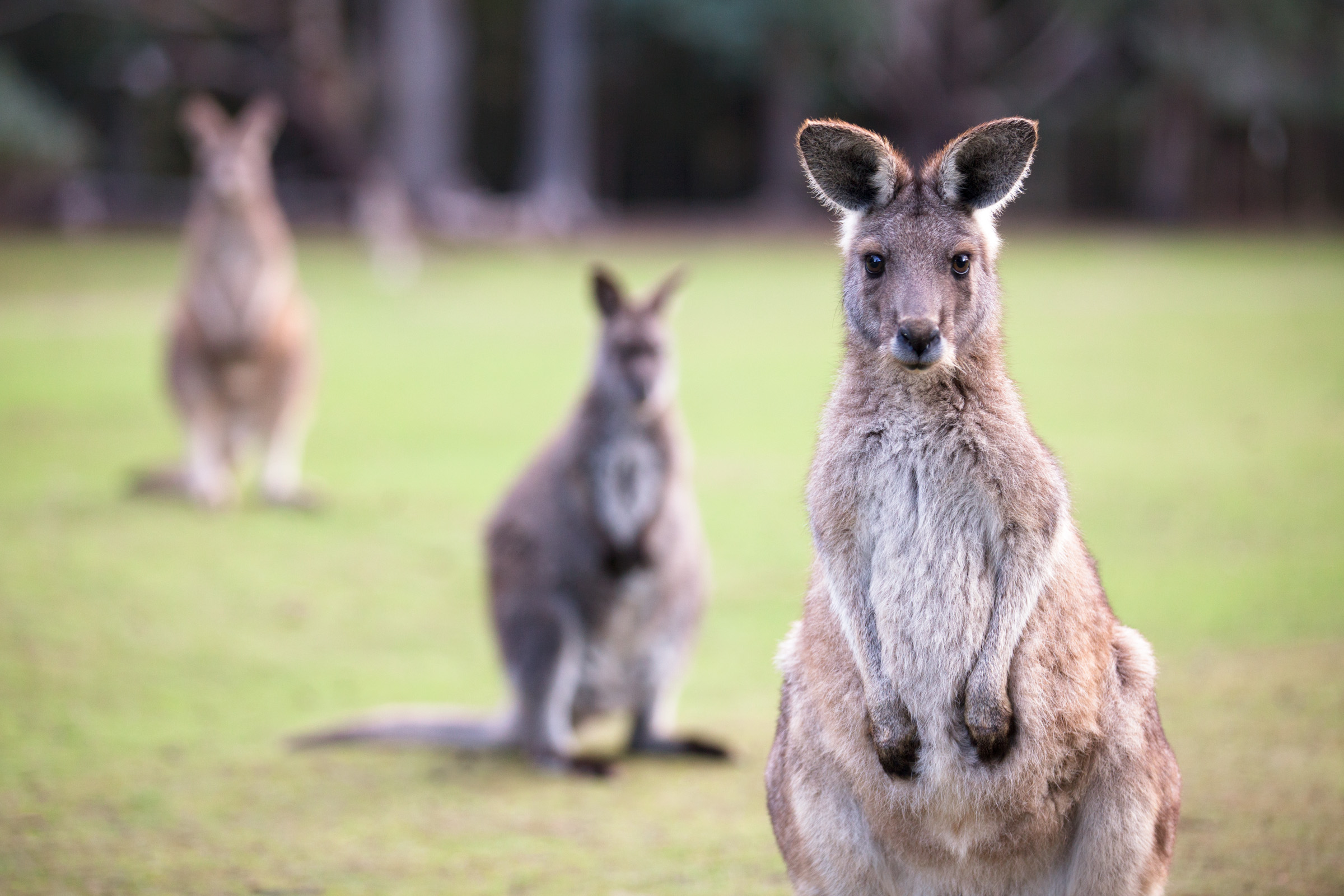
Grassland plains stretching toward dry horizons demand patience from anyone observing the Australian interior, where distance dwarfs human scale and shadows pool beneath sparse gum canopies. On Oct. 24, Canberra marks World Kangaroo Day, formalising an affection for the continent's prominent macropods that First Nations cultures have maintained across millennia. Official iconography presents the animal as an emblem of continuous forward motion, fixed on the national coat of arms. The ecological reality recorded in 2026 presents a far more troubled trajectory.
Civic symbolism inevitably simplifies biological variety. Australia hosts dozens of macropod species—59 belonging to the wider superfamily—ranging from the red kangaroo of the arid centre, classified as Osphranter rufus, to the eastern grey kangaroo, Macropus giganteus, and the western grey, Macropus fuliginosus. Public attention rarely lingers on the specialised relatives dwelling beyond manicured suburban reserves. Arboreal tree kangaroos, including Lumholtz and Bennett lineages grouped under Dendrolagus, inhabit fragmented canopy corridors in Far North Queensland. Secretive marsupials like Potorous, including the rare Gilbert potoroo, alongside primitive forms such as Hypsiprymnodon, persist within isolated forest pockets where environmental buffers have largely worn away.
The Geography of Exposure
Global weather anomalies in 2026, intensified by a super El Niño, have exposed the vulnerability of these regional refuges. Severe heat regimes alter food supplies and desiccate critical shelter belts, compounding pressures documented in fire research where continental bushfire risk rose by at least 30 percent. A land accustomed to boom-and-bust cycles now confronts patterns where dry intervals arrive faster and linger longer, testing species whose ranges cannot shift across cleared ground.
Skeptics of broader wildlife protection often point to inland population surges of red and grey kangaroos following seasonal rains, arguing that visible numbers dispute warnings of structural decline. Pastoral enterprises frequently treat larger mobs as resource competitors, citing local abundance to counter conservation controls. That arithmetic, field biologists suggest, conceals a sharper biological divergence. Broad continental counts of common plains grazers mask the steady contraction of specialised, lesser-known species whose ancient rainforest canopies and dense coastal scrublands are burning or drying beyond historical recovery thresholds.
Shifting Horizons
Offshore sanctuaries like Kangaroo Island demonstrate that geographic isolation cannot insulate indigenous fauna from severe atmospheric disruptions. When extreme heat fronts sweep across southern latitudes, island coastlines risk turning from secure refuges into ecological enclosures. Field conditions indicate that native populations can adapt to shifting weather only within finite margins, while rapid shifts in climate compress the time needed for evolutionary adjustment.
Official iconography presents the animal as an emblem of continuous forward motion, yet ecological reality presents a far more troubled trajectory.
Tourism promotions across the Pacific basin still depict the Australian landscape as an untamed expanse defined by effortless survival. Travellers arriving in Canberra or venturing outward across the interior encounter promotional narratives of an indestructible biological theatre where wildlife simply persists against the elements. What the continent actually asks of those who observe it closely is a surrender of that easy romanticism. Protecting fifty-nine macropod varieties requires measuring the concrete environmental disruptions confronting fragile regional habitats, long after the speeches and calendar commemorations end.
Sources
Newsletter
Pacific Daily
A curated briefing from Thailand, Asia-Pacific and the world.