China's Steel Transition Threatens Australian Iron Ore Dominance
Beijing’s drive for low-carbon steel production and a slowdown in demand indicate a structural shift that could reshape commodity trade patterns across the Asia-Pacific.
SINGAPORE
China's steel sector undergoes a transformation signaling a potential long-term shift away from its historic reliance on Australian iron ore. A reported slowdown in steel demand, coupled with signals of a low-carbon transition in China, places Australia's iron ore supply at a crossroads.
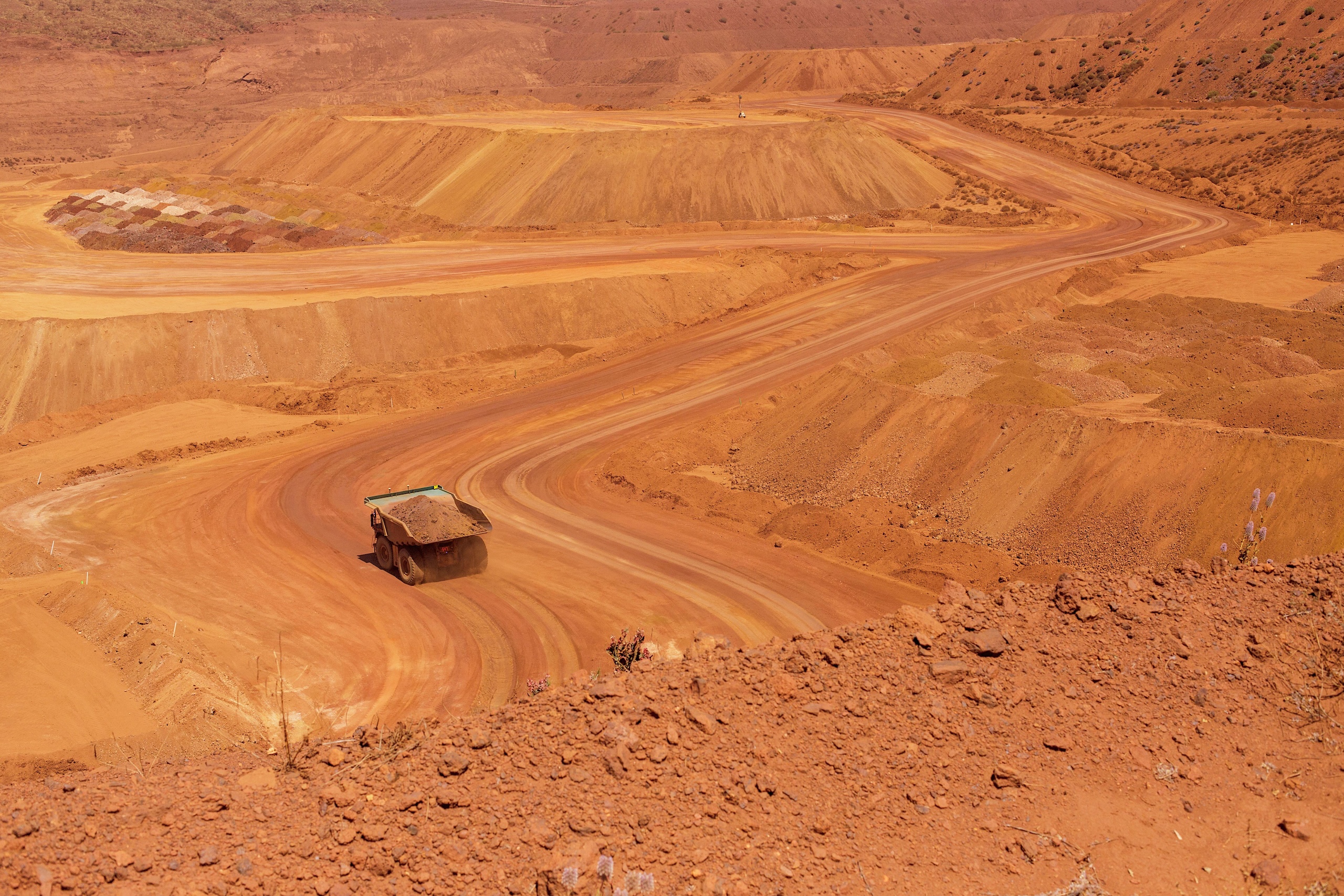
Australia has traditionally supplied around 60% of China’s iron ore. This relationship, highlighted by imagery of imported ore unloaded at Qingdao port in Shandong province, now faces re-evaluation. China’s industrial policy pivots towards greener manufacturing; the pursuit of low-carbon steel production carries significant implications for the global commodities market, particularly for major iron ore exporters.
The shift is not merely cyclical but structural. Chinese policy, once focused on raw production volume, reportedly integrates environmental objectives into industrial planning. Should China significantly reduce its overall steel output or transition to alternative, less ore-intensive production methods—such as increased recycling or hydrogen-based steelmaking—the foundational demand for imported iron ore could diminish. This transition raises a critical question for Australia: Can its economic ties, characterized by embracing while sparring with China, adapt to such fundamental changes in commodity demand?
While China's current steel sector evolution poses a direct challenge to Australia, region-wide implications extend further. Iron ore is a foundational commodity; shifts in its trade dynamics resonate across supply chains. Should China reduce its reliance on Australian ore, it could diversify its sourcing, potentially elevating other iron ore producers. This would not represent a complete cessation of trade but a recalibration of market power and supply routes. The notion that such a significant economic relationship, even one marked by Chinese coercion and Australian resilience, could undergo such a profound change indicates deep economic forces are at play.
One counterargument suggests that the sheer scale of China's steel industry and its existing infrastructure for processing Australian ore would make a rapid or complete disengagement impractical. Operational complexities and capital investments required to pivot away from an established, high-volume supply chain are substantial. Furthermore, global demand for steel, even if lower-carbon in its production, is not projected to disappear, implying a continued need for iron ore. However, this perspective often understates the long-term impact of policy-driven industrial transformation, particularly when it aligns with strategic national objectives like carbon neutrality.
Will China’s low-carbon commitments translate into capital plans that meaningfully reduce iron ore imports? This remains the critical uncertainty. History of environmental policy implementation often shows gaps between stated goals and practical outcomes. Yet, the reported signals from China’s steel sector suggest a trajectory where demand patterns, and therefore trade relationships, will not remain static. The implications for regional economic stability, particularly for commodity-exporting nations, bear continued observation. This evolving dynamic represents a constraint that remains unresolved for established trade paradigms.
Sources
Newsletter
Pacific Daily
A curated briefing from Thailand, Asia-Pacific and the world.