Papal Health, Regional Implications: A Question of Vatican Influence in Asia-Pacific
The announced surgery for Pope Leo on October 11, 2026, introduces questions about continuity of leadership, which holds distinct implications for Catholic communities and diplomatic engagements across the Asia-Pacific region.
SINGAPORE
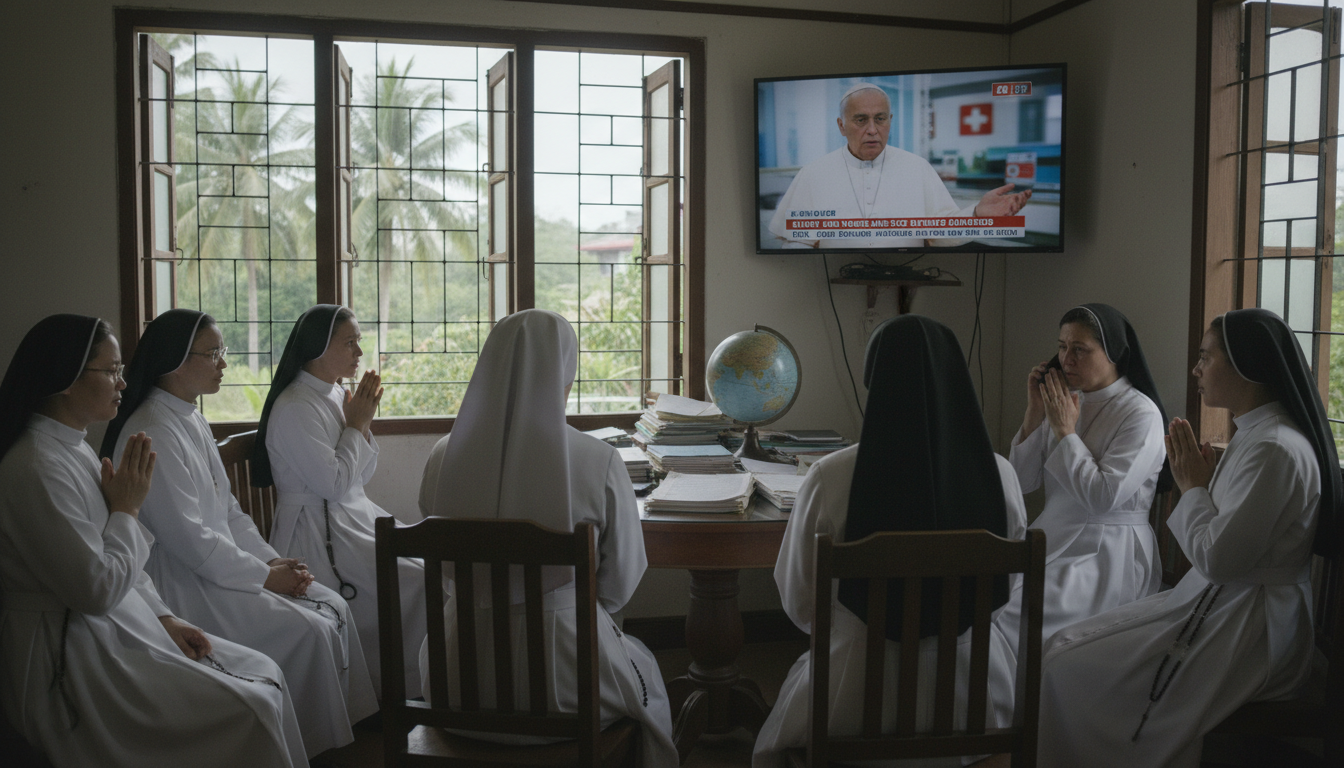
The announcement on Sunday, October 11, 2026, that Pope Leo will undergo surgery for a small growth on his lung introduces a period of medical uncertainty for the 71-year-old pontiff. Pope Leo told pilgrims in St. Peter's Square that doctors had detected the growth during a recent health check, describing it as "well-contained" and spotted early. This health development, marking the first such scare of his tenure, prompts consideration of its potential impact on the Vatican's diplomatic posture and the numerous Catholic communities across Asia-Pacific nations.
While the Vatican’s institutional functions and diplomatic corps continue without immediate disruption, the personal authority of a pontiff remains central to its engagement with states and religious bodies. For countries in the Asia-Pacific that host significant Catholic populations, such as the Philippines, South Korea, and Vietnam, leadership stability at the Vatican is not merely an internal ecclesiastical matter. The consistent direction provided by Pope Leo has been a factor in addressing religious freedom concerns and fostering interfaith dialogue within these diverse geopolitical landscapes.
Historically, the Vatican has sought to expand its diplomatic presence in Asia, often on issues that directly affect local Catholic communities and intersect with broader state interests. In places like China, where the relationship between the Vatican and the government remains complex, the leadership of Pope Leo has been instrumental in navigating delicate discussions. Any perceived weakening of this leadership, even temporary, could create openings for internal dynamics to shift or affect the pace of ongoing dialogues concerning religious practice.
The immediate medical prognosis, as described by Pope Leo, suggests a "well-contained" condition. However, the requirement for surgery for a lung growth, particularly for a leader of his global stature and age, inevitably raises questions regarding his long-term vigor. The medical situation, irrespective of its eventual outcome, shifts the focus from routine governance to a contemplation of continuity and future leadership within the Catholic Church.
For regional states like Thailand, where the Catholic community constitutes a minority, the direct impact of this health event is less pronounced. However, the broader diplomatic alignments within the Asia-Pacific can be indirectly influenced by the Vatican’s global standing and the perceived strength of its leadership. The news of Pope Leo’s impending surgery was widely reported on October 11, 2026, by outlets including Channel News Asia, Reuters, South China Morning Post, The New York Times, and ABC News & Headlines – Australian Broadcasting Corporation, highlighting the event’s global recognition.
Some might argue that the Vatican's resilience, built over centuries, inherently mitigates the impact of a single pontiff’s health. This view suggests that the established bureaucracy and ongoing diplomatic efforts will largely proceed, ensuring minimal disruption to its external relations and internal operations. This perspective emphasizes the institution's capacity to absorb leadership transitions without fundamentally altering its mission.
However, the ultimate authority for major diplomatic initiatives, the appointment of bishops, and critical pronouncements rests with the pontiff. A prolonged recovery or a more serious underlying condition, while not indicated by current reports, would inevitably slow decision-making processes and potentially defer significant foreign policy overtures. This health event marks the first of its kind in Pope Leo’s tenure, moving from an assumption of robust health to an acknowledgment of vulnerability.
For the Asia-Pacific, the immediate consequence is not a dramatic policy shift, but rather a recalibration of expectations concerning the Vatican’s proactive engagement. Attention will remain on the surgery and Pope Leo’s subsequent recovery, which will determine the extent to which he can maintain his demanding schedule. This event introduces a constraint on the global Catholic Church's operations, the full implications of which remain to be assessed.
Sources
Newsletter
Pacific Daily
A curated briefing from Thailand, Asia-Pacific and the world.