Small CT Scanner Reflects Shifting Control in Asia-Pacific Medical Technology
The emergence of a 6 kg CT scanner, claimed as the world's smallest by its developers, points to structural changes in technology access and decision-making power.
SINGAPORE
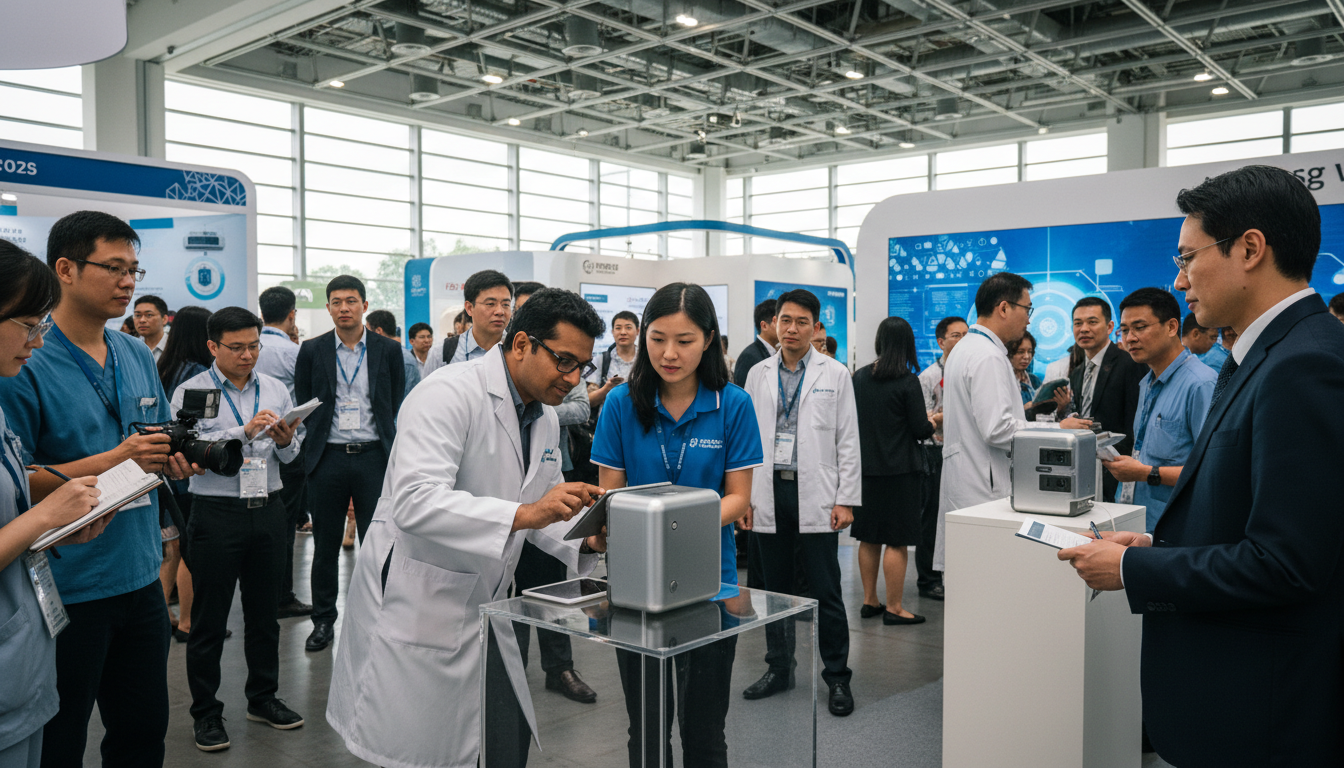
The development of a 6 kg CT scanner by a company founded by Chinese Academy of Sciences researchers signals a shift in the structural landscape of medical imaging technology. Reported on September 17, 2026, this device, described as the world's smallest by its developers, is built for imaging small objects, emphasizing portability.
This development does not stand in isolation. It aligns with other technological advancements originating from China. These include the reported use of 100,000 home-grown AI chips for a weather forecast system on September 16, 2026. Prior reports, including one from December 17, 2025, also detailed efforts to develop AI chip capabilities. Another report from February 26, 2026, described a team unveiling a 3D printing technique capable of creating solid structures in under one second.
The increasing sophistication and miniaturization of technology, as evidenced by the CT scanner, imply a potential rebalancing of influence in technology manufacturing and dissemination. If medical imaging devices become significantly more portable, and if such portability contributes to reduced costs, the barriers to access for diagnostic capabilities could lower. This could be particularly impactful in regions with limited infrastructure or remote populations. The control over manufacturing and distribution of such devices could shift from existing dominant players towards entities in Asia, notably China.
However, the claim that this 6 kg device is the 'world's smallest' remains an assertion by its developers, not an independently verified fact. The available information does not detail the full specifications of its imaging capabilities, its durability, necessary regulatory approvals, or the scale of its manufacturing. Without these details, its practical impact on medical diagnostics and market penetration remains to be fully assessed. Furthermore, the long-term implications for intellectual property rights and global competition in sensitive technology sectors warrant closer examination.
Thailand and other Asia-Pacific nations could potentially benefit from more accessible and portable diagnostic tools, particularly in underserved areas. However, this also necessitates adapting to a technology ecosystem where key innovations increasingly originate from and are controlled by Chinese entities. The decision-making power regarding the deployment and standards of such technology could therefore gravitate towards Beijing, rather than established global medical technology hubs. The unresolved constraint remains the extent to which these new technological capacities will translate into broader health infrastructure improvements and who will ultimately dictate their terms of use and distribution across the region.
Sources
Newsletter
Pacific Daily
A curated briefing from Thailand, Asia-Pacific and the world.