Pacific Storm Compounding Exposes the Limits of Coastal Resilience
As Hurricane Trudy bears down on Jalisco and Colima following Hurricane Simon, municipal breakdowns and labor friction reveal fragile support systems along the Pacific rim.
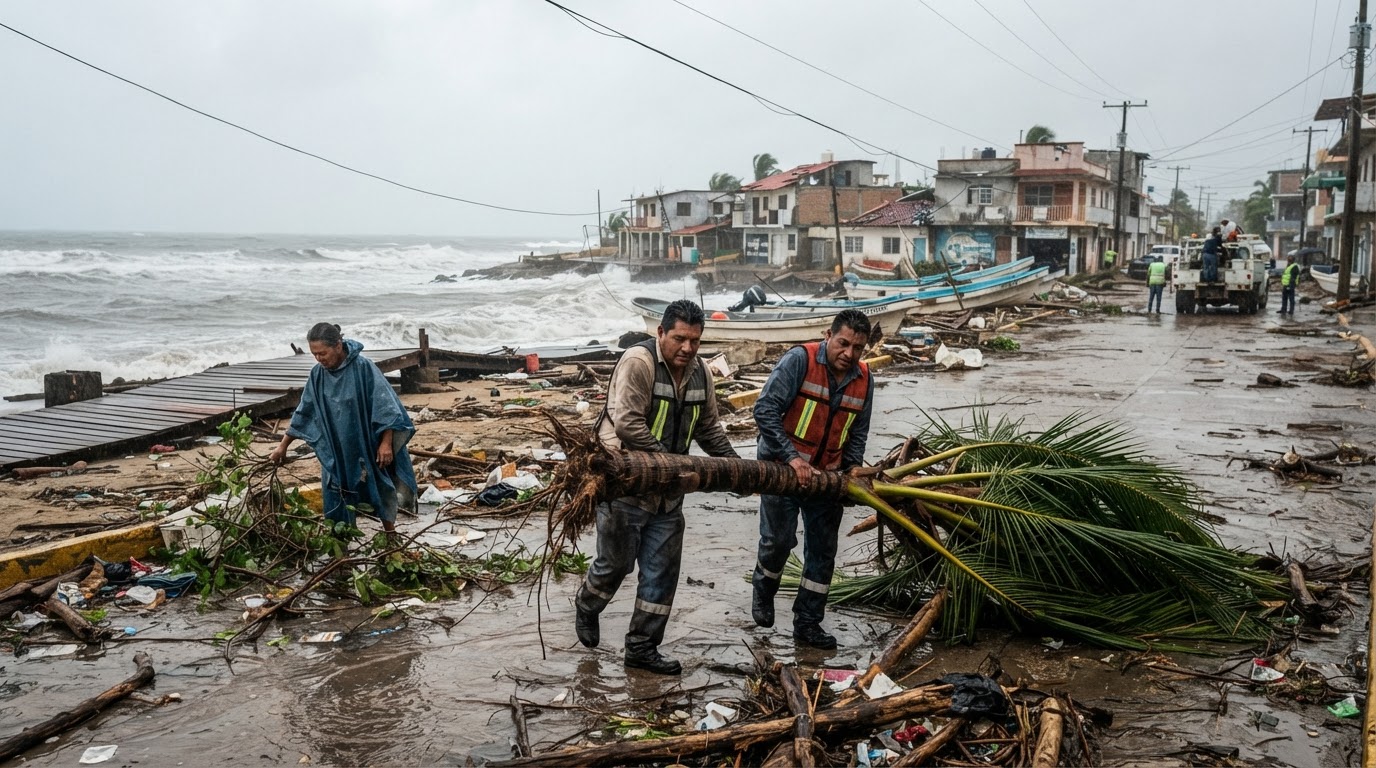
Coastal infrastructure fails when successive atmospheric shocks intersect with degraded civic services. Off Mexico’s Pacific coast, Hurricane Trudy intensified into a Category 3 storm during the second week of October, tracking past Colima and Jalisco. The system arrived before coastal settlements had absorbed the impact of a close brush with Hurricane Simon. Such compression of storm cycles leaves port approaches, municipal drains, and regional logistical corridors operating without repair intervals.
Physical defenses at the shoreline represent only the external layer of maritime readiness. Effective storm management requires steady municipal water lines, functional hospitals, and civil administrative stability to absorb disruptions inland. Western Mexico’s interior corridors, however, showed acute strain just as the marine system approached. In Guadalajara, demonstrations against contaminated water escalated into Sunday street clashes that resulted in 39 arrests and dozens of injuries. The National Human Rights Commission, or CNDH, initiated an inquiry into alleged police conduct during the incident, underscoring institutional distress in the interior hub that anchors supply lines behind the Jalisco shoreline.
Compounding Strains Across Civil Networks
Operational capacity depends on the labor that maintains emergency and public health services. While Trudy advanced, staff linked to the Mexican Social Security Institute, or IMSS, mobilized across nearly every state. Demonstrators protested persistent medicine deficits while rejecting an official 2.9 percent salary proposal, demanding an increase of 10 percent instead. A healthcare system facing nationwide wage disputes and supply constraints cannot provide resilient backing when maritime storms batter regional transport networks.
Inland stability and maritime protection cannot be decoupled. When public water distribution fails in a major center such as Guadalajara, emergency response resources divert away from coastline reinforcement. Storm surges and coastal flooding along Colima and Jalisco inevitably require rapid water purification equipment, medical reserves, and unimpeded transport corridors. If basic utility grids cannot guarantee clean water during normal conditions, their ability to support displaced coastal populations remains compromised.
The Logistical Friction of Succession
Regional vulnerability is further complicated across the broader Pacific basin. Atmospheric disturbances are testing installations across multiple zones, with Typhoon Champi simultaneously menacing Guam as Trudy presses along Mexico’s western coast. For commercial vessels, regional fishing fleets, and coastal operations, repeated storm alerts compress safe routing margins and strain salvage services.
Every storm event acts as an audit of municipal and transport balance sheets. Rebuilding sea walls, clearing dredged silt, and repairing damaged harbor berths demands sustained public expenditure. When municipal authorities in Jalisco face public unrest over contaminated water while federal health staff demand basic provisions, capital allocation for perimeter coastal defense becomes increasingly difficult to sustain. Marine resilience is impossible without administrative reliability in the cities that supply coastal terminals.
The durability of maritime infrastructure along the Pacific rim ultimately depends on resolving civic and public utility bottlenecks inland before subsequent storm seasons begin.
Sources
Newsletter
Pacific Daily
A curated briefing from Thailand, Asia-Pacific and the world.