Nomadic Hearth on the Global Competition Stage
A Mongolian pastoral tradition adapted for Toronto and Milan exposes the quiet tension between living hospitality and institutional technique.
SINGAPORE
Nomadic cooking begins with the discipline of conservation. Across vast pastoral grasslands, herding communities built their kitchens around the portable wood-and-felt ger, where slaughter was seasonal, every cut of mutton demanded careful preparation, and milk tea simmered over dry fires to sustain travelers arriving from the open plains. Hospitality in that setting was never an artistic exhibition. It operated as an unwritten survival code, serving whoever stepped through the low wooden doorframe with whatever preserved provisions remained from the frost.
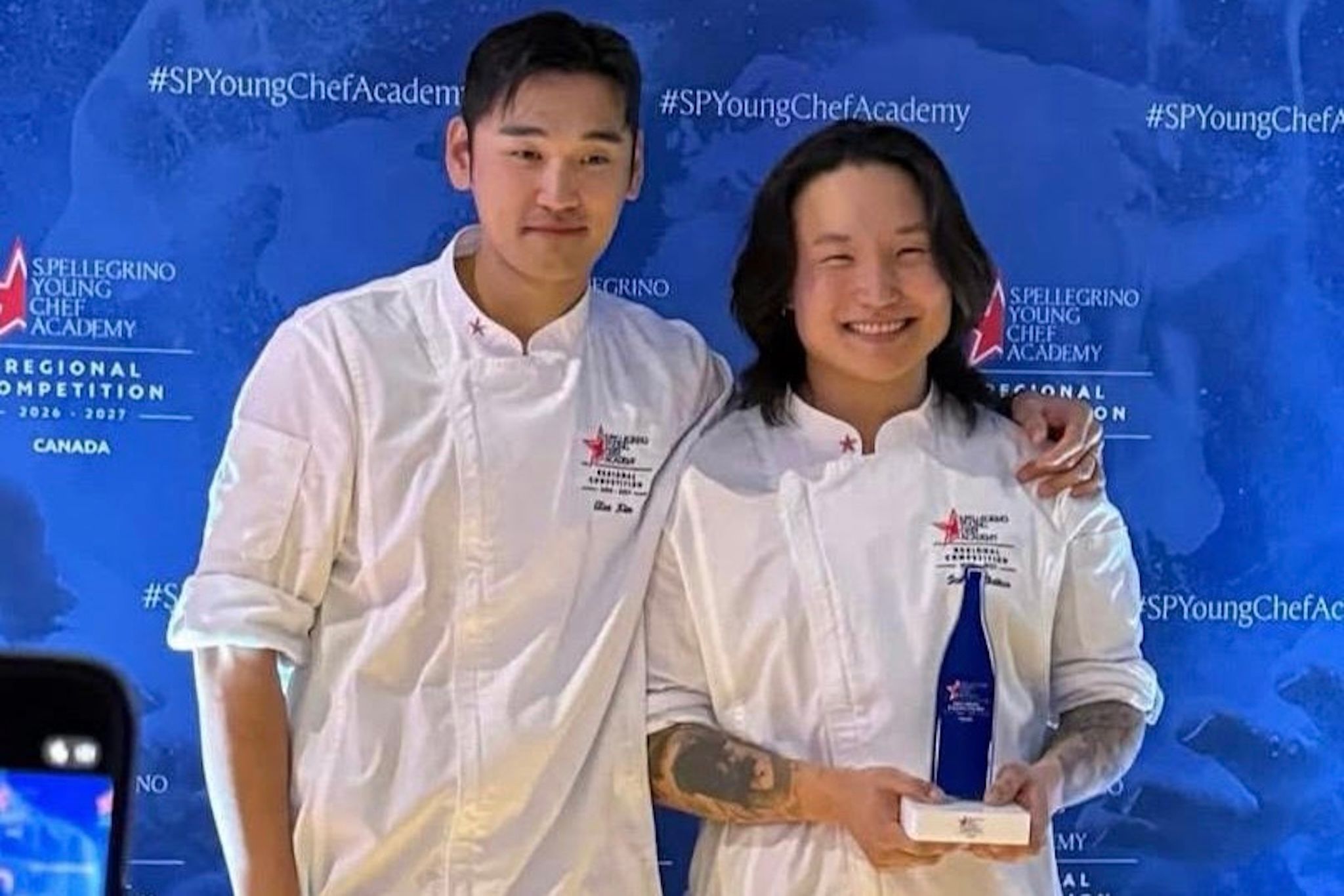
That domestic reality underwent a formal transformation in late 2026 when Chef Tengis Battur of Five Sails took first place at the S.Pellegrino Young Chef Academy Competition 2026-27 Canada Regional Final in Toronto. Battur secured his passage to the Grand Finale in Milan by presenting a complex entry titled "Steppe" in the Spring, rooted in his Mongolian background and nomadic shelter etiquette. His multi-element course assembled khushuur as a crispy lamb tenderloin dumpling alongside spring onion purée, chips, and scapes; suutie tsai brewed with roasted bone broth milk tea, chive oil, and borts, the ancestral wind-dried cured lamb; shortlog balancing charcoal-grilled lamb heart and tongue against ramp and nettle chimichurri with allium flowers; and bantan framed through a charred onion stuffed with braised meat.
The Logic of the Ledger
The composition reveals how pastoral staples shift when translated into the vocabulary of Western competitive judging. Traditional khushuur is utilitarian sustenance, shaped from minced scraps, sealed in coarse wheat dough, and cooked to satisfy heavy physical labor. Refashioning it with tenderloin and calibrated scapes alters its social purpose. The dish ceases to be communal comfort and becomes an exercise in technical precision, judged by international panels who assess consistency, garnish geometry, and refined plating.
Similar negotiations appear in the handling of suutie tsai and borts. For generations of herders, borts functioned as a light, fibrous staple of necessity, cured by bitter winter winds so families could carry concentrated protein across pastures on horseback without spoilage. Reconstituted within a milk tea infused with roasted bone broth and finished with chive oil, the wind-dried meat trades its rustic austerity for culinary complexity. What was once food designed to endure months of isolation becomes a single curated tasting flight under salon lights.
Heritage and Institutional Stages
This adaptation illustrates a wider cultural pattern across the diaspora, where younger cooks increasingly carry ancestral heritage into global culinary circuits. In choosing offal, wild alliums, and dehydrated meat, Battur avoids diluting northern pastoral flavors for Western palates, retaining the deep animal profile that defines Mongolian life. He brings heart, tongue, and wild ramps into an elite arena that long favored Western European protein standards.
Yet the institutional frame inevitably reshapes what it honors. When pastoral hospitality is deconstructed into individual charred onions and chimichurri reductions for evaluation in Milan, the communal spirit of the hearth recedes behind technical prowess. The open bowl passed between strangers inside a round tent gives way to solitary plates scrutinized on white tablecloths.
The resulting meal preserves the ingredients of nomadic survival while gently replacing the communal context that gave them meaning. Whether this codification protects a heritage or domesticates it remains an enduring question for culinary traditions seeking validation beyond their native ground.
Sources
Newsletter
Pacific Daily
A curated briefing from Thailand, Asia-Pacific and the world.