When Water Breaches the Amenity Balance Sheet
Severe river crests across Colorado and Arizona expose the structural capital costs facing scenic hospitality belts
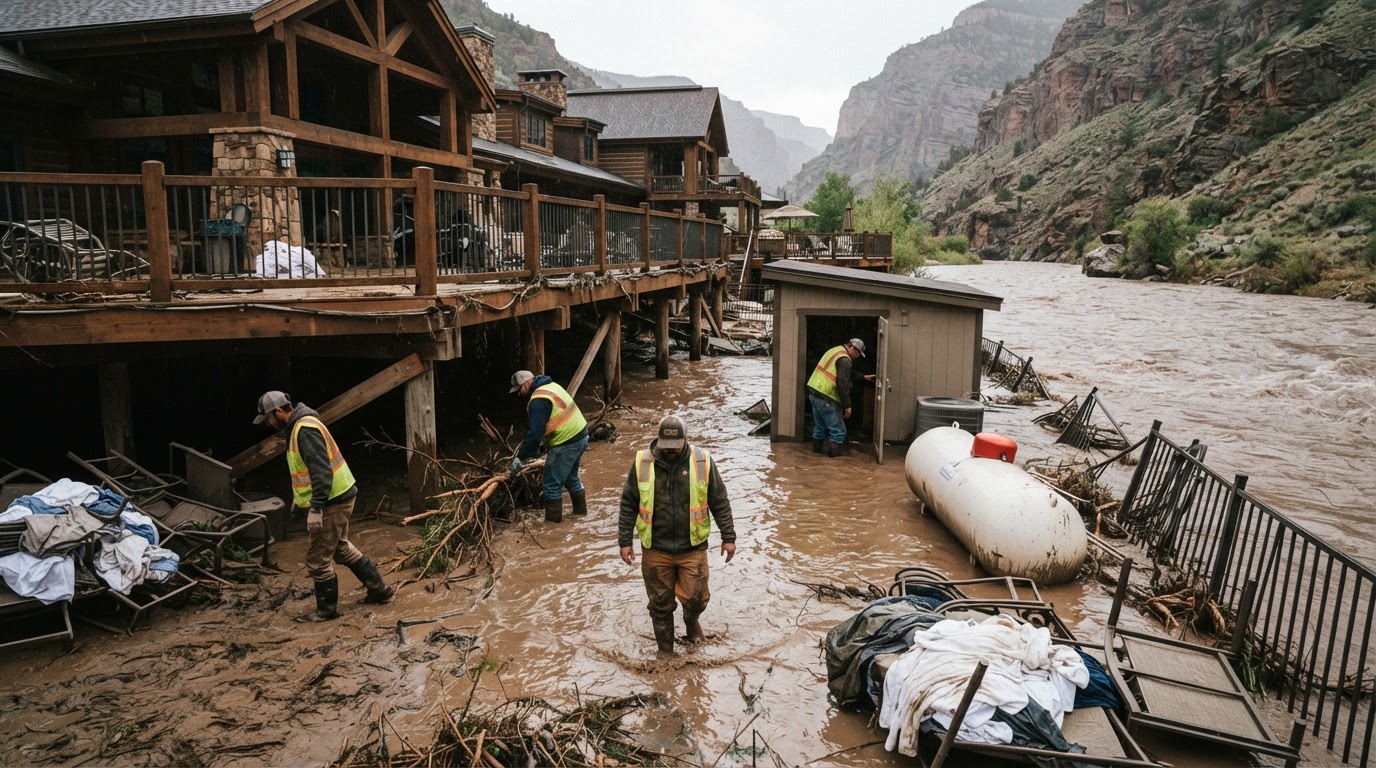
Hydraulic limits dictate commercial solvency faster than visitor demand can recover. In Pagosa Springs, Colorado, officials warned on Sunday of potentially catastrophic flooding as the San Juan River was forecast to crest at more than 19 feet Sunday night. Evacuation directives extended across low-lying terrain tracing the San Juan, Rio Blanco, Navajo, and Piedra rivers, directing displaced occupants toward a designated shelter established at a local church. Further south, municipal authorities in Sedona, Arizona, ordered residents near Oak Creek to abandon their properties immediately as surging floodwaters trapped multiple people inside their homes.
These disruptions reveal a balance-sheet vulnerability common to high-amenity leisure enclaves across exposed drainage basins. Destination economies market proximity to pristine river corridors and rugged topography. That operational asset turns into an acute physical liability when hydrologic thresholds fail.
The Price of Proximity
Resort enclaves generate municipal receipts and private operating margins by concentrating fixed assets along waterfronts and scenic drainage channels. In Pagosa Springs, known as a geothermal spa center, commercial valuations cluster tightly beside the San Juan River. Sedona derives comparable hospitality premiums from lodging positioned directly along the contours of Oak Creek. When floodwaters rise rapidly, the physical proximity that commands room-rate premiums induces immediate business cessation, plant destruction, and emergency municipal intervention.
Emergency declarations across the U.S. Southwest do not occur in an isolated meteorological vacuum. Late 2026 recorded intensified storm patterns across broader regional corridors. In September 2026, Hurricane Polo drove emergency preparations across Mexico’s Baja peninsula while fueling fears of landslides in Mexico's southwest, even as Hurricane Nolo advanced toward Hawaii. Such concurrent developments follow historical precedents, including Hurricane Enrique in June 2021, which weakened while leaving Mexico at risk of flash floods.
Capital allocators often assess seasonal inundation as a temporary interruption managed through standard property coverage and municipal disaster relief. That assumption understates systemic balance-sheet attrition. Repeated emergency evacuations erode insurance availability, inflate infrastructure maintenance outlays, and destabilize seasonal cash flows required to service heavy fixed debt.
Commercial lenders evaluating regional leisure assets rarely penalize scenic proximity during benign hydrological cycles. Debt service schedules remain rigid, regardless of whether a property operates at peak occupancy or sits empty behind police barricades. When access corridors close, revenue drops to zero while debt service, utility overhead, and basic maintenance liabilities continue to compound.
Capital Drag and Structural Exposure
When municipal leaders issue mandatory evacuation orders, the underlying fiscal ecosystem stalls. Small leisure operators confront fixed operating overheads alongside lost receipts during prime booking windows. Specialized emergency personnel, including responders affiliated with units like the Tucson Fire Department Technical Rescue Team, absorb elevated operational costs that eventually shift onto local tax bases.
Defenders of conventional recreation-corridor development maintain that top-tier scenic destinations command sufficient consumer pricing power to offset episodic hazard costs. Under this view, robust post-disaster visitor rebounds compensate for intermittent seasonal closures. Pagosa Springs and Sedona retain established geographical profiles, allowing surviving operators to pass elevated insurance premiums and remediation expenses onto incoming travelers once waters recede.
Yet pricing power operates within clear boundaries. When a river forecasts a crest at more than 19 feet, the physical degradation of foundation infrastructure, secondary roadways, and treatment systems imposes capital demands that marginal room yields cannot absorb. For hospitality operators situated throughout exposed river valleys and fragile catchments across the Pacific rim, the calculation is unambiguous. Natural amenities cannot be monetized indefinitely without accounting for the compounding capital write-downs that volatile river basins extract.
Sources
Newsletter
Pacific Daily
A curated briefing from Thailand, Asia-Pacific and the world.