Luxury Yachting's Clean Power Ideal Masks Asia-Pacific's Energy Struggle
Individual energy independence for recreational vessels offers a quiet convenience that contrasts with the region's enduring dependence on conventional power sources.
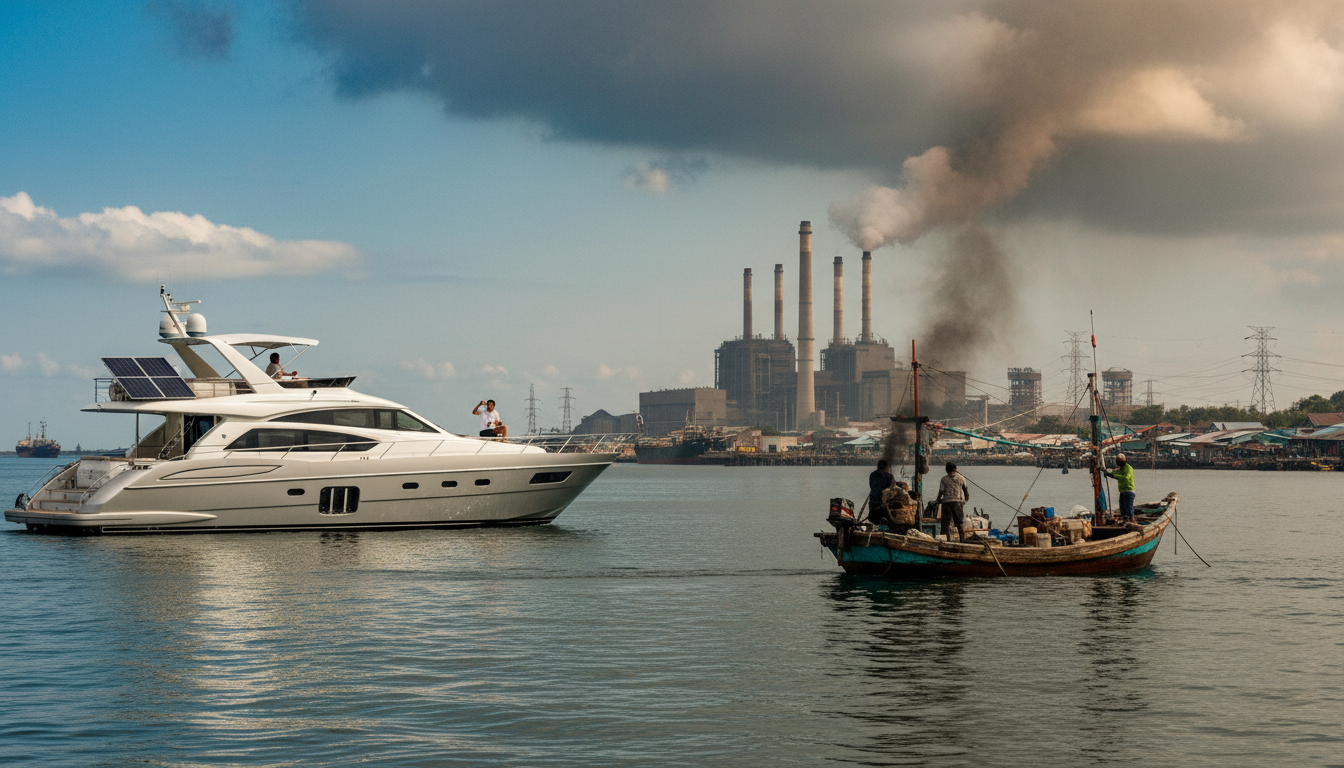
The notion of a yacht slipping into an anchorage, its engine silenced, while its systems operate on batteries charged by solar panels throughout the day, presents an appealing vision. This description, reported by Sail World Asia on October 9, 2026, highlights the potential for energy autonomy on individual vessels. Such a scenario represents a niche application of renewable technology, offering precise power for limited, specific uses.
However, this micro-level energy self-sufficiency stands in tension with the broader energy landscape across the Asia-Pacific. The International Renewable Energy Agency (IRENA) focused on investment needs for renewed ambitions in Pacific Islands discussions ahead of COP31. This indicates a recognition of the financial requirements for energy transformation at a regional scale. Separately, the Lowy Institute noted that energy insecurity persists despite increased investment in renewables. This suggests that the current pace of investment does not yet fully address the region's entrenched energy vulnerabilities.
The Realities of Regional Transition
Transitioning national and regional energy grids away from conventional sources involves complexities beyond those of a single yacht. Nations in the Asia-Pacific, many with developing economies, face the challenge of replacing existing infrastructure while ensuring a consistent energy supply for widespread industrial, commercial, and residential demands. The World Bank Group hosted an East Asia and Pacific Energy Knowledge and Learning Forum, an event acknowledging the continuous efforts required for these broader energy sector shifts. Yet, some economies continue to rely heavily on diesel, struggling to reduce their dependence, as observed by the Financial Times. This inertia, driven by economic structures and existing infrastructure, presents a significant counterpoint to the apparent simplicity of solar power for individual vessels.
Initiatives elsewhere underscore the scale of effort required. Mauritius, for example, has explored renewable energy solutions with a Perth base, as reported by The Guardian. Trackbond Energy also partnered with China’s Tide Power to boost Nigeria’s energy sector, according to The Guardian Nigeria News. These demonstrate international engagement in renewable energy development. However, the path for many Asia-Pacific nations involves building domestic capacity and securing sustained, large-scale investment, rather than simply adopting existing technologies.
While the concept of quiet, self-sufficient power on a yacht embodies an aspiration for both luxury and environmental awareness, it does not directly address the fundamental questions of scale, cost, and equitable access that define the wider regional energy dilemma. The reliable operation of a refrigerator and lights on a solar-powered yacht demonstrates a technological capability. It does not, however, translate directly to the consistent, affordable, and widespread energy access required for sustainable development across the Asia-Pacific. The core constraint remains the gap between isolated technological achievements and comprehensive, equitable energy infrastructure transformation for millions.
Sources
Newsletter
Pacific Daily
A curated briefing from Thailand, Asia-Pacific and the world.