Naples and the Global Maritime Canvas: A Shifting Focus for Asia-Pacific
The arrival of an AC75 in Italy highlights a tension between traditional competitive venues and the Asia-Pacific's strategic maritime growth.
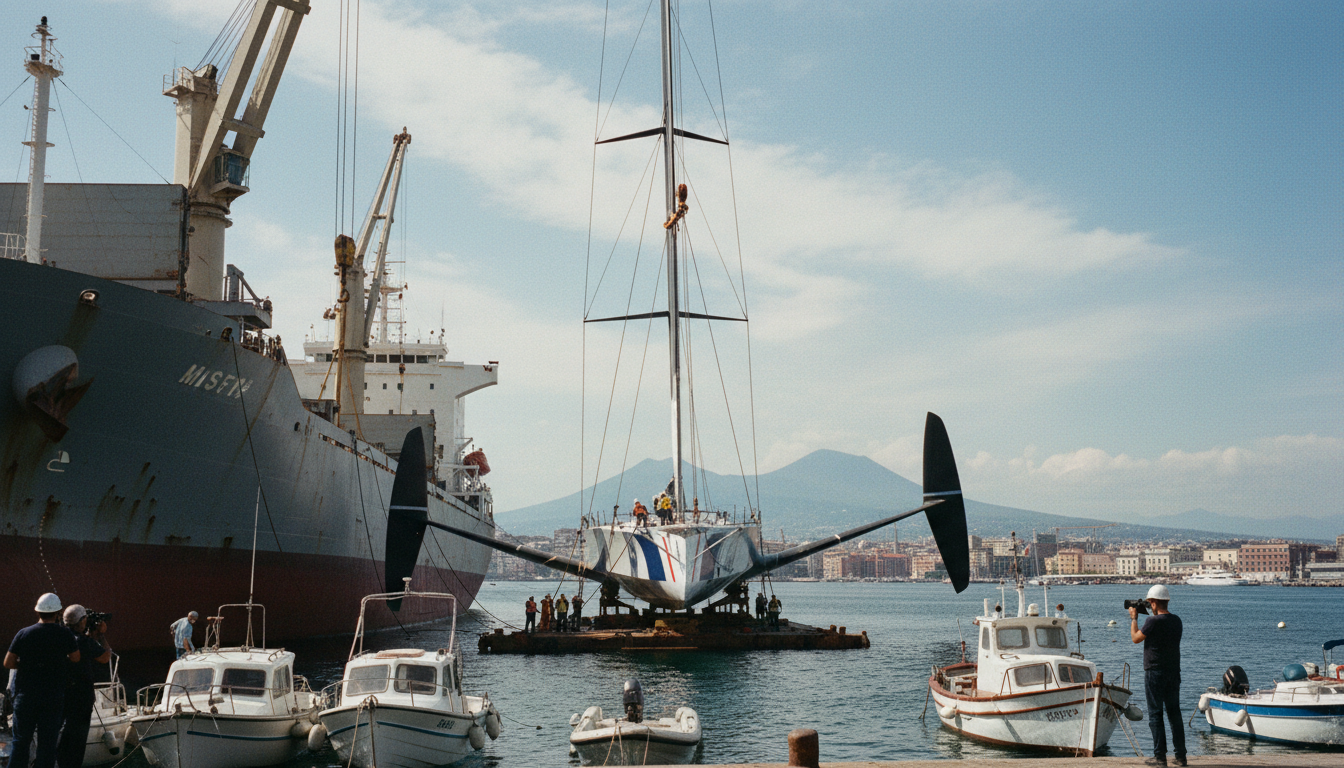
The announcement from Sail World Asia on September 24, 2026, noting the Société Nautique de Saint-Tropez’s AC75 as the first Challenger to arrive in Naples for the 38th America’s Cup, marks a specific event in elite competitive sailing. Naples, a venue far from Pacific sailing circuits, will host this event. This geographic displacement of a premier maritime competition warrants examination through the lens of regional strategy, particularly concerning the Asia-Pacific.
Historically, maritime competition has often mirrored economic and strategic rivalries. The America’s Cup itself has seen its share of international disputes, with legal acrimony noted in 2009. The participation of national teams, such as New Zealand’s, which earned a mention in The Washington Post for their assertive approach, links sailing to national identity and competitive spirit. Beyond sport, however, the movement of such a high-profile event to the Mediterranean, while nations in the Asia-Pacific increasingly dominate global trade routes, creates a tension.
The America's Cup, though focused on sporting prowess, draws global attention and investment. The purchase of the Spanish SailGP team by Israeli billionaire Idan Ofer’s Quantum Pacific Group, reported by The New York Times in April 2026, illustrates the intersection of high finance and competitive sailing. While the event takes place in Naples, the financial and promotional attention it generates is global, often benefiting regions with existing maritime infrastructure and strong economic ties to established markets.
For Thailand and the broader Asia-Pacific, this event is a data point in a larger pattern of evolving maritime priorities. While the physical race occurs in Europe, the strategic consequence is that the region's focus, and indeed global capital, continues to shift towards maintaining and expanding trade and logistical networks. The ongoing challenges at border checks, such as those reported by the BBC in April 2026 regarding ESS, suggest persistent friction points in the smooth flow of goods and people. The narrative of global maritime activity, particularly high-profile events, moving away from the Pacific, may appear to suggest a diminished role for the region. However, the quantitative reality of trade volumes and infrastructure investment indicates a contrary trend.
The real cost of this apparent eastward shift in maritime prestige is not borne by the host nation, but potentially by regions that might benefit from increased visibility and investment in high-end maritime industries. The Asia-Pacific, with its extensive coastlines and burgeoning economies, is a critical theatre for global maritime affairs. While Europe hosts the Cup, Asia continues to build the superyachts, as documented by RNZ in 2021 regarding New Zealand's industry, and to manage the shipping lanes that underpin global commerce. The question then becomes how long the symbolic gravity of such events will continue to pull away from the economic gravity of the Pacific. The policy written inland, focusing on European venues, places a different kind of pressure on the coastlines that manage the practicalities of global trade.
Sources
Newsletter
Pacific Daily
A curated briefing from Thailand, Asia-Pacific and the world.