Elderly Driver, EV Crash Spotlight Daily Risks in Thailand
A fatal incident in Bangkok raises questions about the practical impact of new technology and an aging population on public safety.
SINGAPORE
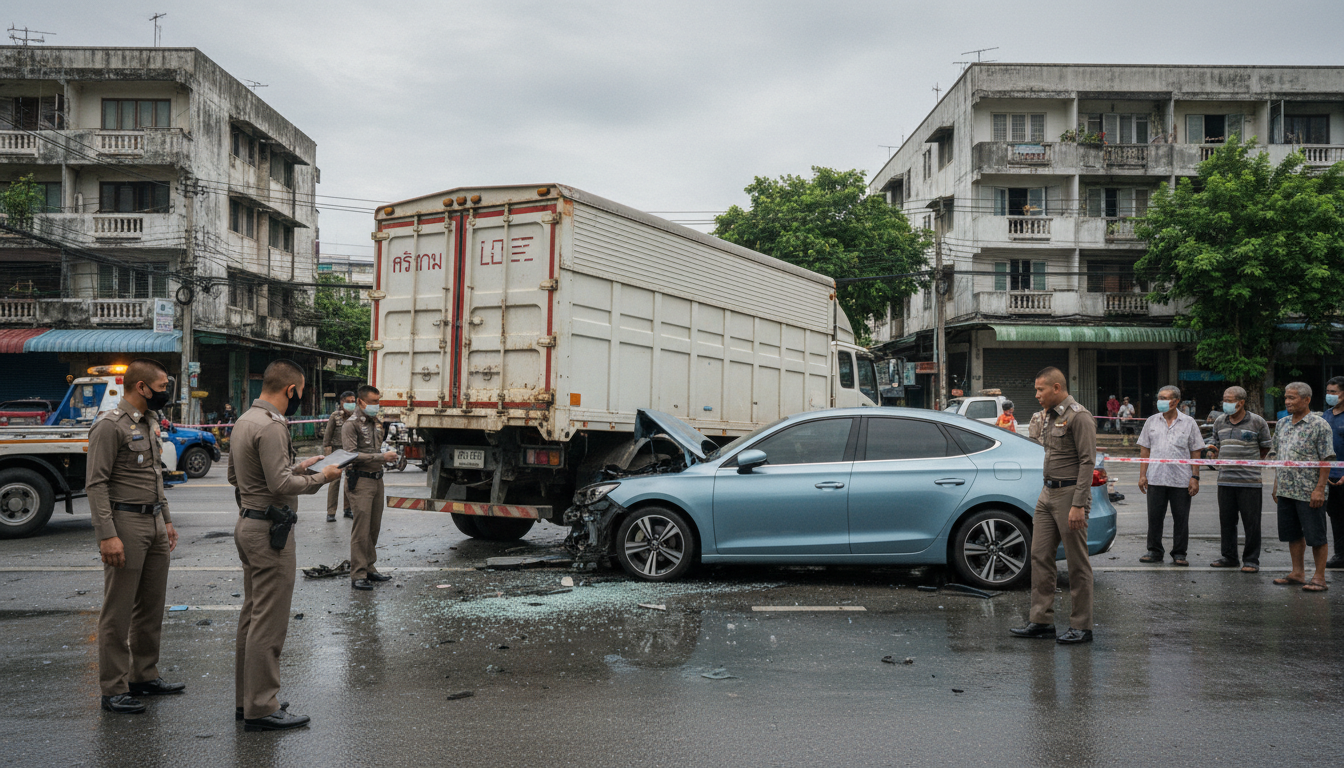
An electric car driven by a 78-year-old man crashed into the Guanyin Shrine at the Thian Fah Foundation in Bangkok's Yaowarat area on Thursday, killing an 82-year-old woman and injuring eight others. Police charged the driver with negligence causing death, serious injury, and bodily or mental harm. He was released temporarily, having turned himself in and showing no sign of trying to flee.
This incident highlights how specific technologies, combined with demographic changes, can introduce new risks into daily life. The car involved was an electric vehicle, a technology promoted for its environmental benefits. However, the acceleration and operating characteristics of EVs can differ significantly from traditional internal combustion engine vehicles, potentially contributing to a different accident profile. These differences become particularly relevant for a driver with potentially slower reaction times.
The increasing number of elderly drivers, both in Thailand and across the Asia-Pacific, presents a growing challenge. As populations age, more people retain their licenses and continue driving for longer. While many elderly drivers maintain their skills, some experience declines in vision, hearing, reaction time, and cognitive function. This can affect their ability to handle complex driving situations, especially in congested urban environments like Yaowarat.
While this particular crash involved an EV, it does not inherently mean electric cars are more dangerous. The specific cause of the negligence remains under police investigation. Any vehicle, regardless of its power source, can be involved in an accident if the driver is not fully capable or attentive. Yet, the unique characteristics of EVs, such as rapid acceleration, could exacerbate a loss of control in certain circumstances. This consideration becomes more pronounced when discussing an aging driver demographic.
Regulators and urban planners face a dual challenge: integrating new vehicle technologies safely into existing infrastructure and addressing the implications of an aging driving population. The outcome of the charges against the 78-year-old driver will reflect legal accountability for the immediate incident. The broader issue requires examination of driver assessment and licensing policies for older individuals, alongside a public understanding of how new vehicle types function on crowded streets. When these factors intersect, human costs can rise.
Sources
Newsletter
Pacific Daily
A curated briefing from Thailand, Asia-Pacific and the world.